DCPA NEWS CENTER
Enjoy the best stories and perspectives from the theatre world today.

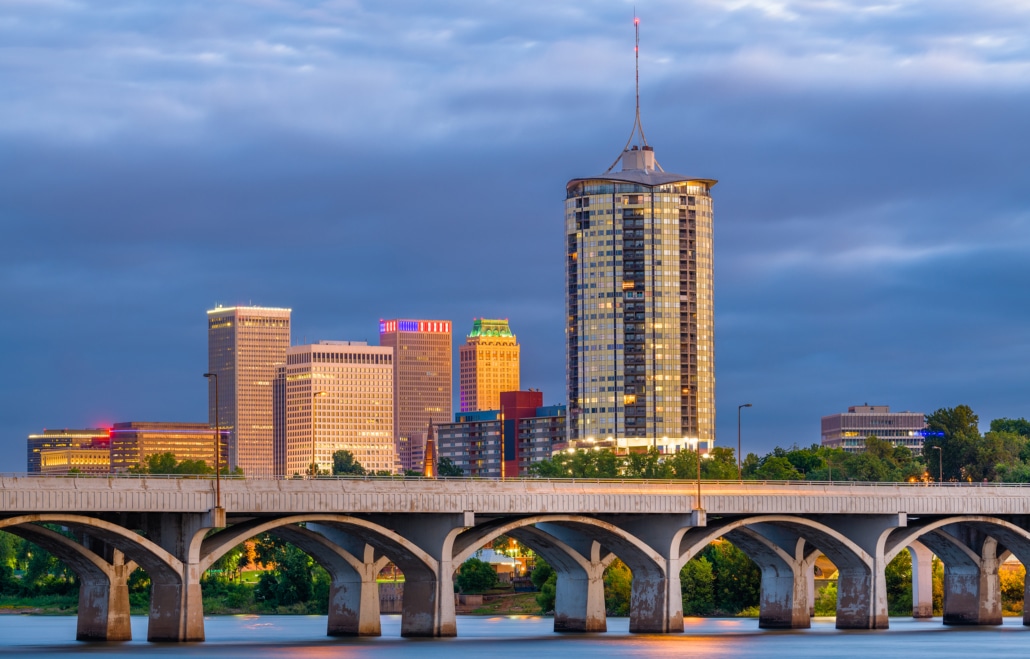
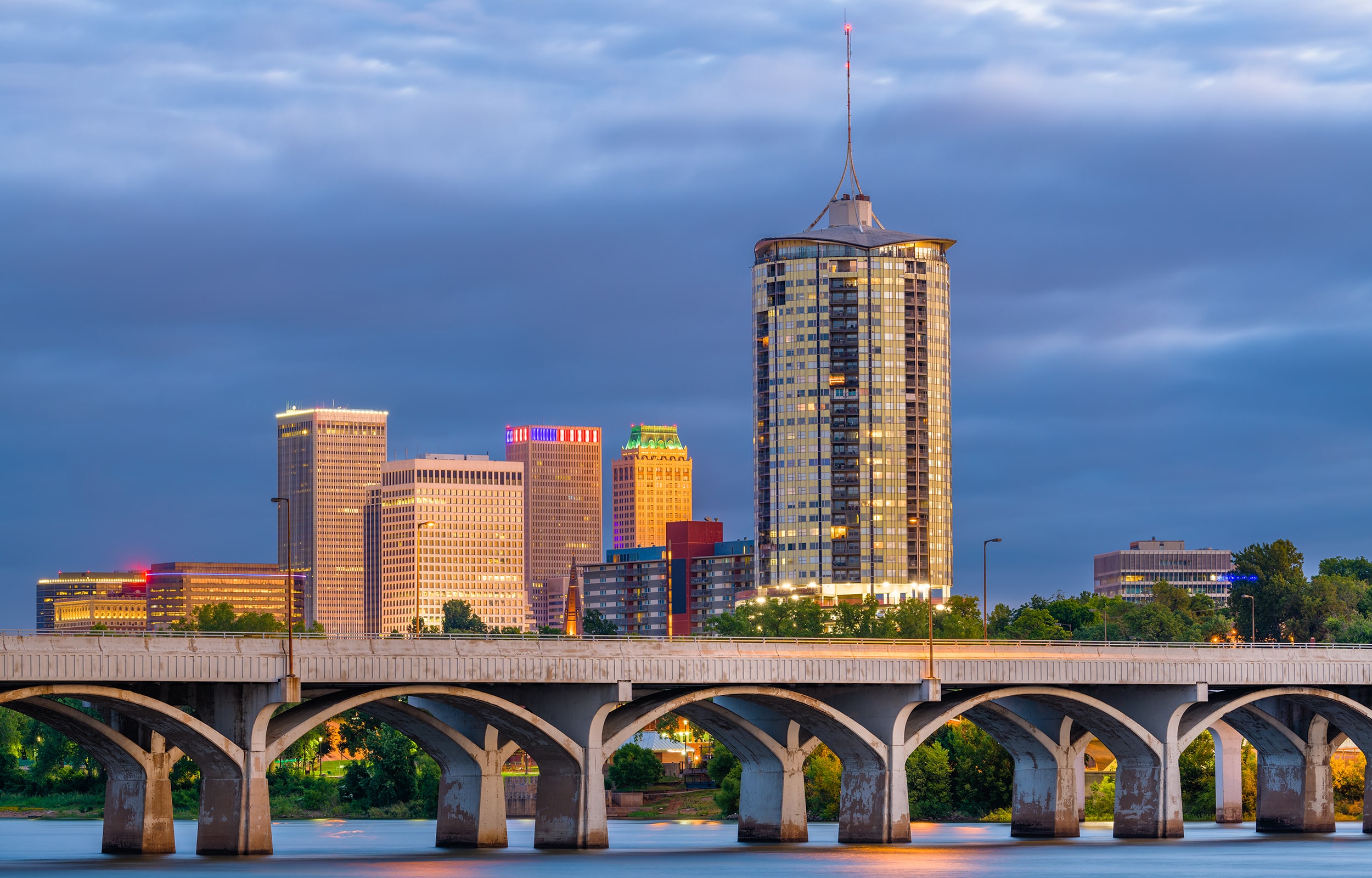
Tulsa, Oklahoma, USA downtown skyline on the Arkansas River at dusk.
Based on the 1967 book by S.E. Hinton, The Outsiders is set in Tulsa, Oklahoma during an industrial boom that created societal divisions between the “haves” and the have nots.” Beyond the immediate cultural and economic setting are deeper, historical events that contributed to class tension and civic unrest.
According to the 1960 U.S. Decennial Census, Tulsa was the second largest city in the state of Oklahoma with a population of 261,685 (about 4 times the capacity of an average professional football stadium).
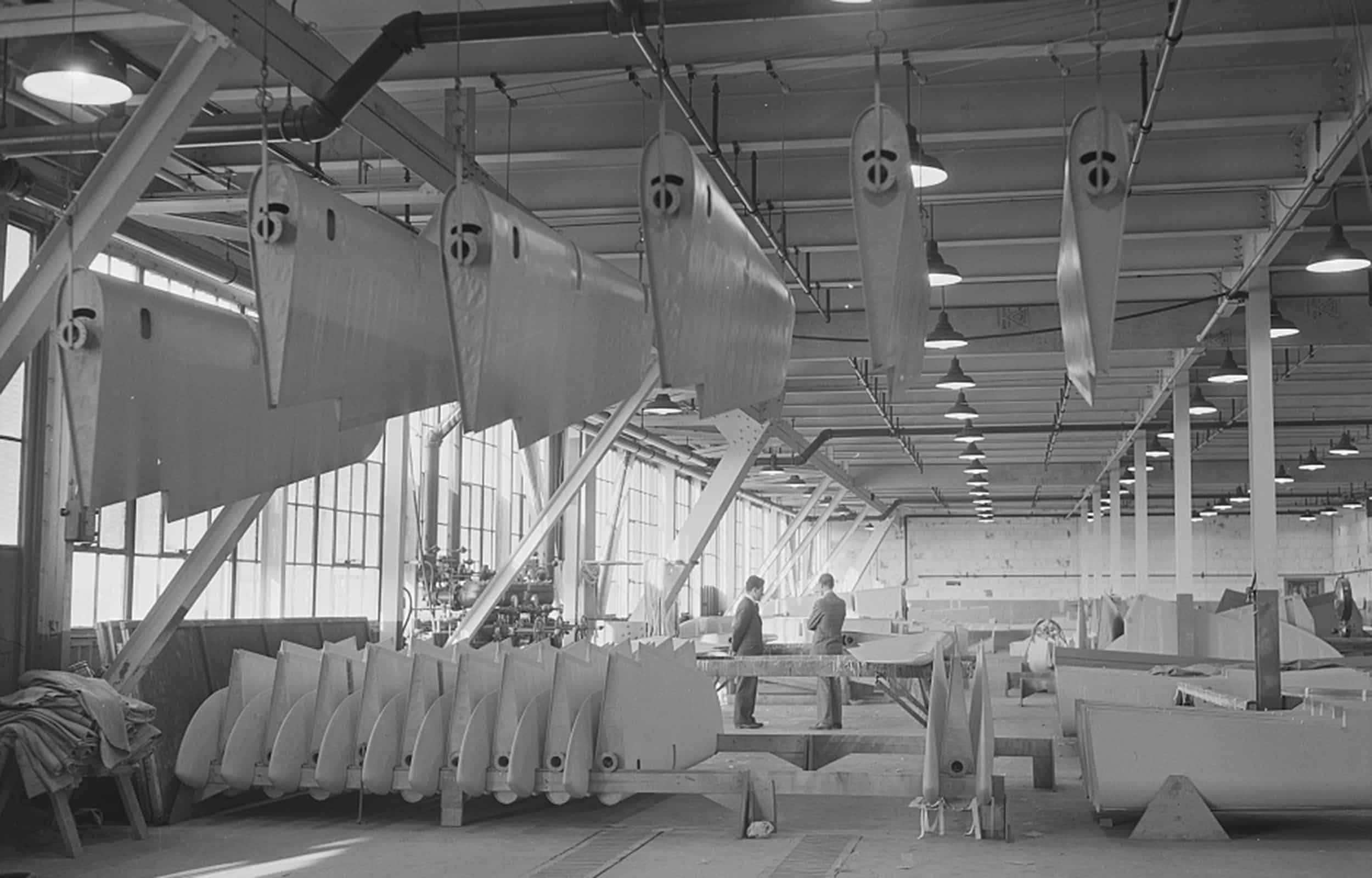
Library of Congress, Prints & Photographs Division, Farm Security Administration:Office of War Information Black-and-White Negatives
The city’s growth began at the turn of 20th century with the discovery of oil in the state, which brought a flood of laborers, speculators, and financiers to the area. After three decades of prosperity, Oklahoma’s oil industry collapsed at the same time that The Great Depression hit. During WWII, the city’s industry shifted to defense; Tulsa became the leading manufacturer of military aircraft and a training ground for American, British, and Canadian pilots. This aeronautical industry led to great prosperity.
During the 1960s and 1970s Tulsa, like other American cities, experienced suburban sprawl, in which real estate developments — housing tracts and shopping centers — quickly spread into more rural areas, creating new suburbs. This suburbanization happened largely as a result of the flight of wealthier whites to the south and east, creating a segregated Tulsa: North Tulsa was predominantly African American, West Tulsa stayed primarily working class, East Tulsa grew with an expanding middle class, and South Tulsa was predominantly upper class.
These divisions led people to socialize with people they lived near, fostering inequality and contributing to the rise of social groups that would be later dubbed, “gangs.”
The city of Tulsa has a long history of violence, most notably against people of color — specifically African Americans and Native Americans. While race is not directly addressed in the novel of The Outsiders, the cast of the musical hails from a diverse variety of racial backgrounds. It is important and helpful to understand the diverse histories that have shaped the region in the decades leading up to the writing of The Outsiders, which would have certainly impacted these characters.
As part of the Indian Removal Act of 1830, five Native American groups were forcibly removed from their ancestral lands in the southeast to present-day Oklahoma. The Cherokee, Creek, Choctaw, Chickasaw, and Seminole were rounded up and forced to march over 1,000 miles to a designated “Indian Territory.” The journeys were incredibly difficult, often lasting several weeks, with shortages of food, supplies, and wagons. Many groups were marched the entire distance, with little shelter, even during winter months. Thousands died due to disease and malnutrition. These difficult journeys became referred to as the “Trail of Tears.”
SOURCES
Encyclopedia of the Great Plains. David J. Wishart, Editor.
The Encyclopedia of Oklahoma History and Culture. Oklahoma Historical Society
(also known as the Greenwood Massacre)
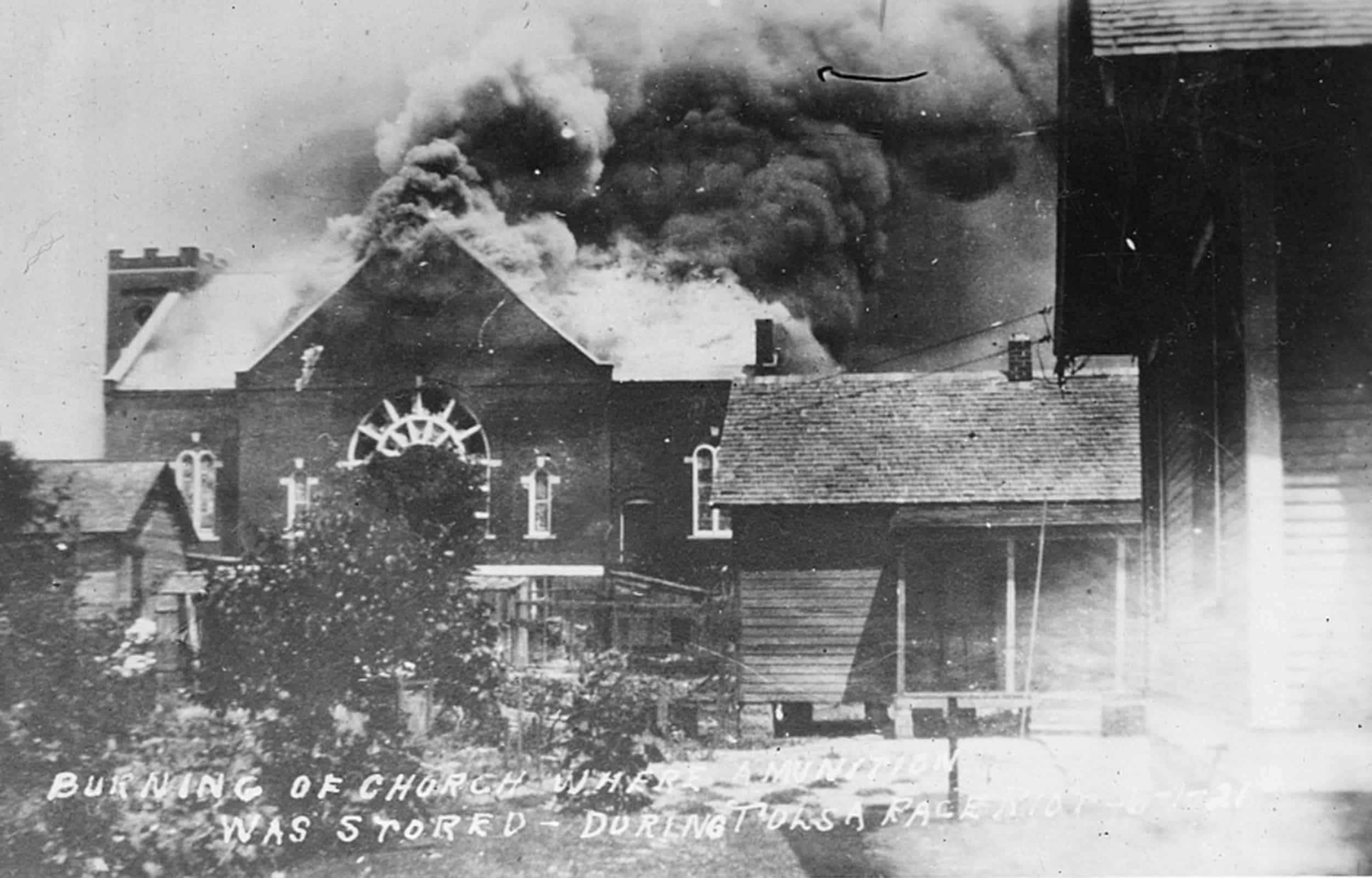
1921 Tulsa Race Riot. Library of Congress, Prints and Photographs Division. American National Red Cross Collection
The Tulsa Race Massacre is amongst the worst incidents of racial violence in the history of the United States, where white supremacists killed dozens of African Americans, injuring hundreds and imprisoning thousands, and destroying more than 35 square blocks of a prosperous neighborhood that took years to build, but just 24 hours to tear down.
At the end of World War I, the Greenwood District of Tulsa was recognized as having one of the wealthiest African American communities in the United States. This thriving business district and surrounding residential area, often referred to as “Black Wall Street,” was home to approximately 10,000 people.
On May 3, 1921, Dick Rowland, a 19-year-old black man was arrested, accused of assaulting Sarah Page, a white 17-year-old woman in the elevator of an office building.
The local newspaper, the Tulsa Tribune, printed an inflammatory article that called for the lynching of Dick Rowland. A mob of hundreds (and in some reports thousands) of angry white men gathered near the courthouse where Rowland was being held; they were met by a group of 75 Black men who came to protect him. Soon, violence erupted with gunfights in the streets.
To contain what they referred to as “a Black uprising,” civil officials deputized white civilians, including many of those perpetrating the violence, sanctioning their actions by providing them with firearms and empowering them to arrest African Americans.
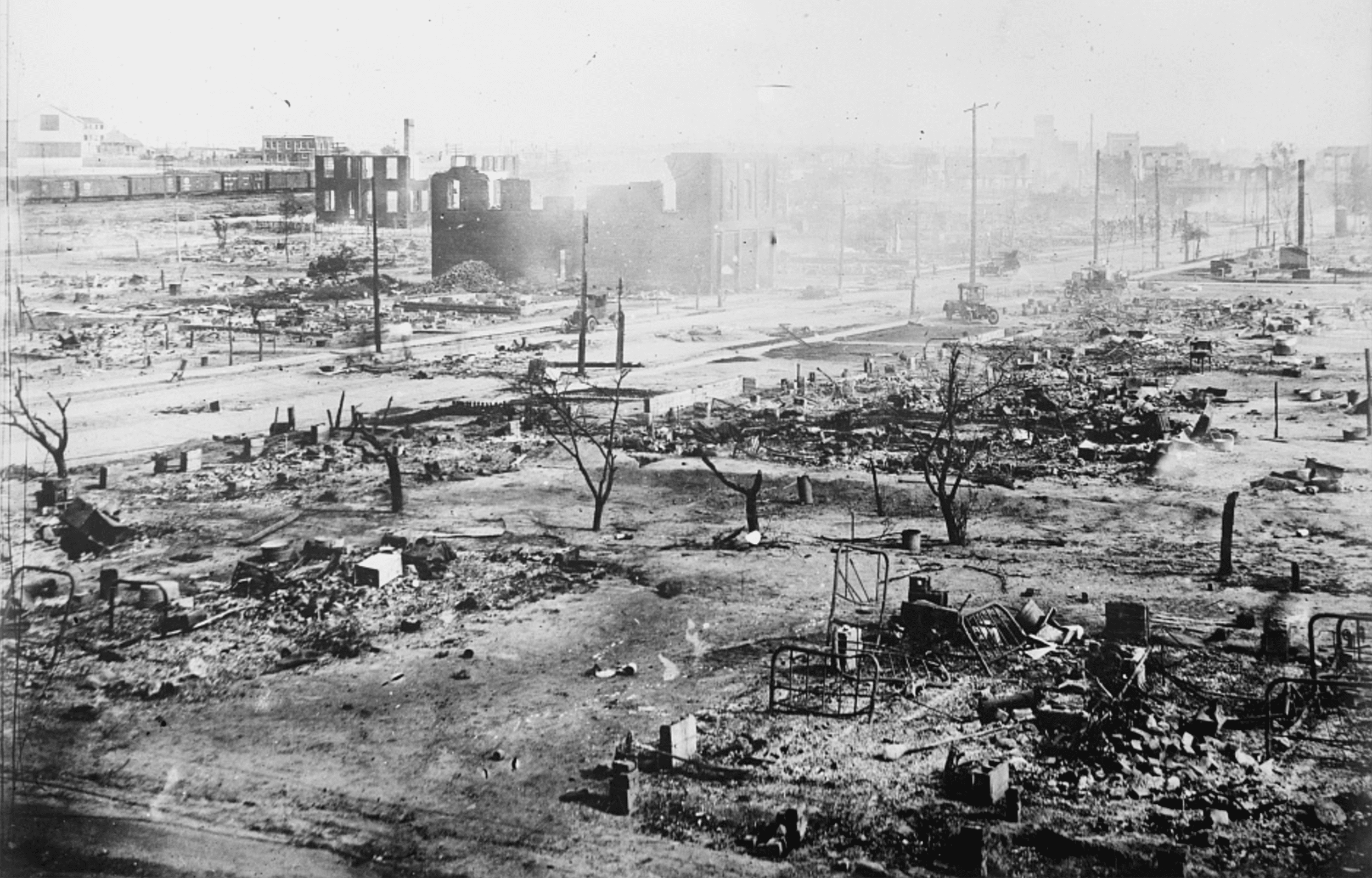
Ruins after the 1921 Tulsa, Race Riot. Library of Congress, Prints & Photographs Division, American National Red Cross Collection
Then began the looting, vandalism, and arson. The white rioters and deputized militia set businesses ablaze and prevented the Tulsa Fire Department from putting out the fires. The mob then moved into residential areas, destroying homes, and rounding up and interning families. There were even reports of planes flown by white men dropping firebombs on buildings and shooting as families as they fled.
Governor James Brooks Ayres Robertson declared martial law and sent in the National Guard to help extinguish the fires and take control of the area. They imprisoned all Black Tulsans not already interned. Over 6,000 people were held at the Convention Hall and at the Fairgrounds, some for as long as eight days.
Twenty-four hours of violence left millions of dollars in property damage, more than 800 admitted to hospital and dozens reported dead, although historians now believe as many as 300 people may have died. The financial devastation extended beyond the property damage and encompassed the loss of inheritance, the loss of wealth that might have shaped the futures for Black generations to come.
In 1996, 75 years after the massacre, the Oklahoma Commission to Study the Tulsa Race Riot of 1921 was formed. The commission’s final report, published in 2001, states that elected officials and members of law enforcement conspired with the racist mob that destroyed Greenwood. The report recommended a program of reparations to survivors and their descendants. The state passed legislation to establish scholarships, encourage the economic development of Greenwood and develop a park in memory of the victims of the massacre. However, none of the criminal acts perpetrated that day have ever been prosecuted or punished by government at any level: municipal, county, state, or federal.
SOURCES:
1921 Tulsa Race Massacre. Museum of Tulsa History
“Tulsa Race Massacre“. The New York Times
“Report on Tulsa Race Riot of 1921“. A Report by the Oklahoma Commission to Study the Oklahoma Race Riot of 1921
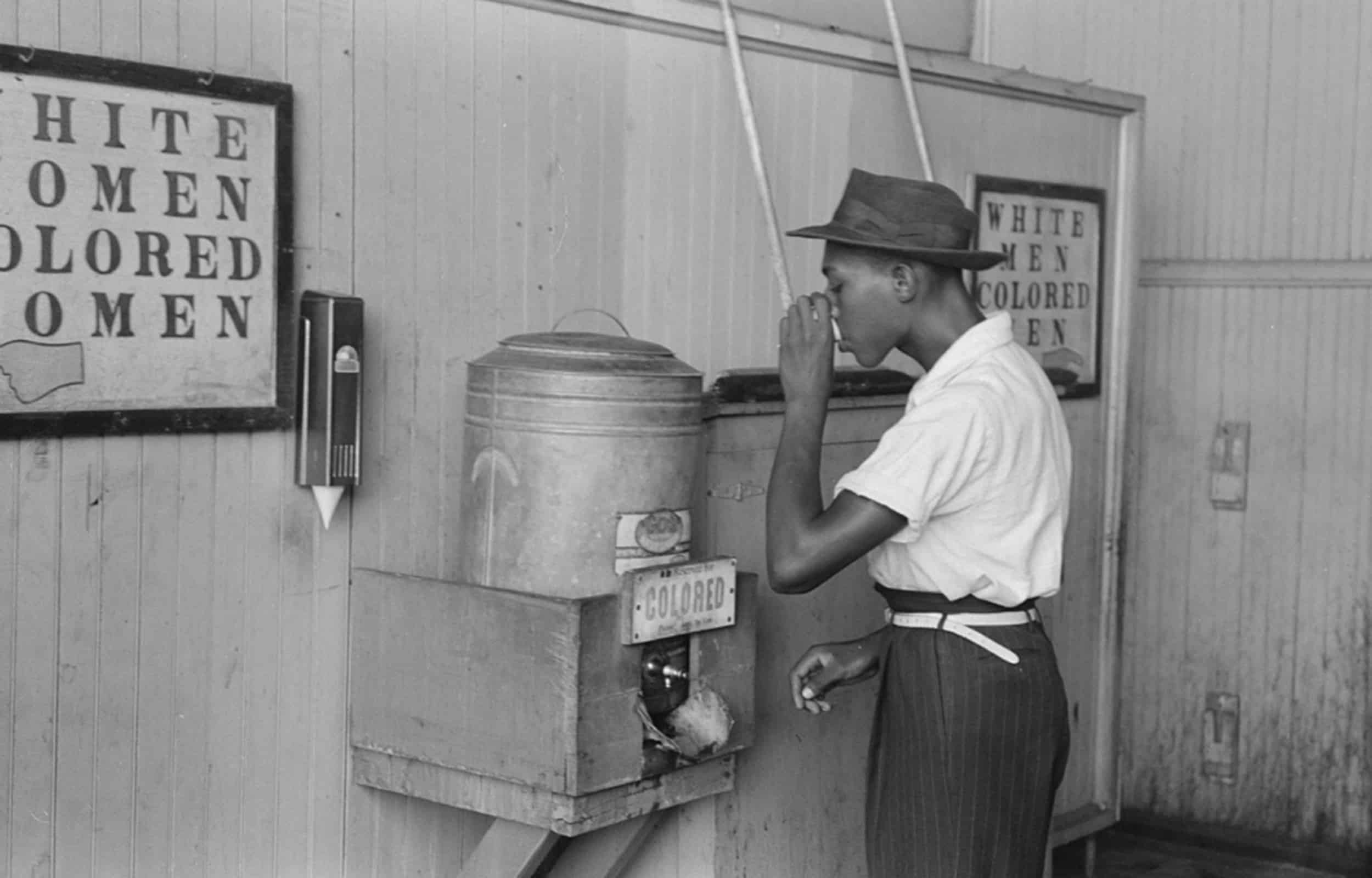
Library of Congress, Prints & Photographs Division, Farm Security Administration/Office of War Information Black-and-White Negatives.
Jim Crow laws, a collection of state and local statutes that legalized racial segregation, which Oklahoma adopted shortly after becoming a state in 1907, were designed to marginalize African Americans by denying them the right to vote, hold jobs, get an education, or benefit from other opportunities.
The laws affected almost every aspect of daily life, mandating segregation of schools, parks, hospitals, libraries, drinking fountains, restrooms, buses, trains, building entrances, theatres, restaurants, and more. “Whites Only” and “Colored” signs were constant reminders of the enforced racial order. African Americans were not allowed to live in white neighborhoods, which is why in Tulsa, most resided in the Greenwood District. Those who attempted to defy Jim Crow laws often faced arrest, fines, jail sentences, violence, and death. These laws lasted for decades.
In the fall of 1958, Katz Drug Store in Oklahoma City was the setting of a pivotal moment in the nation’s civil rights movement. Clara Luper and 13 African American children (aged 6-13) participated in a sit-in, silently and nonviolently protesting segregation at the store’s lunch counter. There, they experienced angry mobs who hurled racial slurs while punching, kicking, spitting at, and scalding them with hot grease.
The sit-in lasted for two days, until finally they were served, and it was amongst the first protest of its kind, soon to be replicated across the country.
These forms of protest in the 1950s and 1960s helped lead to the passage of Civil Rights legislation in 1964 and 1968.
This article originally appeared in The Outsiders study guide.
READ MORE
The Denver Center for the Performing Arts (DCPA) NewsCenter is the organization’s editorial platform for stories, announcements, interviews, and coverage of theatre and cultural programming in Colorado. We are committed to producing accurate, trustworthy, clearly sourced journalism that reflects our mission and serves our community.