DCPA NEWS CENTER
Enjoy the best stories and perspectives from the theatre world today.



It was the summer of 1959. West Side Story was the biggest hit on Broadway and filming on the movie was just beginning. The neighborhood of San Juan Hill on the West Side of Manhattan was in the process of being demolished, so Director Robert Wise took advantage of the demolition to film scenes among half-destroyed buildings, using the rubble to suggest the hardscrabble world of the musical. It was a tough neighborhood – in the 1940s, the New York Housing Authority called it the worst slum in New York.
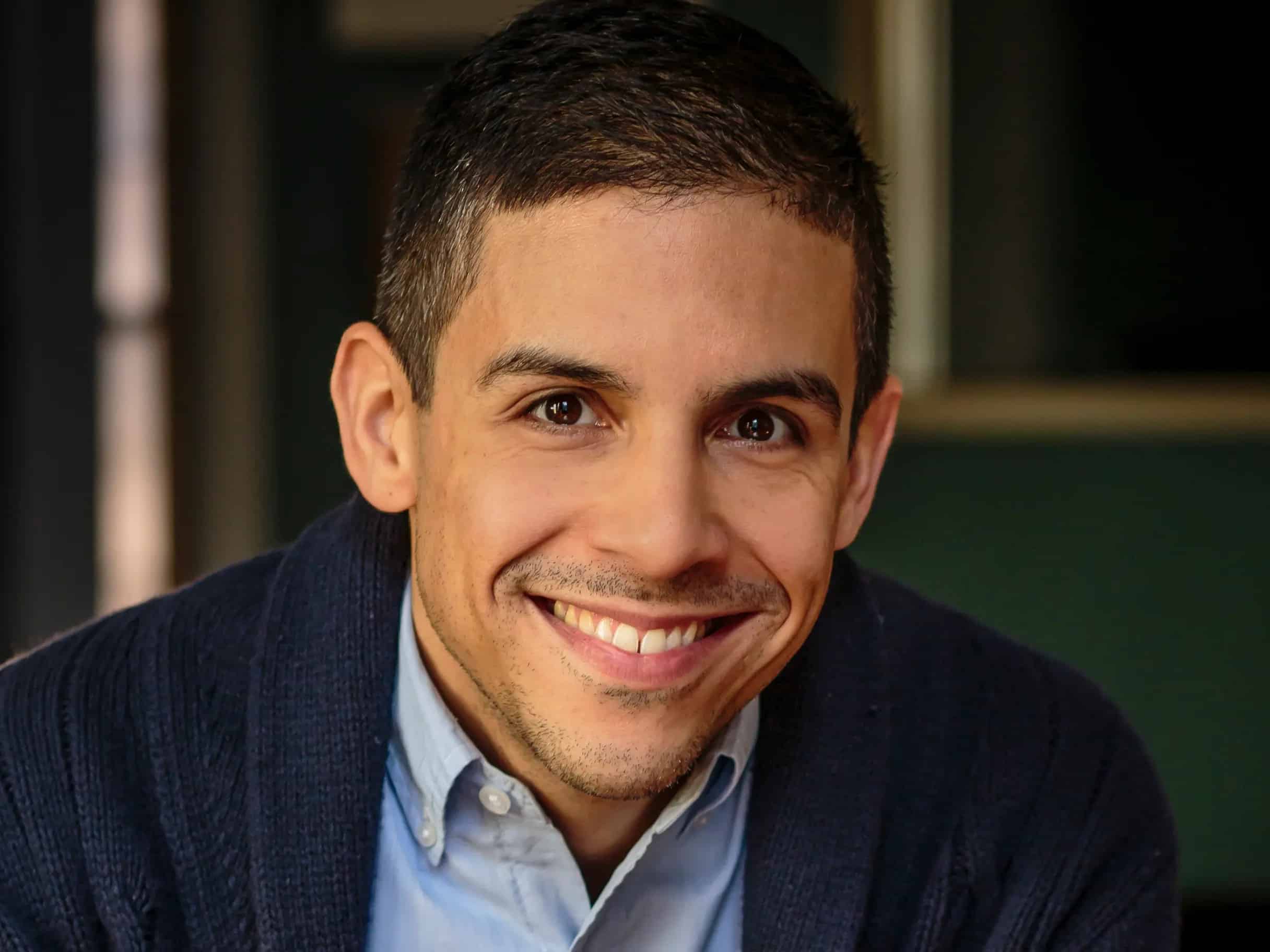
Matthew Lopez
Perhaps that was in part reflecting the Authority’s opinions of those who lived there. In the early 20th century, San Juan Hill was the largest African-American community in New York and soon became the predominant Puerto Rican neighborhood as well. Thelonious Monk grew up there, as did pianist James P. Johnson and Barbara Hillary, the first Black woman to reach the North and the South Poles. For those people, and the 7,000 displaced by the construction of Lincoln Center, San Juan Hill was home. Playwright Matthew López chose it as the setting for Somewhere, in which a Puerto Rican family confronts artistic dreams and an entertainment industry that has no use for them.
“When you read about San Juan Hill, it was so rich culturally, it was this convergence of many communities who lived there. Thelonious Monk would stand on the street corner and listen to traffic and the sounds of the neighborhood, and they would find their way into the music that he created,” says director Laurie Woolery.
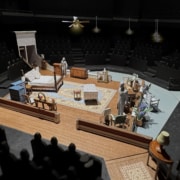
Somewhere tells the story of the Candelarias, a family with dreams of show business. The father, Pepe, is a bandleader who is frequently touring and away from home, while mother Inez looks out for the children and their futures. The siblings study dance and acting, while the oldest, Alejandro, aspires to be cast in the film of West Side Story. A play filled with dance, it reflects the struggles of the family, whose apartment building is scheduled for demolition to make way for Lincoln Center.
“It’s a story about a mother’s love,” says Woolery, whose own mother immigrated to the United States from Central America. “She really did believe in the American dream when she came over, and she came during World War II. She worked in a factory preparing the rags that would clean the planes. It’s about immigration and pursuing the American dream.”
“The son (Alejandro) has to step in and defer his dreams, and you see this a lot with immigrant families, with the parents, because they’ve sacrificed to fulfill that dream.” — Laurie Woolery, Director
While the Candelaria parents and their eldest child were not born in New York, neither are they quite immigrants.
“They’re not immigrants, but they’re treated as immigrants,” Woolery continues, noting that Puerto Rico is a U.S. territory. “Alejandro was born in Puerto Rico, but his other siblings were born here, so he does have the homeland still in him, so he and his mother shared that. Puerto Rico has always just had a very complicated relationship with all the rest of the states. You’re a citizen, but you can’t vote.”
As in most families, there is generational conflict. Alejandro posits himself as a realist, but his mother insists that her dreams for the family are not native.
“I live in the world too. I see what you see,” Inez responds. “But unlike you, I also see the future. And that gives me power to shape my destiny. I don’t imagine the world away — I imagine it better. You call my dreams foolish but I say that having no dreams is the most foolish of all.”
“To pragmatic people, that’s very head in the sand, but to me, that’s visionary thinking,” Woolery feels.
Dance isn’t just a passion for the characters; it’s a major element of the play itself. The cast had to be able to dance in a variety of styles, from Caribbean cha cha and mambo to Broadway styles. All of it is performed to original music by sound designer Paul James Prendergast. In the world of the play, Alejandro speaks about the pain he feels when he can’t dance.
“I think about artists who really have a passion, and who really feel like ‘this is all I know how to do’, like there’s a liberation in the arts that opens up your soul and your spirit. Whatever the form is you partake in, you can be anyone and go anywhere and expand your existence and transcend your labels. Art allows us to be able to see outside of the box society and our families and ourselves place us in. I have my guesses of why Matthew chose dance; I think it’s connected to his aunt, and I think it’s connected to West Side Story. Words and music are no longer enough to express the emotion that is being felt.” — Laurie Woolery, Director
As she spoke, Woolery was in tech rehearsals for the Oregon Shakespeare Festival production of Come From Away. The two plays combined felt particularly meaningful in the year following her own mother’s death and a conflicted nation.
“It’s very emotional to be doing theater right now,” she says. “I find it very challenging because you’re just trying to figure out: How should I be serving my community, my neighbors, my country? And then I get into the rehearsal room and I’m reminded, we are reflections of the world that we are in, and we get to show our humanity to each other.”
The Denver Center for the Performing Arts (DCPA) NewsCenter is the organization’s editorial platform for stories, announcements, interviews, and coverage of theatre and cultural programming in Colorado. We are committed to producing accurate, trustworthy, clearly sourced journalism that reflects our mission and serves our community.
 ©Denver Center for the Performing Arts