DCPA NEWS CENTER
Enjoy the best stories and perspectives from the theatre world today.

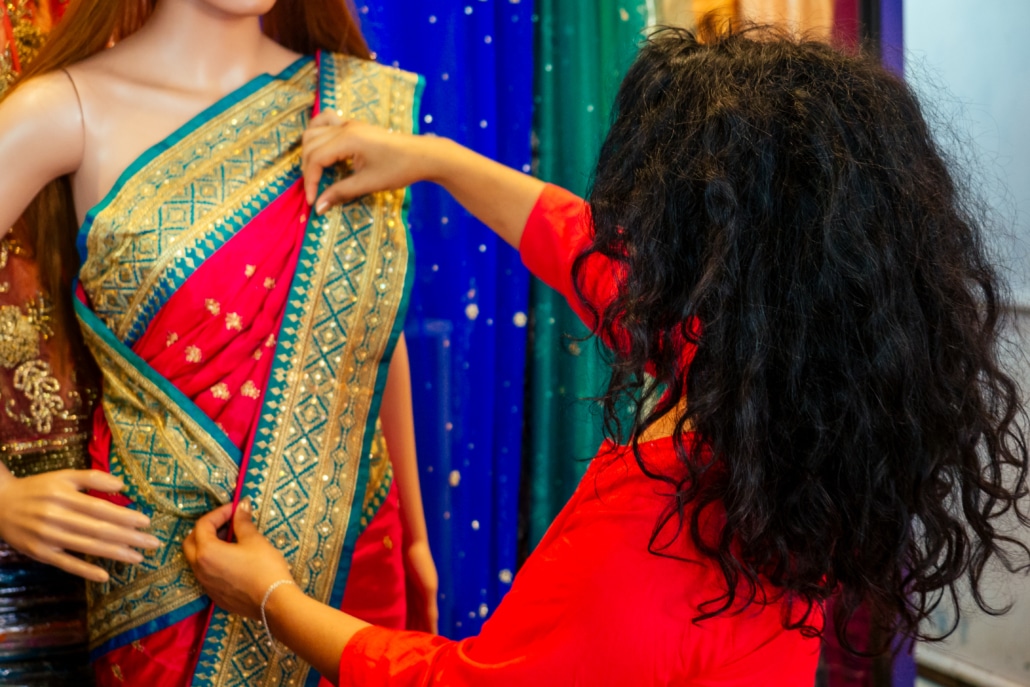
Staging the world premiere of Cowboys and East Indians required not only American and Western wear, but a great number of saris and other traditional Indian garments. Most saris sold in Colorado are for formal occasions, such as weddings, so Costume Design Associate Meghan Anderson Doyle looked to India, ordering saris and other traditional garments from online stores.
 “The script calls for a design from a particular region, so we went to the source for that particular piece,” Doyle says, alluding to Southern India and, specifically, Tamil culture. A shop in Mumbai built choli blouses to order.
Doyle ordered more than the half-dozen saris required by the script, knowing that extras would be needed for props – in the play, Chitra describes the many saris she received as gifts before leaving India.
Because the play is partly a period piece and set entirely in Wyoming, it required additional costumes. “As the play moves back and forth from the early 1980s and the early 2000s, this show is largely pulled from our incredible stock and from purchased pieces,” Doyle says.” There are vintage pieces from the 80s that take us back and some more contemporary pieces that land us a little closer to today.”
After many discussions with the director, Doyle researched clothes and hair from both periods and worked up renderings for each character. She then shopped and built outfits, creating a “closet” for each character. Only after the actors’ fittings were final decisions made as to what they might wear in a particular moment.
A plot point centers around Lucky’s failed attempts at draping a sari. “We did learn to properly drape saris from a variety of places!” Doyle says.
Some of the actors had their own cultural knowledge of saris, and playwright Nina McConigley’s mother gave a tutorial of her own in the rehearsal room. Additionally, Eishita Nariani from Mudra Dance Studio in Centennial provided two instructional sessions. “We all watched tons of online videos and reached out to our community partners as well,” Doyle says. “Some of our saris are quick-rigged to accommodate quick changes in the script, but more than one is draped onstage in front of the audience. No rigging there, just skill!”
A Guide To Traditional Indian Clothing
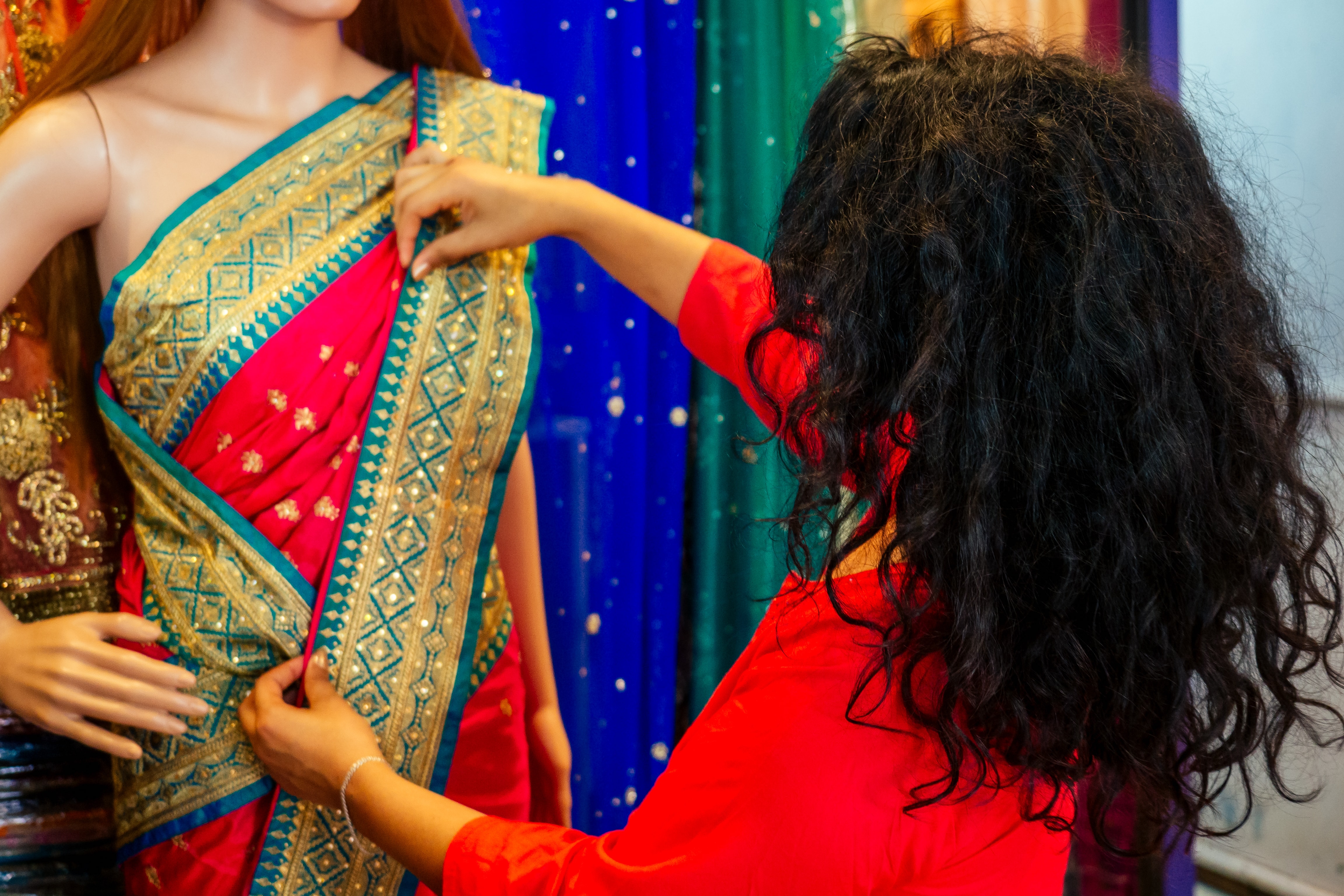
Sari: A long length of woven fabric that is draped to form a long skirt. One end is tucked in at the waist or petticoat and the other draped over a shoulder, sometimes exposing the midriff. Saris are draped differently according to region, with the pallu, or ornamented end, usually draped diagonally across the shoulder.
Choli: A fitted blouse, usually cropped to expose the midriff, and worn with a sari.
Salwar kameez: Worn by both men and women, the salwar refers to pants, usually narrowed at the bottom, frequently with a kurta, a loose, collarless tunic, worn on top.
Lehenga: A long, pleated skirt worn with a choli.
Veshti: A long piece of fabric worn by men, draped to form pants that are baggy through the thighs and narrow at the knees or calves.
DETAILS
Cowboys and East Indians
Jan 16-Mar 1, 2026 • Singleton Theatre
Tickets