DCPA NEWS CENTER
Enjoy the best stories and perspectives from the theatre world today.

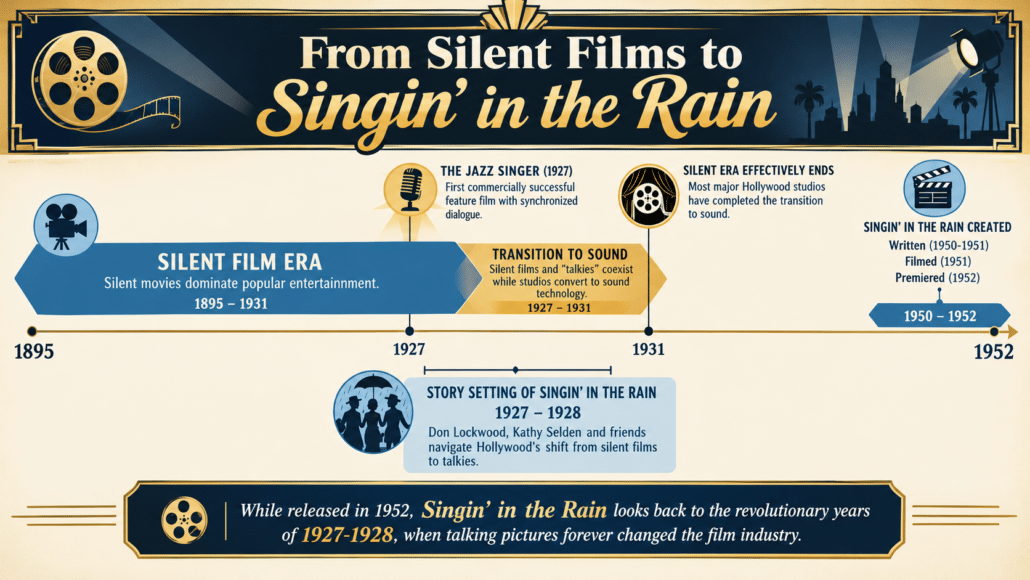
In 1951, as the classic movie musical An American in Paris was being released, director Stanley Donen and star Gene Kelly came together for a new film, now frequently named as the greatest movie musical of all time: Singin’ in the Rain.
Seven decades later, playwright Jay Berkow imagined what might have transpired behind the scenes of filming. The result was What a Glorious Feeling!, playing in the Garner Galleria Nov. 7 through April 4. The play with music (much of it from the movie) tells of Kelly’s determination to partner with Donen and his assistant/newly divorced ex, Jeanne Coyne; battles with the studio; and the challenges for ingenue Debbie Reynolds, who was not a dancer
For the production, Denver Center designers came together to evoke the early 1950s, Old Hollywood, and the making of the movie itself.
“I had not seen the film since I was a child but could picture the iconic ‘Singin’ in the Rain”’ scene. My first step was to read the script, then watch the film, and then start the conversations with Piper (Arpan, director and co-choreographer) about her dreams for this production. I love to do period research, so I have plenty of images from Hollywood and the film lots and rehearsal rooms of the day. The film itself has many behind-the-scenes locations, so those were helpful as well,” Orzolek says.
The small size of the Galleria stage helped to evoke a rehearsal room. Usually, designers try to design the space’s columns (structurally necessary to hold up the parking garage overhead), pipes and conduit – this time, they embraced them.
“There are many considerations for how big the onstage space can be with what needs to be stored for Act 2 scene changes or quick-change booths offstage, but we seem to be able to squeeze it all in,” Orzolek says. “A bigger challenge is the height of the room in a play that involves dancing on top of the furniture. With the ceiling at about nine feet and the lights at about eight feet, we are a little limited on which furniture can be danced on. Not to give anything away, but there is some dancing on chairs!”
Knowing that tap would be an integral part of the choreography, the stage’s entire deck was replaced for the show. “This new floor sounds terrific and will amplify the amazing dance in What a Glorious Feeling!, and will serve the Galleria for years to come,” Orzolek says.
Act I of What a Glorious Feeling! takes place in the rehearsal room, only moving into filming in the second act. That transition is noted by the lighting. Act I is lit “very naturalistic and monochromatic – more like the feel of an actual rehearsal room,” MacLeod says, with “more light from above than from the front.”
Color and side lighting will come into play during the dance numbers of Act II. “Of course, we never know until we are in the room during tech what looks best for the scene,” he adds.
Those eight-foot ceilings affected the lighting as well as the set. “You always work with what you have,” MacLeod says. “Certainly, in a bigger theater, the aesthetics would be a bit grander. There have been some really terrific shows that fit on the Galleria stage – perhaps this will be the next one!”
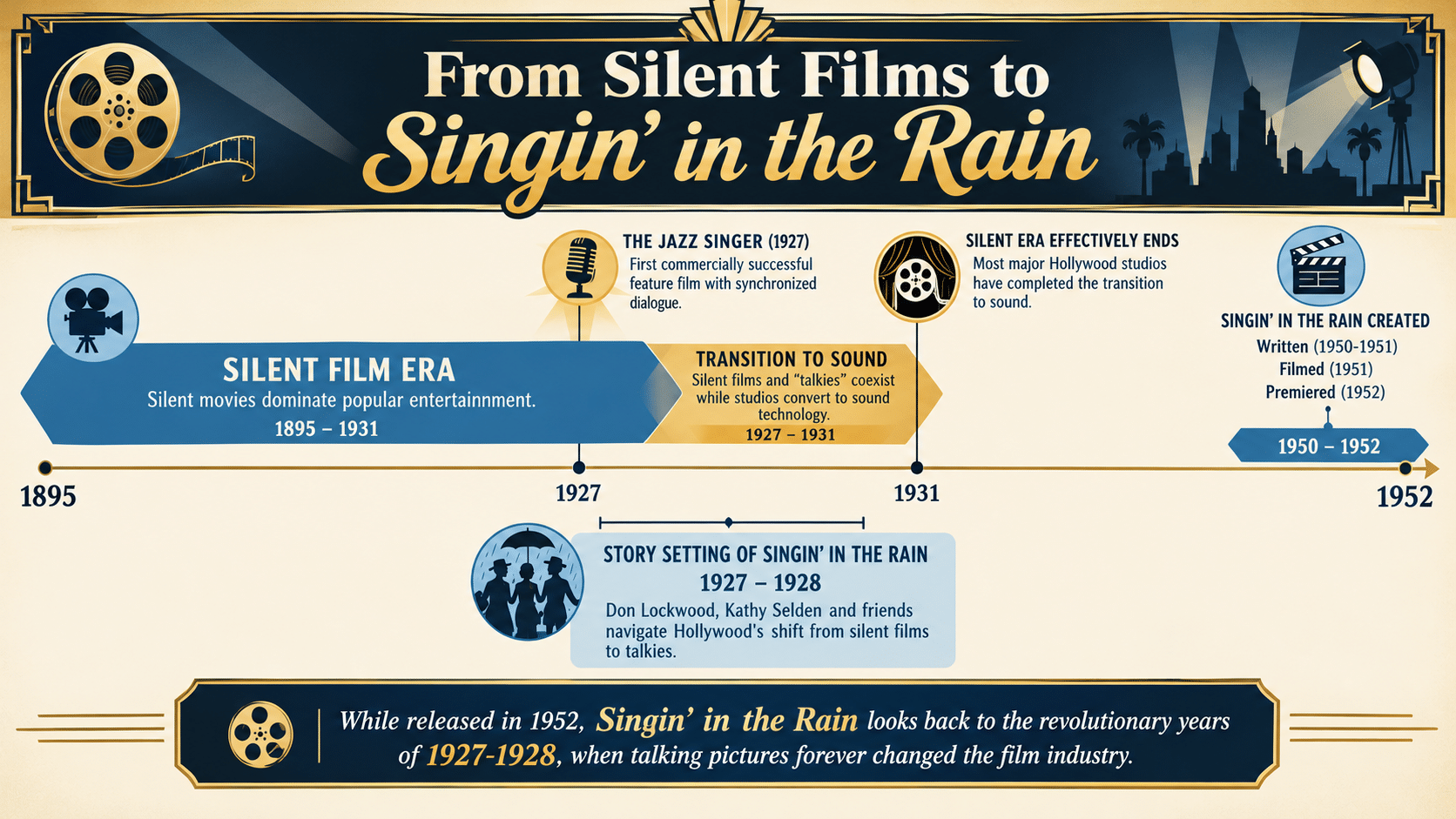
All of the designers had to navigate the world of the rehearsal, the world of the film, and the world of the script. The movie’s depiction of the 1920s – the transition from silent films to sound – was itself filtered through the eyes and technology of designers 30 years later.
“This one is an interesting challenge,” Zinn says, because the script is set in the 1950s during rehearsals for the movie, while the movie is set in the 1920s “You want to draw connections to the movie regardless, but that of course is the 1950s doing the 1920s, which is a whole other look. So how do you meld all of that together into something that looks cohesive and unforced within the setting of a rehearsal room?”
The size of the theater requires precision in costuming, because audiences are close enough to catch the details. “The audience is closer, and they spend more time with individual elements, so it‘s harder to get away with fudging things here and there,” Zinn says.
“For me in my design it definitely is most about the period and how movies were transitioning to talkies at that time,” Billman says. Sound, after all, changed dramatically both with its introduction to film and technological advances from the 1920s to the 1950s. The introduction of sound to the movies was an earthquake, with silent movies phased out in a span of four years.
For Billman, the biggest discovery was the role of Arthur Freed, who had co-written almost every song in the show. He was a major Hollywood producer and conceived Singin’ in the Rain as a showcase for the catalog of songs he had written with Nacio Herb Brown. “I think Arthur Freed, and his massive impact on what movies became, is not well known enough,” Billman says.
The Denver Center for the Performing Arts (DCPA) NewsCenter is the organization’s editorial platform for stories, announcements, interviews, and coverage of theatre and cultural programming in Colorado. We are committed to producing accurate, trustworthy, clearly sourced journalism that reflects our mission and serves our community. The article was written by Lisa Bornstein. The timeline graphic was created with the help of AI.