DCPA NEWS CENTER
Enjoy the best stories and perspectives from the theatre world today.

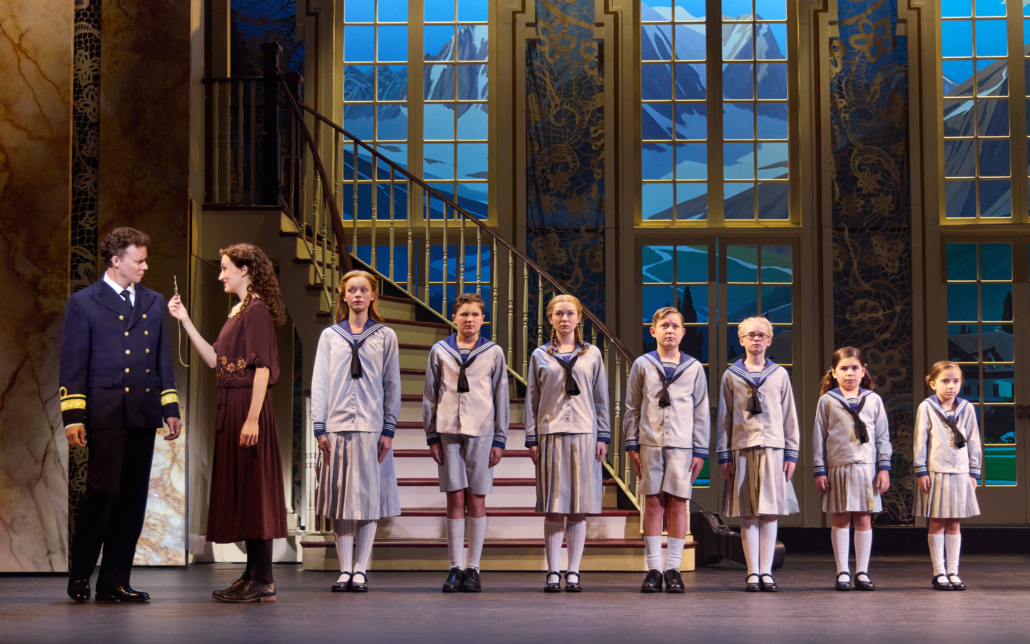
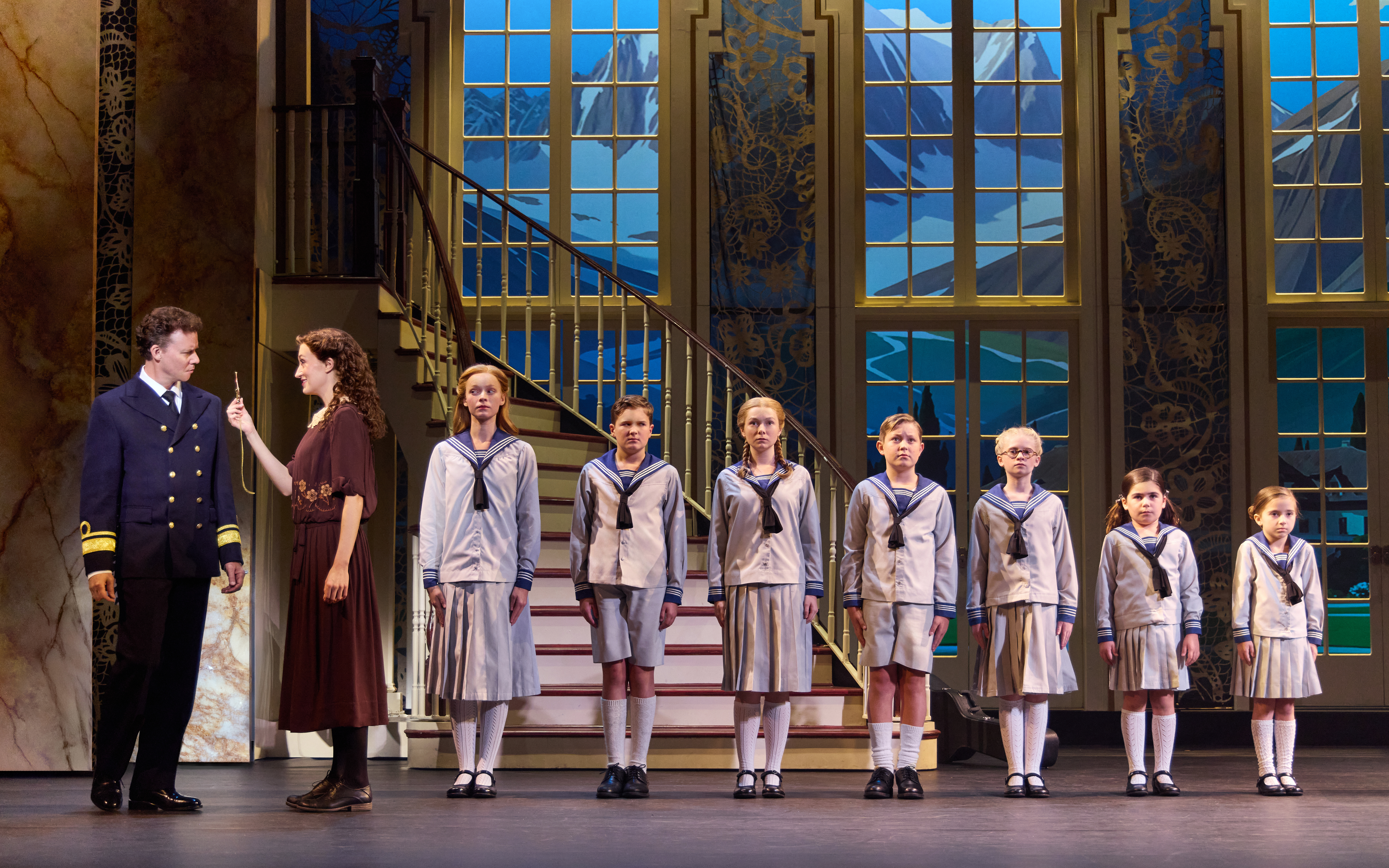
(l-r) Kevin Earley and Cayleigh Capaldi with Ariana Ferch, Eli Vander Griend, Ava Davis, Benjamin Stasiek, Haddie Mac, Ruby Caramore, and Luciana VanDette in The Sound of Music. Photo by Jeremy Daniel
This article was created by Marcos Nájera for the national tour of The Sound of Music by Center Theatre Group, Los Angeles’ preeminent non-profit theatre company.
MARCOS NÁJERA: If you don’t mind indulging me the pun, “Let’s start at the very beginning.” How would you describe what your job is as a theatre director and how you learned the craft?
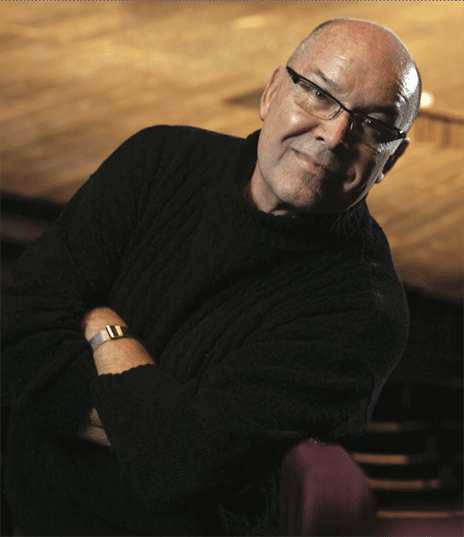
Jack O’Brien, Director, The Sound of Music
JACK O’BRIEN: I’m every show’s first audience. I’m every actor’s first audience. I’m every writer’s first audience, everybody. Whether it’s a classic or a brand-new piece, I look at it as if no one has ever seen it before. And I ask of it all the questions that you want to know: Why is this happening? Who are these people?
We are in a situation where even though we know it’s fake, we want to believe it. When you like a show, you are swept up in it. And when it’s disappointing, you’re never engaged — you don’t care. So, you go away saying, “That wasn’t very good.” But when it is good, it’s incredibly moving. It’s an act of faith really, which is interesting that The Sound of Music has so much to do with faith. I try to make sure that everybody on stage is saying or thinking the same story at the same time. And if we are all really clear, and we believe it, you believe it too.
To put it simplistically, I’m a storyteller who uses people as his medium.
NÁJERA: You really have to marshal all the forces of the written text, the people moving on stage, and the lights, costumes and sounds to tell the story and make it happen. Can you describe the nitty gritty of a director’s day and job?
O’BRIEN: It’s almost as if there’s a movie playing in my own head. And I read the material. I listen to the music. And in my own imagination once I’ve talked to my designers [lights, sound, set, costume artists] and everybody, I try to gently explain what I think I see. And they take off from that. They give me their version of it. And I think, “Yeah, that’s good — but shouldn’t she be in yellow? Or shouldn’t she be in dark blue?” And little by little, we get together and decide together how we want it to be. And then what emerges on stage is not ever what I really wanted, but it’s some amalgam [a combination or mixture of different things] of belief that we’ve all agreed upon.
NÁJERA: So you are crafting a working document with your team?
O’BRIEN: A choreographer works by saying, “I want you to do exactly what I’m doing. Your leg goes this way. Your arm goes that way. No, your finger should be up. See this finger? It’s up! Please do exactly as I do.”
A director has to somehow convince everyone involved that what is happening is their idea, not his.
You can only do one of two things. You can replicate. Or you can create. If you replicate, you’re doing what you are told to do. If you create, you are putting something of yourself into it. You are making it yours. I think a good director always tries to get the actor or the designer to do their best work — as if it is their work. And if you are really clever, you get what you want that way. But! It’s through the filter of somebody else’s creativity. Sometimes they can’t do it. But sometimes, it is better than you dreamed.
I’m going to try to put a real story on stage. Not one that just goes along with plot. For instance, I want the early [musical] numbers, say “Do-Re-Mi,” to look like Maria staged them. They shouldn’t look like they’ve been done by a Broadway choreographer. So Danny Mefford, my choreographer, and I are going to play games with the children because I don’t think they should be all that good the first time they do it. These are kids who haven’t been singing and dancing. And so a couple of them are going to waddle off into the corner and bump into walls and stuff.
NÁJERA: (Laughs) After all these years of being a Sound of Music fan, it never quite struck me that the children in the film were instantly able to keep time with the steps, commit the choreography to memory with no rehearsal and then sing and harmonize in perfect pitch!
O’BRIEN: They don’t know anything about that! And since we do the number half a dozen times in the show — every time we do it, it gets better doesn’t it? And so by the time they are actually The von Trapp Singers, they are pretty damn good. But they can’t be like that in the first act or we don’t have a show.
NÁJERA: So, in essence, the children finally get a real rehearsal process in this story starting at the top of the show to the end?
O’BRIEN: For months! And obviously, they’ve gotten better. This story has almost all the bases covered, and our Maria has never staged a number in her life. She’s a [religious] officiate in the mountains! So what I’m trying to do and what I think the really fun number is “The Lonely Goatherd.” Because I think she is the greatest babysitter that ever was!
She’s got a bunch of kids who are terrified of thunder and lightning, and she plays a game with them that is so outrageous and funny and adorable that we forget to be afraid. It’s a babysitter’s game. I think it’s an improv. They are making that song up as they go along. And I think it’s: how many things rhyme with goat? Coat, moat, wrote. I think that’s the game she is playing, that I’m not asking questions about.
NÁJERA: Well, what do you think the value is of creating, replicating and experiencing this story now, all these years later?
O’BRIEN: We tell this story to each other over and over again because our world will always be in peril. And we take courage from the success of others and learn how to behave in difficult circumstances. Its great value is that it happened. It’s not fiction. This actually happened. It’s a version of what happened. We know that this young woman showed up.
She fell in love with the father and they fled just before the Nazis took over Austria. These are real people. Any time you see people stand up for their own rights and make a moral decision, it’s riveting. We know, looking over our shoulder how that came about, and how it turned out. And some people got through, and some people didn’t.
So, there’s not just one reason why this has become one of the most beloved shows in American history. It’s because it literally touches everybody. From children who’ve never seen a stage show before, they see kids their own age making discoveries and responding. And parents see what it is like to lose somebody. Teachers see what it’s like to instruct. And everybody sees not only how important it is to love and to be loved, but to have something worth loving. And that is really ultimately, your country.
This show has almost all the bases covered, and our job is to uncover them.
The Denver Center for the Performing Arts (DCPA) NewsCenter is the organization’s editorial platform for stories, announcements, interviews, and coverage of theatre and cultural programming in Colorado. We are committed to producing accurate, trustworthy, clearly sourced journalism that reflects our mission and serves our community.