DCPA NEWS CENTER
Enjoy the best stories and perspectives from the theatre world today.

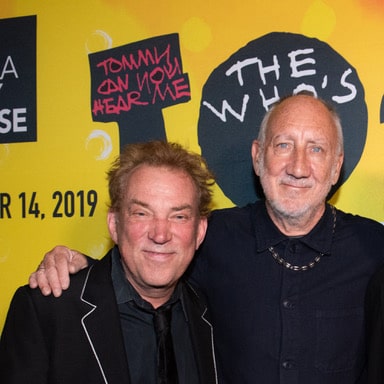
Nearly 60 years ago, The Who released its fourth studio album – and blew up the entire concept of an album with the first commercially successful rock opera, a song cycle tracing the life and experiences of the “deaf, dumb and blind kid” Tommy, who goes from tortured childhood to becoming a godlike figure – itself a tortured existence. At 34 years old, the stage musical The Who’s TOMMY is nearly as venerable. Des McAnuff, who wrote the musical with Pete Townshend while artistic director of the La Jolla Playhouse, reflected on the current touring production, which he also directed.
What is your personal favorite number in the show, and why? Have you done anything different with that song for this tour?
From the time I first heard The Who’s album, I’ve loved every single cut. When staging the show for the first time, I always thought to myself, “Oh boy, here comes this one!” If there’s any kind of standout, it’s probably “Sensation.” “Sensation” is the song in which we discover that Tommy is a savant. It’s also the moment that his parents realize this, and I think many people find it really moving. I can’t say that we’ve changed the number as much as it’s evolved and hopefully deepened.
Tommy is almost 60 years old. What are the aspects and qualities that have made it endure for so long?
As one of our dramaturgs, Chad Sylvain, pointed out, “it’s about a boy who rejects existence as we know it. In Catcher in the Rye, Holden Caulfield turns his back on adulthood. In Tommy, Tommy turns his back on life itself.” It’s Tommy’s commitment to his own inner journey, which is basically all he’s got, that seems to get people to project themselves onto his consciousness. He goes from not being there at all to becoming a most formidable entity. It’s an amazing journey indeed.
How did the recent Broadway production differ from earlier productions? What design choices did you make, how are those executed on tour, and why were those choices important?
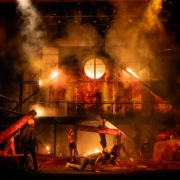
Technology has evolved so much since we started TOMMY, so we’ve had a much more elaborate paintbox on the Broadway production as well as the tour. Scenically, the show quite literally lights up. It makes the mystical part of Tommy’s voyage easier to portray vividly. TOMMY involves a great deal of visual storytelling. The libretto is poetic and advances the storyline thematically, but the staging has to take care of a good deal of the narration, which makes it challenging but also invigorating. It’s become more and more exciting to work on as a visual storyteller.
The Who has never been known for being quiet and retiring. Can you talk about the sound design for the show and how it balances the expectations of a Broadway musical with the power and energy of classic rock?
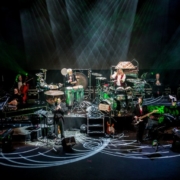
Gareth Owen is a spectacular sound designer. Once upon a time, he was the soundboard mixer for The Rolling Stones, so he really gets it. He also has created a very elaborate system to capture the sound in all its thunderous glory as well as its great subtlety. Along with our music supervisor, Ron Melrose, Gareth and team have, in my opinion, set the bar on electric music in the theatre.
TOMMY began as a concept album. How much, if at all, did you reference the film during the creative process, and what was your vision for translating the story to the stage?
The Ken Russell film is a completely separate entity to the theatrical version. The concept album was, of course, the foundation for the show in that the score was largely complete and many of the story points were suggested if not fleshed out from that extraordinary album. The first time I listened to it was after rehearsing with our garage band. We expected just to listen to a couple of selections and ended up playing the record cover to cover. I thought it was the most monumentally inspiring album I’d heard, eclipsing even “Sgt. Pepper.” Getting to work on the book and the direction with Pete Townshend has been a greatly significant part of my life.
The Denver Center for the Performing Arts (DCPA) NewsCenter is the organization’s editorial platform for stories, announcements, interviews, and coverage of theatre and cultural programming in Colorado. We are committed to producing accurate, trustworthy, clearly sourced journalism that reflects our mission and serves our community