DCPA NEWS CENTER
Enjoy the best stories and perspectives from the theatre world today.

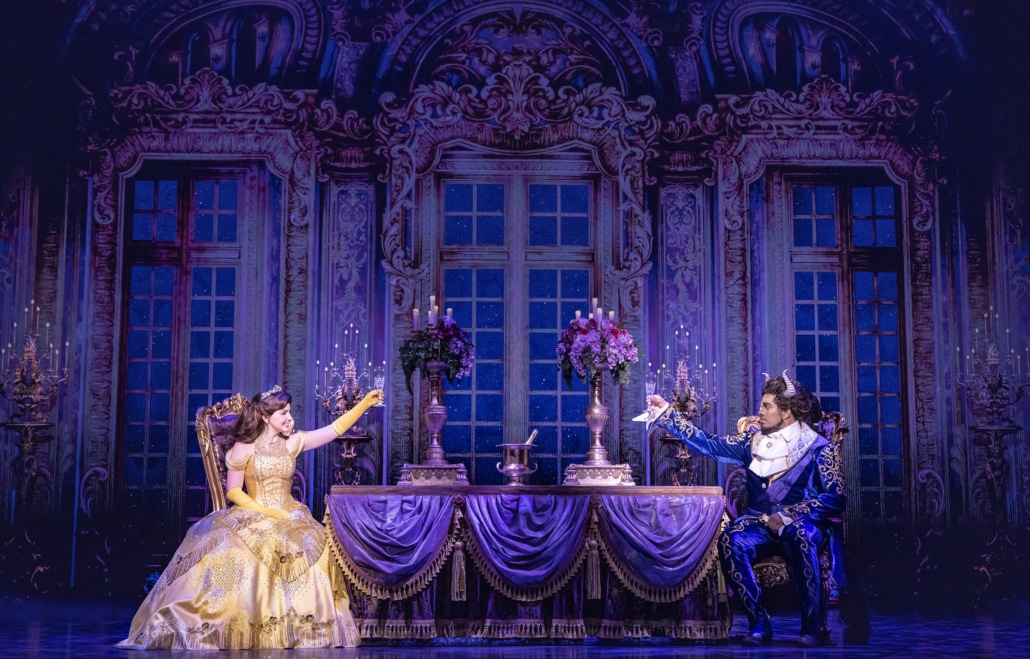
 Writer Linda Woolverton and director-choreographer Matt West describe the evolution of Beauty and the Beast from the screen to the stage — plus what’s new for this tour.
By Ruthie Fierberg, Broadway News
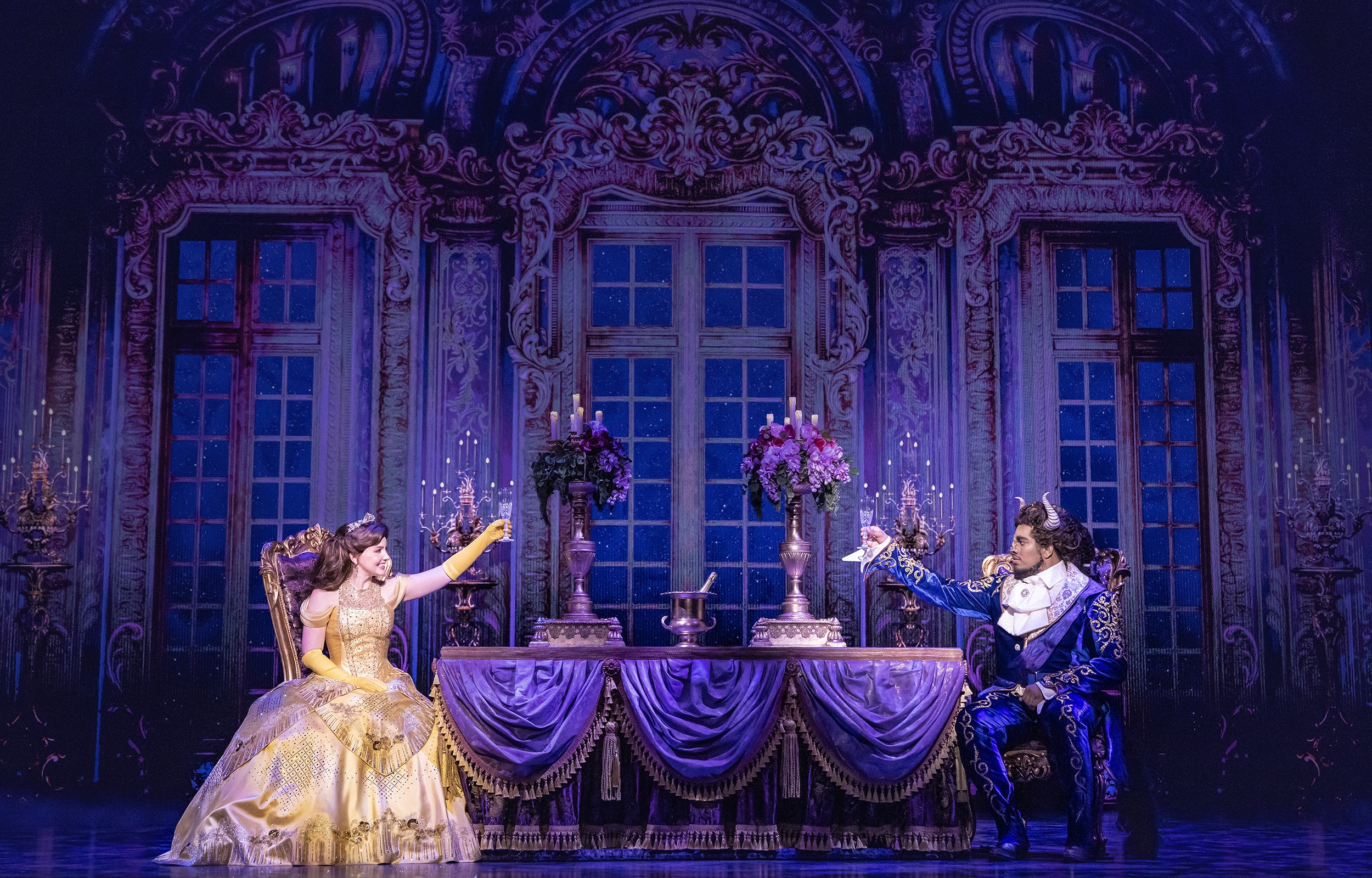
Kyra Belle Johnson & Fergie L. Philippe in Disney’s Beauty and the Beast. Photo by Matthew Murphy. (c) Disney
When Disney’s animated film Beauty and the Beast landed on silver screens in 1991, it changed the cinematic paradigm. “[Executive producer and lyricist] Howard [Ashman] really conceived of it as a Broadway musical in animation,” said the movie’s screenwriter Linda Woolverton. “It was the first time it had ever been done. Little Mermaid did a little, but Beauty just blew out the form.”
“We really made that statement that we were basically doing Broadway musicals,” Woolverton added. And in 1994, Disney mounted Beauty and the Beast in its inspirational form — opening as a full-fledged Broadway musical on the stage of the Palace Theatre. Woolverton penned the book for the stage adaptation, which was directed by Robert Jess Roth and choreographed by Matt West with a score of now iconic songs by Ashman, composer Alan Menken and lyricist Tim Rice.
The Broadway musical’s opening marked another paradigm shift — this time a theatrical one. Beauty and the Beast was the first Broadway outing for Disney, the production that would usher in the establishment of Disney Theatrical Productions and the dozens of stage shows it has since created. Since Beauty first bowed in 1994, the musical has played in the West End, on tours throughout the U.S. and the U.K. and in productions around the globe. Now, just over 30 years since its premiere, Beauty and the Beast has been revitalized for a new tour.
But don’t worry. It is still very much the Beauty and the Beast that won the hearts of millions of people. That said, transformation is in the show’s DNA. “One of the things that’s so lovely about Beauty and the Beast is that it’s a living, always growing piece of theater,” said West, who took over direction of the show in 2021 and is the director-choreographer of its latest tour. “We’re a team that loves [the show] so much that we continue to look at it, we continue to bring it into the contemporary world because it lends itself to that.”
After all, when Beauty first leapt from animation to the stage, it underwent changes. “In animation, you can do anything. You say ‘cut to,’ but [on Broadway,] we had to move people across the stage,” Woolverton recalled. “We had to figure out the horse, Philippe,” West remembered. “That horse, in the animated film, came back to tell Belle that something was wrong. We had to figure out things like that. It took a long time.”
The musical’s creative team also integrated new ideas about the castle’s servants — Lumiere, Cogsworth, Mrs. Potts and more — who had become enchanted objects. “We had this new conceit that they were gradually changing, which isn’t in the movie,” Woolverton explained. “In the show, they are gradually becoming more and more [inanimate]. So everybody’s got more stakes in Belle and the Beast coming together.”
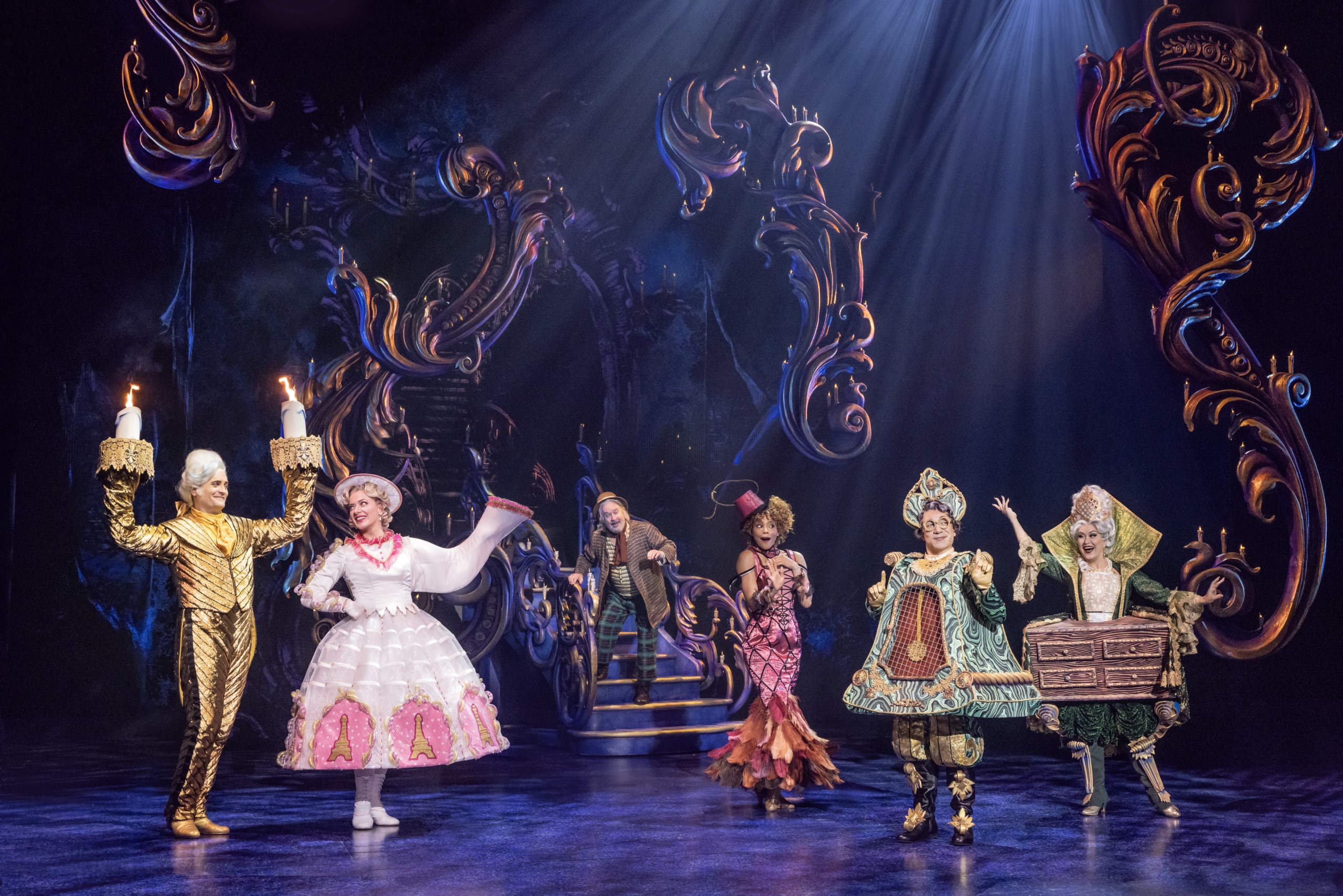
Enchanted Objects in Disney’s Beauty and the Beast. Photo by Matthew Murphy
“Linda expanded the script from the animated film in so many ways,” West added. The musical’s score also expanded — salvaging songs that had been cut from the animated version, like “Human Again,” and adding new ones, like Belle’s solo “Home.” But the core of the beloved characters has always remained the same, particularly Belle.
“Howard Ashman and I had decided we wanted to do a different kind of Disney heroine — not a princess, a heroine — who was a thinker, who wasn’t about what she looked like. She was proactive. [She] had a vision and read a lot. I don’t think we ever really said it in words, but really we were trying to create a new iconic Disney heroine. I think we succeeded.” — Linda Woolverton, Writer
Over the decades, Belle has only become a stronger, more insightful and more relatable character. In 1998, the Broadway musical’s team added the song “A Change in Me” — the heroine’s second-act power ballad. For this 2025 iteration, Belle wears reading glasses. “Those connective tissues to the audience are important, too,” West said. “Watching the first audiences come through, many of the young ones were in their Belle dresses. But so many of the young people were wearing glasses. I called Linda and said, ‘What if Belle wears glasses when she reads, to connect to these kids?’”
The show itself has also evolved — from the script to the choreography to the design — in order to continue to feel contemporary. Woolverton wrote an entirely new scene for this production and has updated some of the language. “Terminology changed,” Woolverton said. “We don’t call the Beast ‘master’ anymore. We say ‘lordship.’ Just simple things like that that make it feel less stuck in the past.”
“Disney is so great about coming to us and saying, ‘What would you like to do?’” West said. That willingness to innovate has led to entirely new choreography for this Beauty.
“I’ve always wanted to see ‘Be Our Guest’ as a tap number,” West shared. “And so now, it’s got every flavor of dance in it. It’s got the tango, it’s got Big Band and it ends with a big swing tap number.” “We’ve been able to do that with all the numbers,” West revealed. “‘Human Again,’ the ‘Gaston’ pub number — the [mug] clinking is still in there, but in a whole other way. Even in the opening number of ‘Belle’ we’ve added things.”
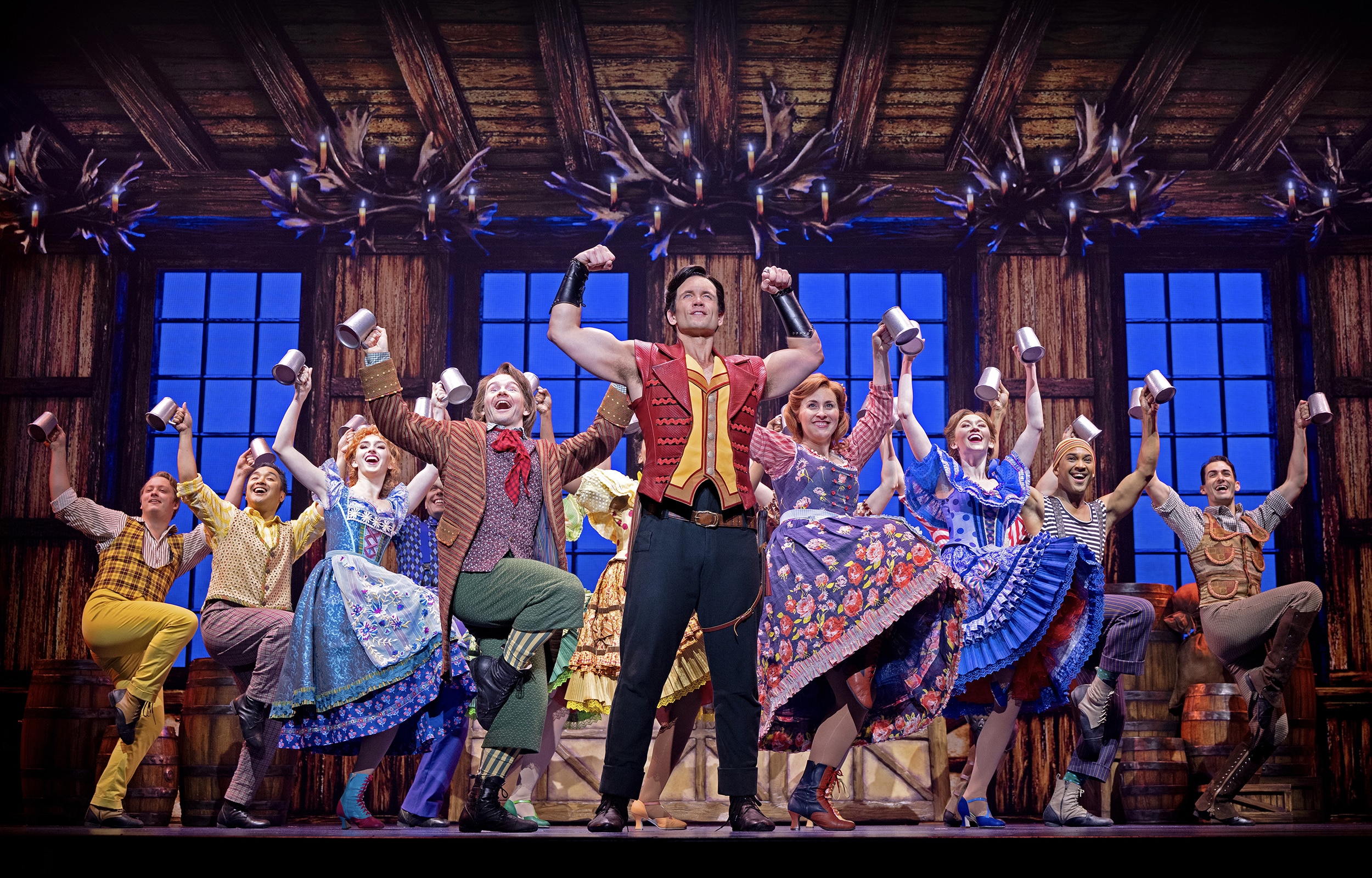
Harry Francis, Stephen Mark Lukas & Company
From a production and design standpoint, Beauty has also leveled up. Ann Hould-Ward has slightly revamped her Tony Award-winning costume design, integrating more luscious fabrics and textures and refining the silhouettes of characters. Natasha Katz has reinvigorated her Tony-nominated lighting design, leveraging today’s technology to sculpt with color and warmth for a more vibrant visual. Stanley A. Meyer combines analog and digital aspects to elevate the enchanted nature of his scenic design. The costumes, sets, lights, props and sound equipment travel in nine trucks to deliver this fresh spectacle in every city. “The show has grown up,” said West. “When you go to see Beauty and the Beast, you still have that warm, fuzzy feeling, because we are true to the characters. They may look a little different in textures and clothing, but we’re using all the opportunities to heighten the show and bring it to life in new ways.”
Still, sometimes heightening the experience means trusting in what has always been there: a dazzling score, an iconic story, not to mention the original stagecraft of the Beast’s climactic transformation — all of which remains true to the original.
As West said, “Some magic is so amazing, you don’t mess with it.”
The Denver Center for the Performing Arts (DCPA) NewsCenter is the organization’s editorial platform for stories, announcements, interviews, and coverage of theatre and cultural programming in Colorado. We are committed to producing accurate, trustworthy, clearly sourced journalism that reflects our mission and serves our community. This article was originally published on BroadwayNews.com.