DCPA NEWS CENTER
Enjoy the best stories and perspectives from the theatre world today.

by Suzanne Cohen
The exuberant musical comedy Singin’ in the Rain, released in 1952, needs almost no introduction. In fact, the American Film Institute ranks it the greatest movie musical of all time. Let’s pull back the curtain on the stories behind this Hollywood classic.
The project started as MGM producer Arthur Freed’s plan to revive songs he’d written with composer Nacio Brown. Screenwriters Betty Comden and Adolph Green created a story around the songs, and Gene Kelly and Stanley Donen co-directed.
Set during Hollywood’s rocky transition from silent movies to talkies in the 1920s, the movie follows silent-film star Don Lockwood (Kelly), his sidekick Cosmo Brown (Donald O’Connor), and his co-star Lina Lamont (Jean Hagen). Lina’s squeaky voice threatens to derail her career and their latest picture. Enter Kathy Selden (Debbie Reynolds), an aspiring actress whose voice may be just what Lina needs.
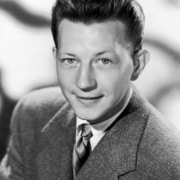
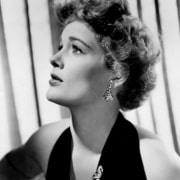
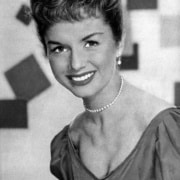
Don and Lina’s first talkie flops at its preview. Then the plot thickens: Don, Cosmo, and Kathy decide to turn it into a musical, with Kathy secretly providing Lina’s voice.
Cue the rain and the title song. Giddy from falling in love, Don swings around a lamppost, singing and splashing through puddles in one of Hollywood’s most iconic displays of pure joy.
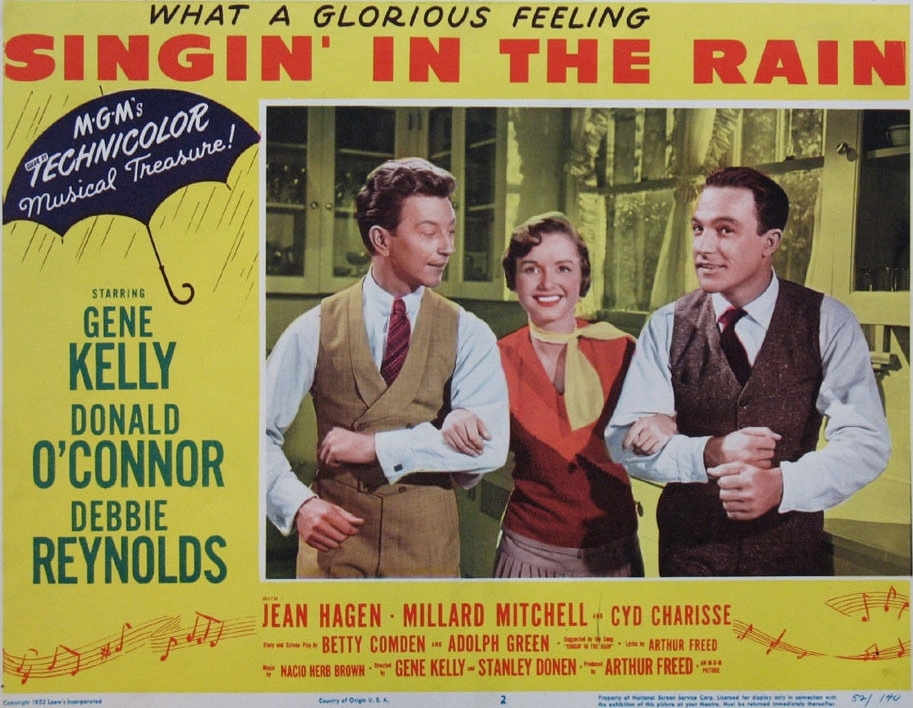
Singin’ In The Rain Lobby Card from WikiCommons. Public Domain
Lights, camera, complications: The film makes movie magic look effortless, but many of its most memorable moments were fueled by blood, sweat, and tears.
For Kelly’s title number, puddles were specially created, and rain was piped onto the set. Kelly performed it with a severe cold, soaked in his heavy wool suit. While popular myth claims milk was added to the water to make the rain visible, Kelly and Donen said strategic backlighting did the trick.
Nineteen-year-old Reynolds—a gymnast but not a trained dancer—recalled struggling through the grueling dance routines. Her feet bled, and she hid under a piano, crying. Fred Astaire found her there and invited her to watch him rehearse, helping restore her confidence.
And O’Connor, a four-pack-a-day smoker, powered through a series of visual gags, backflips, and other physical stunts in “Make ’Em Laugh.” The routine combined improvisation with careful choreography, making the acrobatics appear spontaneous. After filming, he was unable to get out of bed for days.
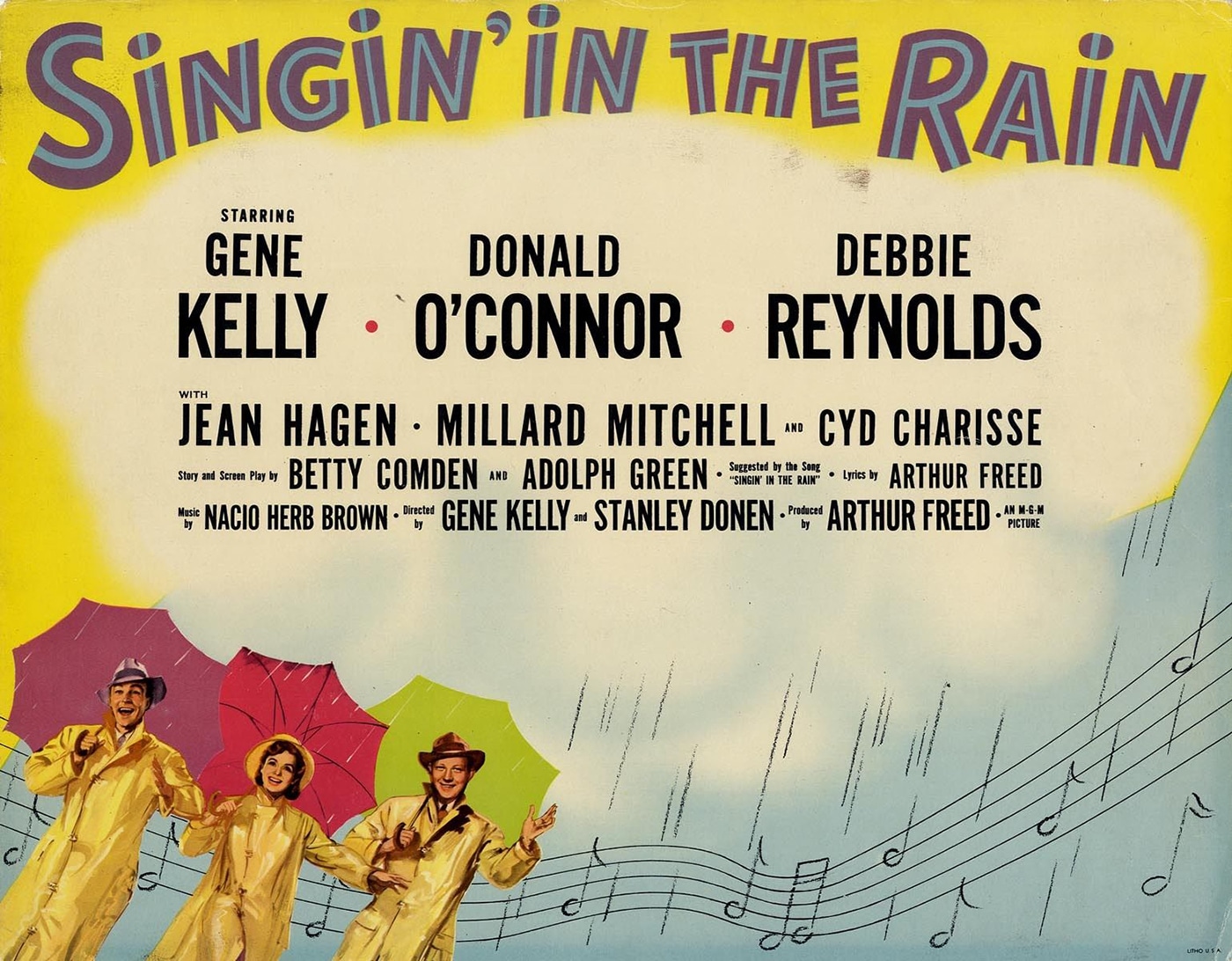
Singin’ in the Rain lobby card. Originally produced by MGM. In the public domain.
The devil was in the details. For instance, tap-dance sounds were added afterward — such as when Kelly supplied some of Reynolds’ taps in “Good Morning.” In “Moses Supposes,” Kelly and O’Connor trashed their diction coach’s office, making so much noise they ruined the live audio. Technicians had to dub every single tap and crash.
Reynolds sang most of her own songs, but uncredited singer Betty Noyes dubbed her on “Would You” and “You Are My Lucky Star.”
The ultimate irony? In the story, Kathy’s voice stands in for Lina’s. In reality, Hagen’s speaking voice was lovely and rich. In one scene, the illusion becomes more tangled: Hagen dubs Reynolds, who is dubbing Hagen.
The climax shines a spotlight on this charade: At the premiere, Kathy’s forced to sing behind a curtain while Lina lip-syncs on stage. When the curtain’s pulled aside, the truth comes out, finally giving the “ghost singer” the recognition she deserves.
After all, the show must go on. What a glorious feeling!
The Denver Center for the Performing Arts (DCPA) NewsCenter is the organization’s editorial platform for stories, announcements, interviews, and coverage of theatre and cultural programming in Colorado. We are committed to producing accurate, trustworthy, clearly sourced journalism that reflects our mission and serves our community.