DCPA NEWS CENTER
Enjoy the best stories and perspectives from the theatre world today.

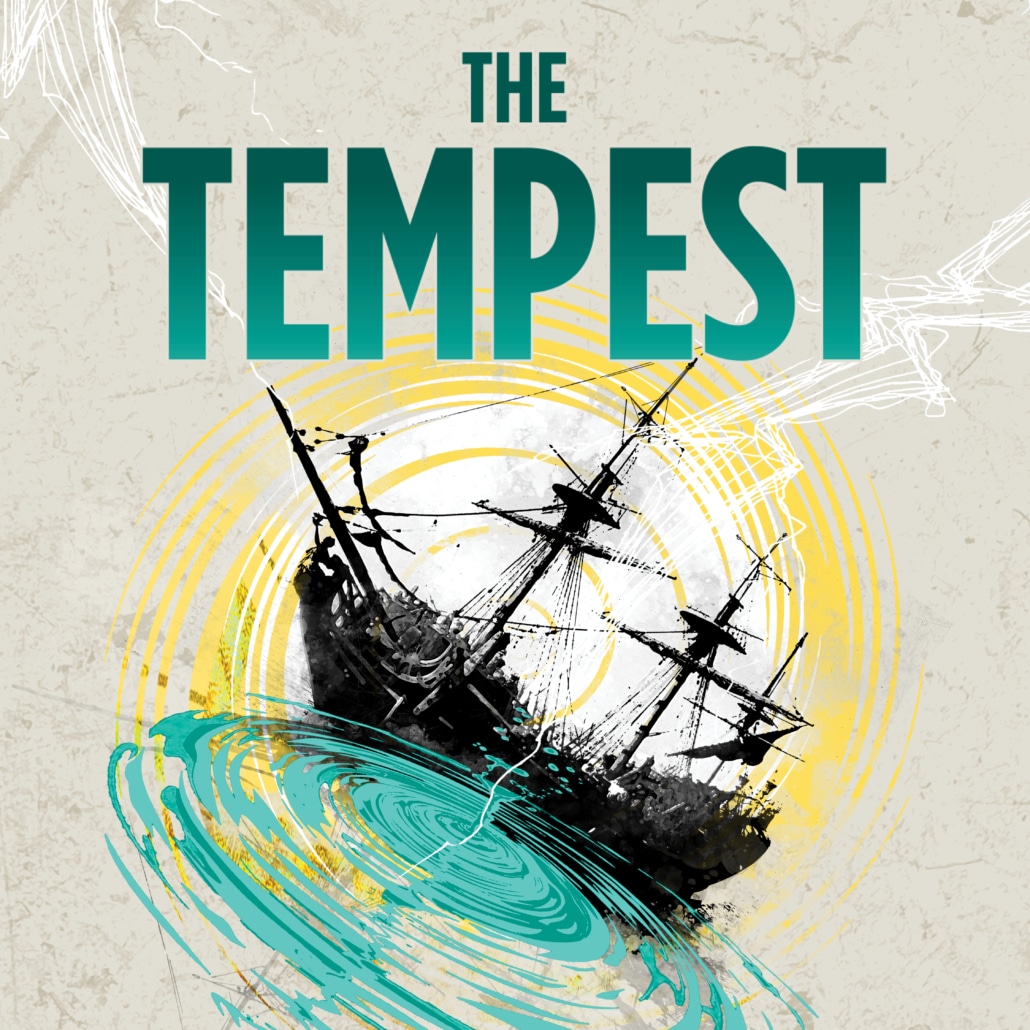

Near an unnamed island, a storm rages. But this is no ordinary gale — it’s 12 years in the making, the rain and fury of Prospero, an exiled duke who seizes the chance to punish his enemies when their ship draws near his barren isle. And Prospero is no ordinary duke. He’s also a powerful magician who commands the island’s spirits to enact his plans against his shipwrecked foes, as well as a loving yet controlling father to his 15-year-old daughter, Miranda.
Written around 1610-11 and considered by many scholars to be Shakespeare’s final play, The Tempest offers audiences a potent brew of supernatural spectacle, family dynamics, rich language and music, and contemplation of revenge and forgiveness. And while those qualities might sound typical for a Shakespeare play, they manifest quite differently on the enchanted water-locked landscape.
For instance, the two spirits — Caliban and Ariel — are under control of a human. Unlike the mysterious ghost of Hamlet, the witches of Macbeth, or the mischievous sprites of A Midsummer Night’s Dream, the mystical inhabitants of The Tempest must follow the agenda of a person whose magical powers come not from divine right or an esoteric source, but from books and learning. Through enough study and patience, humans can make the invisible world visible. Illusions can be controlled.
Half-human, half-spirit, Caliban is the son of a witch from the island who died before Prospero and Miranda arrived, while Ariel was imprisoned in a tree by this same witch and recently set free by the exiled magician. Caliban is an earthy creature, deeply connected to the land and forced into physical labor. Ariel belongs to the air and uses sweet songs and spells to carry out Prospero’s bidding, while also seeking liberation from his master. Incidentally, modern scholars have also compared the treatment of the spirits and the island environment to indigenous people in the Americas during the Age of Exploration. They posit that through this play, Shakespeare was also navigating the ideologies and power dynamics of the European empire as it spread across the world.
Of the enemies washed up on the shore, one of them happens to be Antonio, Prospero’s younger brother who usurped him as the duke of Milan, as well as Alonso, King of Naples, who assisted Antonio in the deed. The treachery is not merely political, it’s personal.

Chris Coleman, Director
“In so many of his plays, Shakespeare is obsessed with betrayal and bastards,” notes director Chris Coleman. And while the ruling brothers are legitimate heirs, there is resonance in their struggle for the rightful place in a kingdom or a family. Coleman observes: “Over and over again, there’s a bastard who feels shunned, and pushed aside, and is seeking to be honored in a way that they deserve to be. And in Shakespeare’s plays, there’s usually a profound betrayal that causes disruption of the social order, and there’s revenge, and usually, someone dies.”
Indeed, the bard’s other work often features a bold, external crisis that changes everything: physical violence such as the fatal stabbing in Romeo and Juliet, a grab for the throne in Julius Caesar, a deception such as Iago whispering into Othello’s ear. But when time for the crisis comes, The Tempest takes a turn toward self-reflection. “In this play, the turning point is a quiet conversation with Prospero and Ariel,” says Coleman. “That moment changes Prospero’s trajectory — it becomes about orchestrating forgiveness.”
“At first I found it puzzling because it feels so strikingly different from all his other plays,” continues Coleman, wondering about the English playwright’s inspirations toward the end of his artistic life. “But in another way, it feels perfect because it’s really the awakening of empathy.”
He also notes that this turning point feels apt for Shakespeare’s final play and theater in general:
“I think that is the central wish and gift of this art form. You step into somebody’s shoes that you might not get to spend time with in your working day life, and you get to experience their world through their eyes and feet. How amazing that at the end of his career, empathy is what’s on his mind.”
The empathy is enriched by the music and songs within the play, most of it used to signify magic. As music wafts across the stage, characters are guided across the island, lulled into enchanted sleep, and reawakened. Ariel’s famous song, “Full Fathom Five,” consoles Ferdinand, the shipwrecked Prince of Naples, who mourns his supposedly drowned father. “Of his bones are coral made / Those are pearls that were his eyes,” intones Ariel, conjuring images of beauty and transformation in place of a grim death. The song eventually leads the prince to Miranda, sparking attraction between the two youths. Prospero masterminds them into a romantic relationship, but in spite of the elder’s tricks, they would have likely fallen in love anyway. As the new generation of royalty, their shared, genuine love offers the hope of reconciliation for a torn kingdom and kin.
With its jazz influences, this production leans into the theme of music as magic — a dream, even — and its ability to enchant, console, and lead to forgiveness. Even if the island is anonymous, with hints of an ancient Mediterranean civilization, and even if the costumes look like 16th century Italian attire, the jazz standards enhance this production’s tone by harmonizing it with both the contemporary world and the dream world. It’s an experience that raises a question for the audience: What kind of magic do you want to see in the world?
For Coleman, the value of The Tempest comes in its themes of forgiveness, empathy, and restoration, even in the face of revenge and anger. “In the world, I want to see peace,” he muses. “I want to see us as a force for peace in the larger world, and I want leadership with moral clarity — that’s the magic I long for in the world.”
As for the world of this production of Shakespeare’s final play, the director notes, “Hopefully the magic will be the discovery of this story coming to you — the music making it feel more accessible, and the play allowing you to find the compassion in your own heart. That’s something we can all benefit from.”
Stay for a post-show discussion after the evening performance on October 13 and 27. Free with paid ticket to The Tempest.
The Denver Center for the Performing Arts (DCPA) NewsCenter is the organization’s editorial platform for stories, announcements, interviews, and coverage of theatre and cultural programming in Colorado. We are committed to producing accurate, trustworthy, clearly sourced journalism that reflects our mission and serves our community.