DCPA NEWS CENTER
Enjoy the best stories and perspectives from the theatre world today.

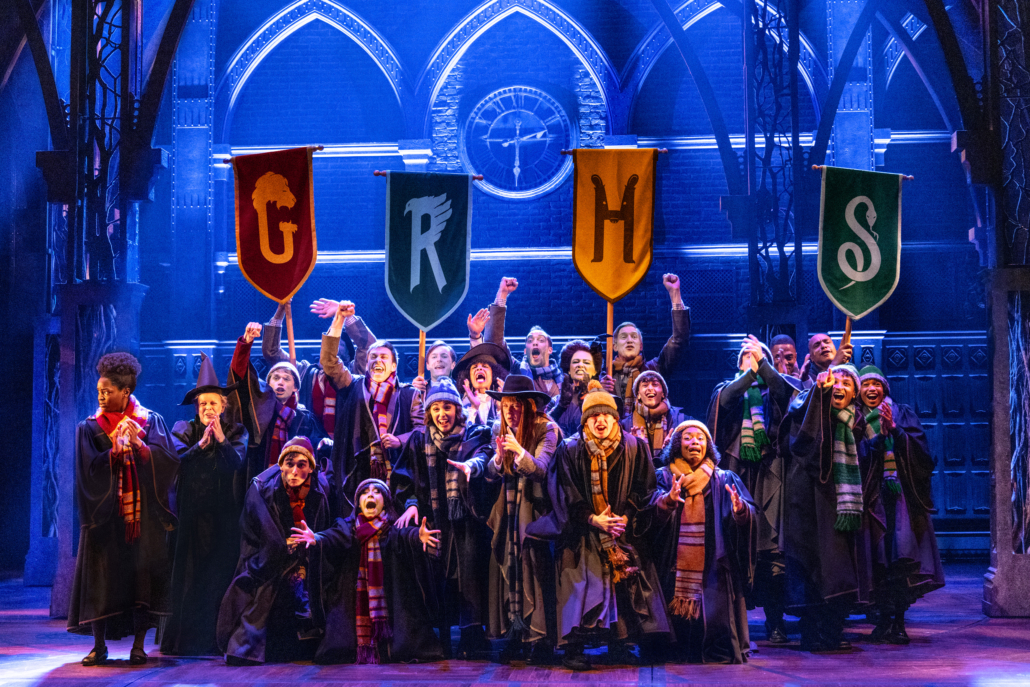
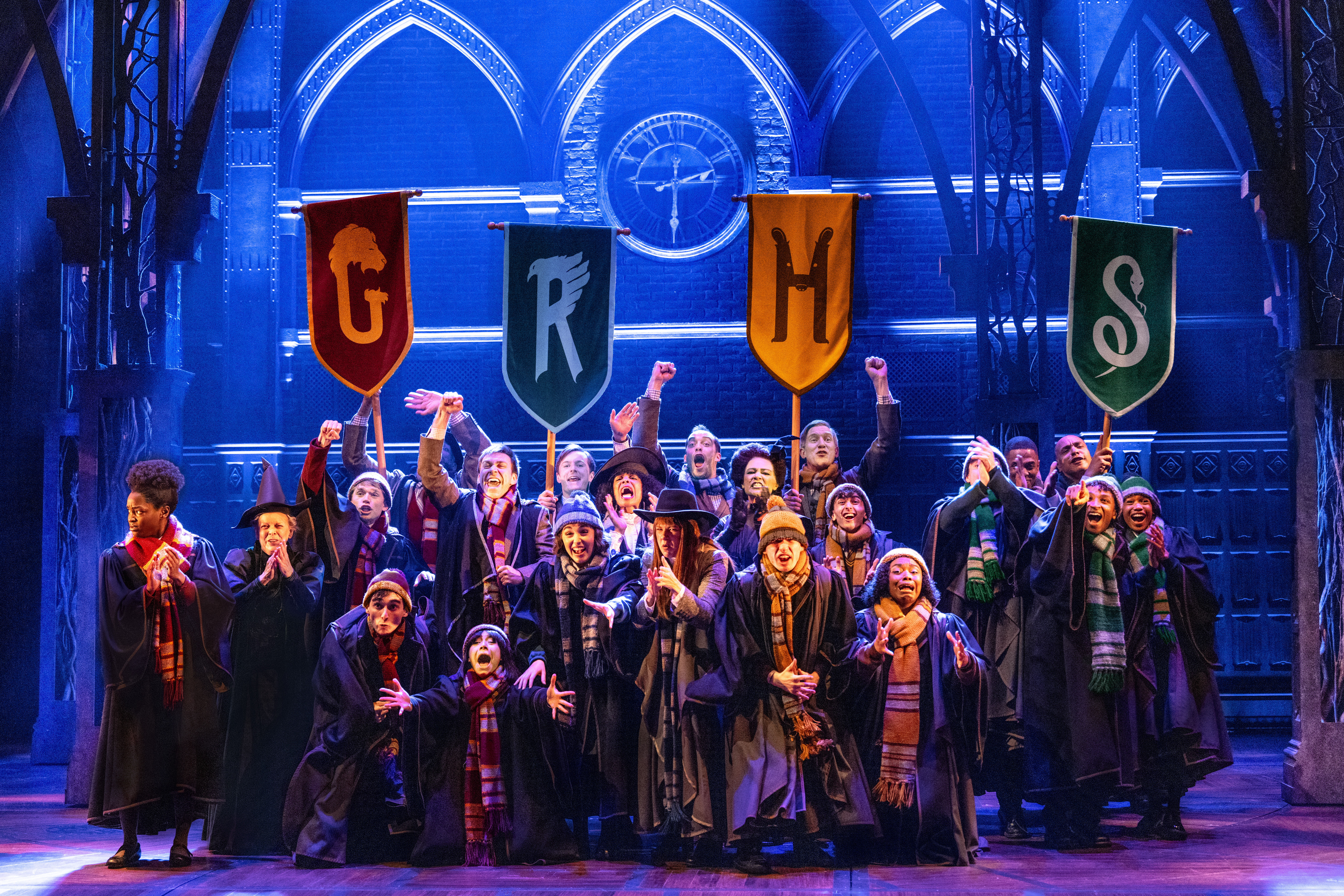
Harry Potter and the Cursed Child North American tour. Photo by Matthew Murphy
Many producers had floated the idea of creating a Harry Potter musical, J.K. Rowling had always politely declined. But a play about the adult Harry, inspired by the epilogue of Rowling’s seventh and final novel? Now, that idea intrigued the author whose books have sold more than 600 million copies worldwide. Together with playwright Jack Thorne and director John Tiffany, she jumped forward 19 years to take her beloved characters and their children on a world-changing adventure molded by Thorne into a Tony Award-winning play. Now, as Harry Potter and the Cursed Child embarks on its first national tour, Thorne, Tiffany, and lead producers Sonia Friedman and Colin Callender look back on the origins of this magical coming-of-age story.
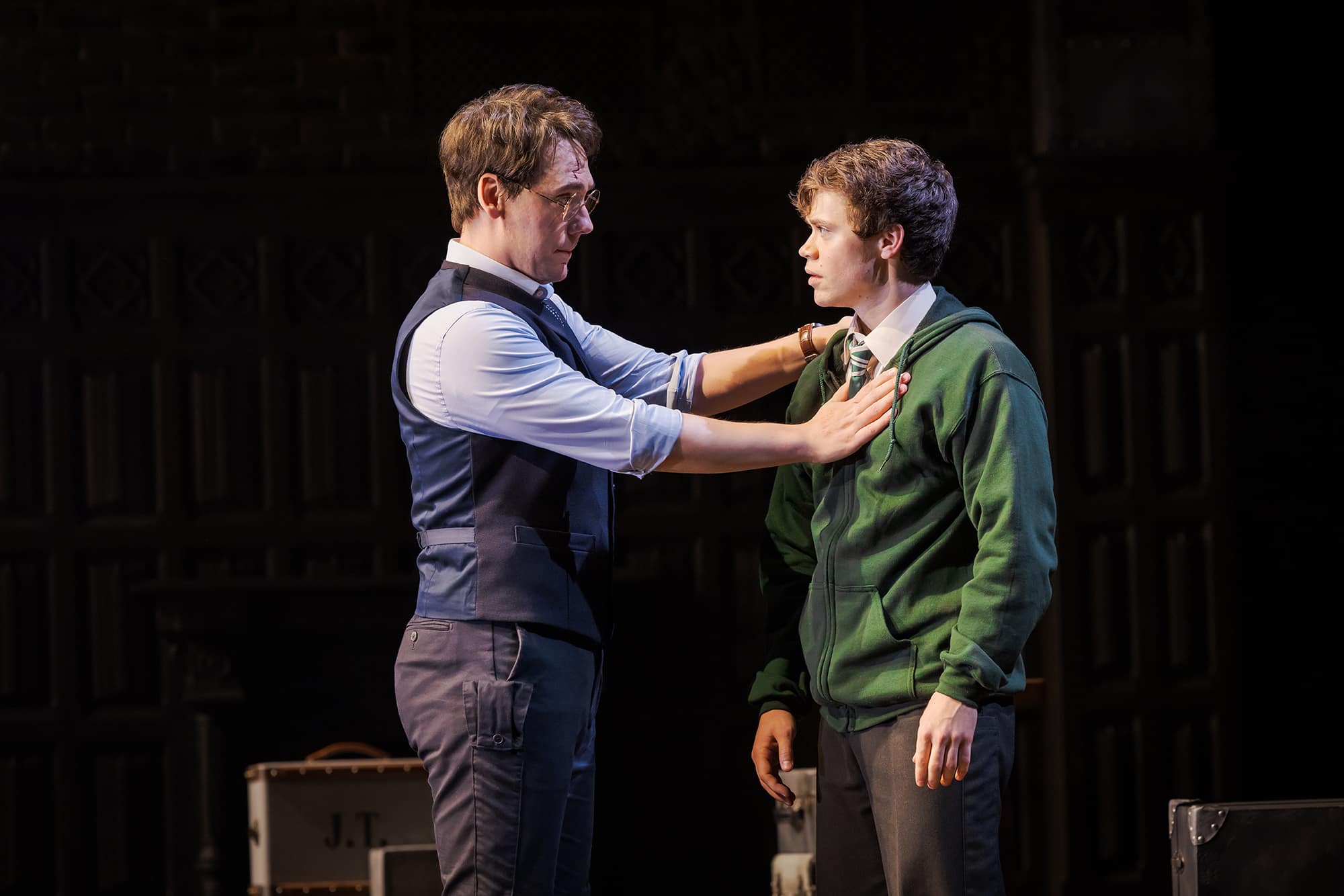
John Skelley and Emmet Smith
Colin Callender, Producer: People had been approaching J.K. Rowling about doing a musical about Harry Potter, but she didn’t like musicals. Sonia Friedman and I thought, “What about a play?” We were interested in the idea of how Harry Potter grew up and learned to be a dad when he didn’t have any role models, and what it would be like to be Harry’s son. We met with Jo [Rowling], and she said, “This idea of exploring the family dynamic is very interesting to me.” John Tiffany was at the top of our list of directors — his work is enormously imaginative and theatrical — and he had just directed a play by Jack Thorne, so we thought the combination could be wonderful.
Sonia Friedman, Producer: My family are storytellers, and I was most intrigued by the story of how Harry Potter’s child copes with having a superstar celebrity, the most famous wizard on the planet, as a dad. And Jo was intrigued with exploring what was going on in Harry’s mind as an adult. At that time, she had no interest in writing another novel or doing another film, but she felt that there was some unfinished business with Harry. And so she said, “Yes — this a story I would like to be told in this form for my fans and for families.” She was unbelievably generous with her time and her characters and together with Jack and John they explored what the story could be.
John Tiffany, Original Story & Director: At the time I was approached about finding a life onstage for Harry Potter, I was working with Jack Thorne, a huge fan of the books, who is brilliant at writing fantasy and making it feel incredibly human. We started talking with Jo about the final scene in her novel, in which Harry and his wife, Ginny, are sending their younger son, Albus, to Hogwarts for the first time. It seemed natural from that point to follow two generations — the parents and the kids.
Jack Thorne, Original Story & Playwright: It was amazing to sit with Jo and John and say, “What do you think Harry will be doing now? What will Hermione be doing?” Harry is a very capable wizard, but he never really addressed his childhood trauma. Albus has found the burden of being Harry’s son very difficult, and Harry doesn’t quite know how to help him. I was interested in the idea of what it’s like to go to Hogwarts when you don’t fit in, because I was someone who struggled in school. I’m drawn to outsiders, and so are Jo and John.

(l-r) Ebony Blake as Hermione Granger, Naiya Vanessa McCalla as Rose Granger-Weasley, Matt Mueller as Ron Weasley, Caleb Hafen as James Potter Jr., John Skelley as Harry Potter, Trish Lindstrom as Ginny Potter, Emmet Smith as Albus Potter
Tiffany: I’ve always had the sense that Hogwarts was a world that belonged on stage. I could see suitcases floating and cloaks whirling; arches and columns that could become trees in the forbidden forest. In some ways, a play is more exciting than a book or movie because it’s happening in front of you.
Friedman: Theater is what I’ve always done, and what I will always do! It’s live, it cannot be replicated, and every performance is unique. The cliché is true: You go on a journey through the course of a show, and you can be changed by it. We wanted to do for theater what Jo had done for books — bring a whole new generation of young people to the theater who had never thought of it as something that could be theirs.
Thorne: There is something about the process of sitting together in a room and watching a story being told that is so intimate and wonderful. This show is a great big mash of movement and storytelling, in which every element of stagecraft speaks to the others.
Callender: In the theater, you can explore the emotional landscape of the characters in a way you can’t necessarily do on film or on the page. You can engage the audience in an emotional journey that’s very powerful; they become your partner in telling the story.
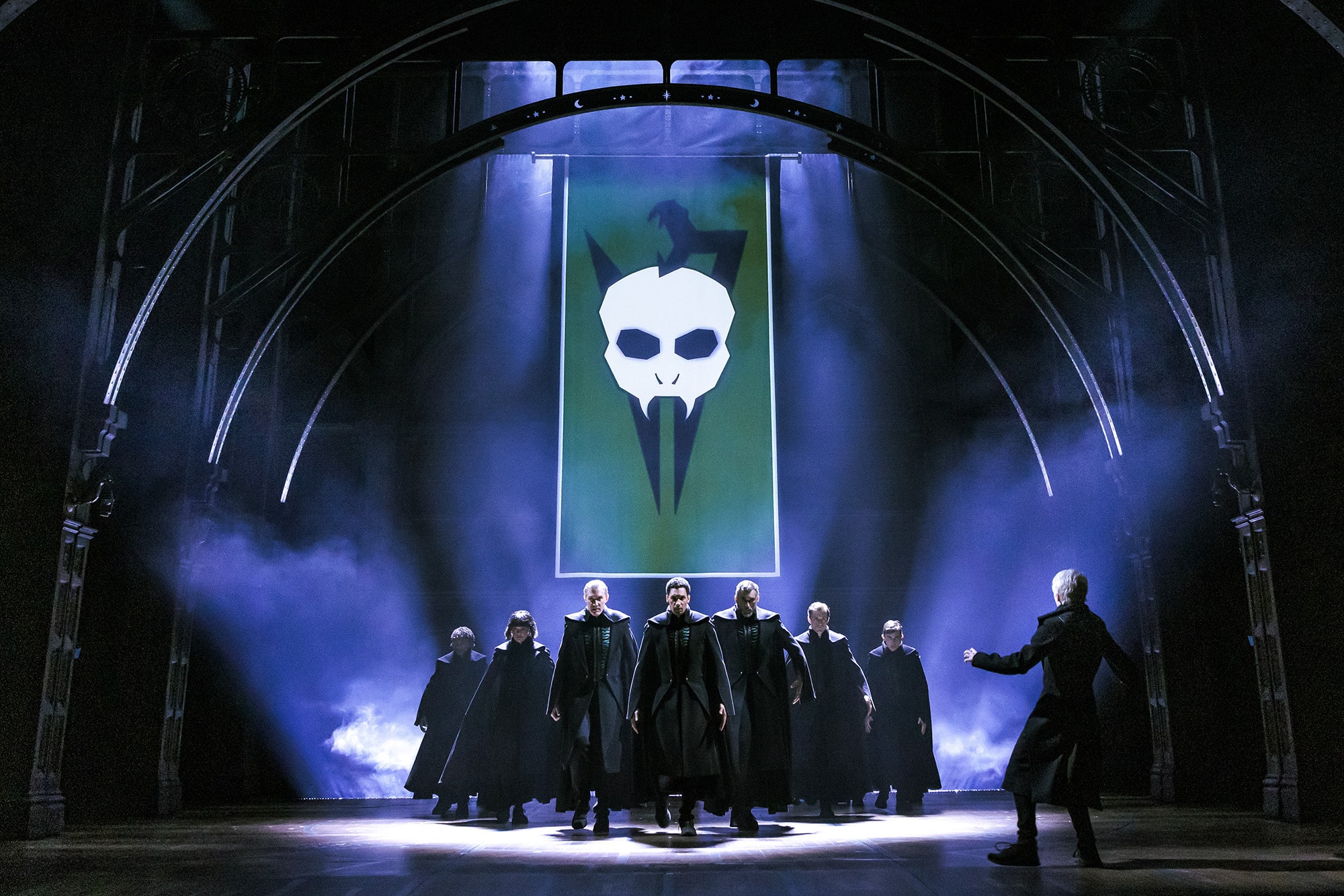
Harry Potter and the Cursed Child North American Tour
Callender: We originally envisioned a simple piece, maybe Harry sitting on a bench on stage. But as Jack and John started mapping out the story, they said, “The essence of the books and movies is that they’re epic, and the audience will come expecting something epic.” It was a leap of faith that resulted in the play growing into the spectacle it became. And yet some of the most powerful moments are just two actors talking: a father and son; a husband and wife; two friends. It’s the personal drama that makes it so compelling.
Tiffany: My first call was to Steven Hoggett, my longtime collaborator, who I knew would jump at the chance to find a physical vocabulary for the show. My next call was to Jamie Harrison, an expert at old-school Victorian illusions. We have spells flying across the stage, but I wanted the show to feel very rooted for the audience. What’s amazing about the fantasy world of Harry Potter is that it allows you to explore the human experience in a magnified and dramatic way.
Thorne: It’s a genuine collaboration between the actors and creative artists in a way that I don’t think will ever happen for me again. Every element on the stage speaks to the other elements; that’s the secret.
Friedman: What we achieved with Harry Potter is without precedent in world theater. It’s an absolute work of art.
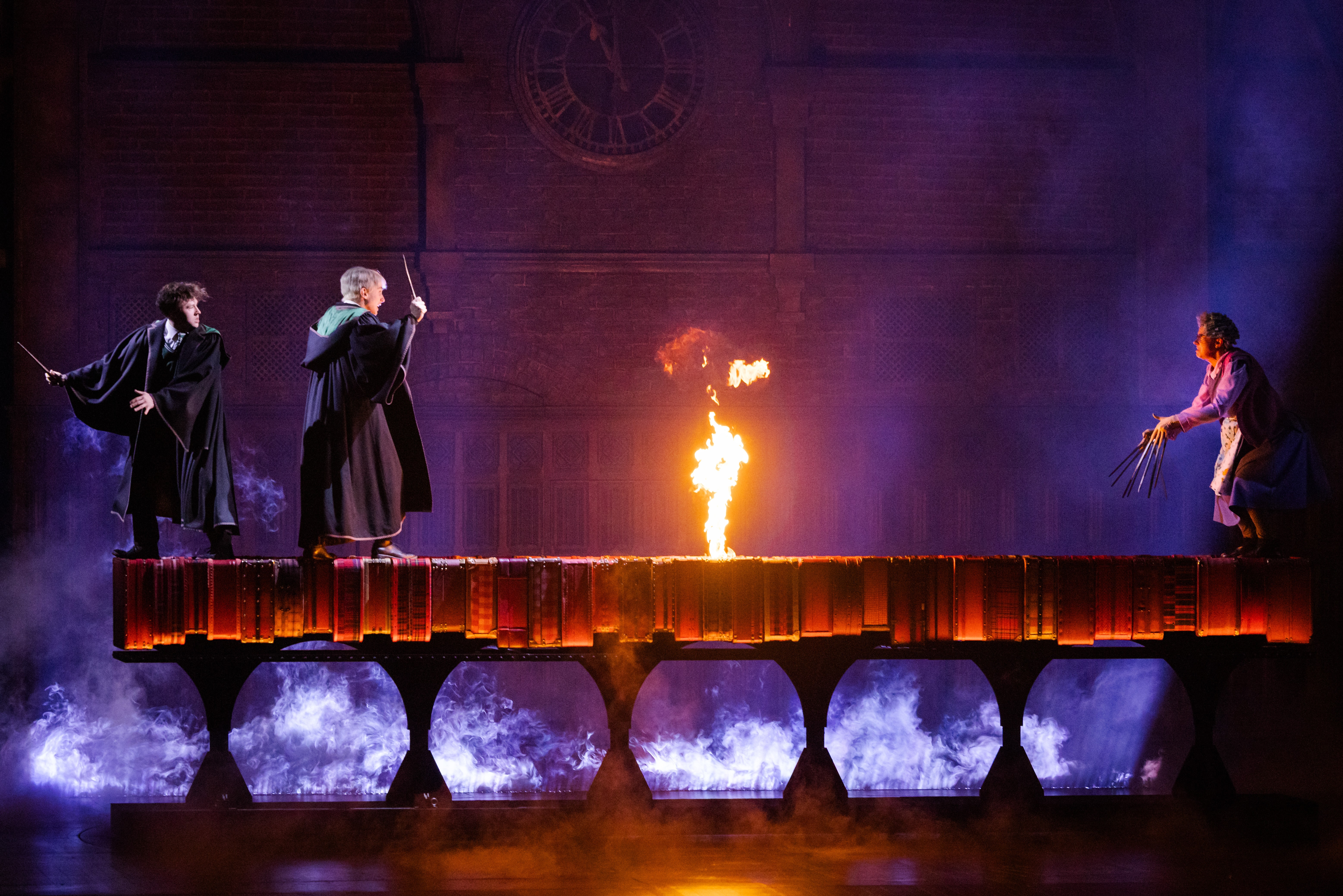
l-r: Adam Grant Morrison, David Fine, Maren Searle.
Photo by Evan Zimmerman
Thorne: When I’m working with John and [Movement Director] Steven Hoggett, I always try to write the impossible, because I know they will set out to achieve it. Things happen in front of you, and you will not be able to understand how they happened. People disappear and other people appear in their place; brilliant illusions unfold. John and I wanted to harness fantastical elements you wouldn’t assume would be part of a Harry Potter story to show people what live theater is capable of.
Friedman: Even though the idea was for it to feel like Victoriana magic happening in front of your eyes, creating that was very complex. The story is universal, but you get to experience wonderful magic all through it.
Callender: Very early on, we decided to bring in the heads of every department — costumes, sound, lighting, production design, and so on — so that everyone was involved organically in the evolution of the illusions and magic. That’s what makes the piece feel of a whole — the stagecraft has a unity to it.
Tiffany: We worked together as a team from the beginning to bring this magical world to life, and according to audience reviews, it’s like nothing they have experienced before.
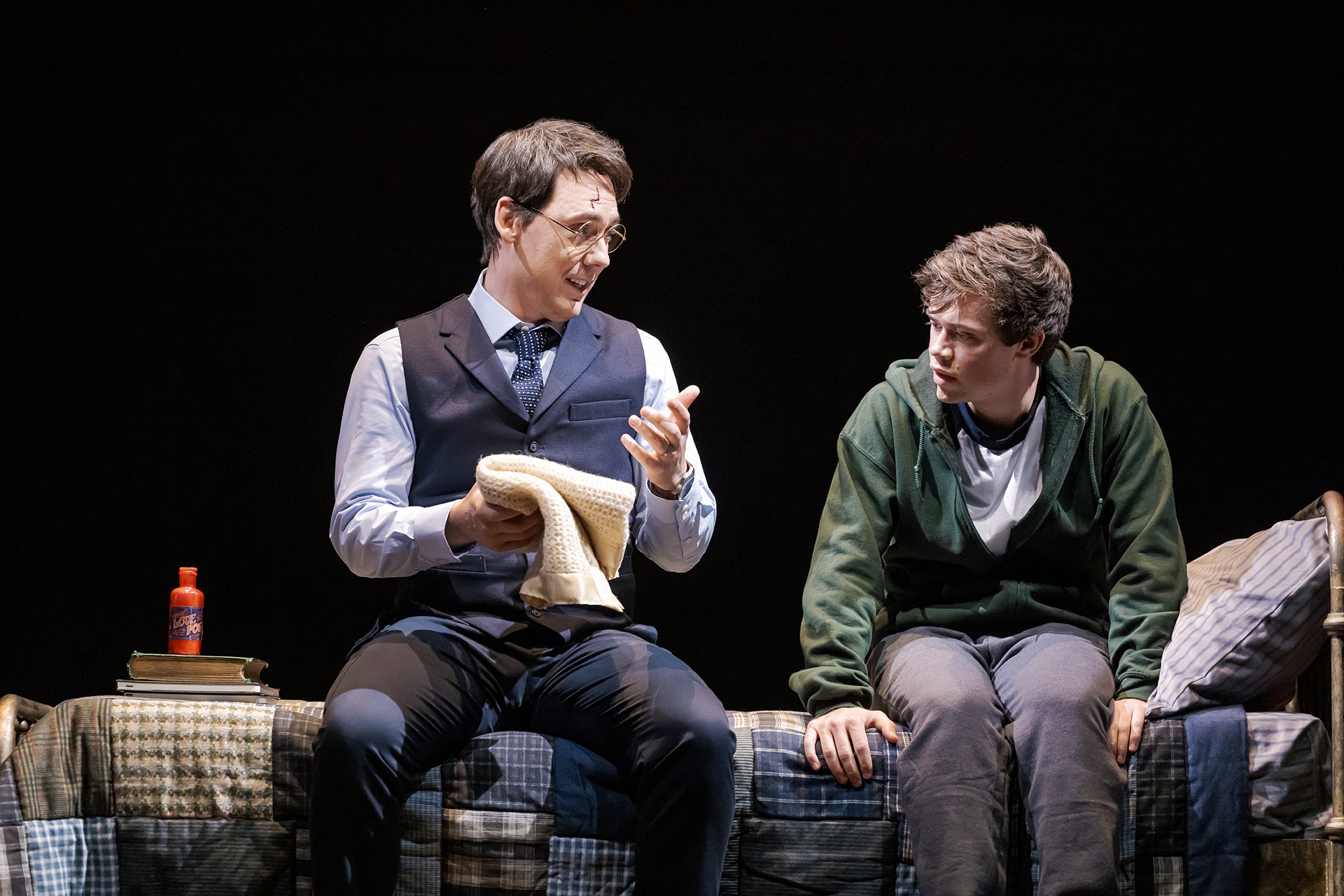
(l-r) Emmet Smith as Albus Potter and John Skelley as Harry Potter
Thorne: We wanted to write a play for people who love Harry Potter and people who don’t know Harry Potter; for people who are nine years old or 85 years old. We wanted to include everyone, because that’s what the books do: You can be any age and feel enchanted by them, and we hope the play does the same.
Friedman: It helps to know that Harry was a wizard, that he had great friends in Hermione and Ron, and that Dumbledore ran his school and Voldemort was evil, but you don’t need to know much more than that. This is a new story, and a whole new generation is coming to see it with their families. I can’t tell you how many fathers we meet who say that the show opened up the line of communication with their children.
Tiffany: What’s nice is that it’s such an exciting atmosphere at the theater, and I love overhearing kids explaining the story to their parents. The play is about the challenge of growing up, and the kids in the audience are going through that as they watch. And it’s a treat because Jo has always said that this play is the final chapter. When he and Albus are standing together at the end of the play, Jo said, “That’s everything I have ever wanted to say about Harry Potter.”
Callender: More than 50 percent of our audiences are first-time theatergoers, and we have an extraordinary number of repeat attendees. It’s wonderful to be introducing a new generation to the theater. The other thing that’s interesting is seeing audience members in their late 20s coming to see the show with their parents. They read the books together, and now they are sharing the experience of the play.
Thorne: My son was born one month before we opened the play in London — he is now eight — and we’ve read all the books. I took him to see the play a few weeks ago, and watching him watch the magic unfold onstage was glorious.
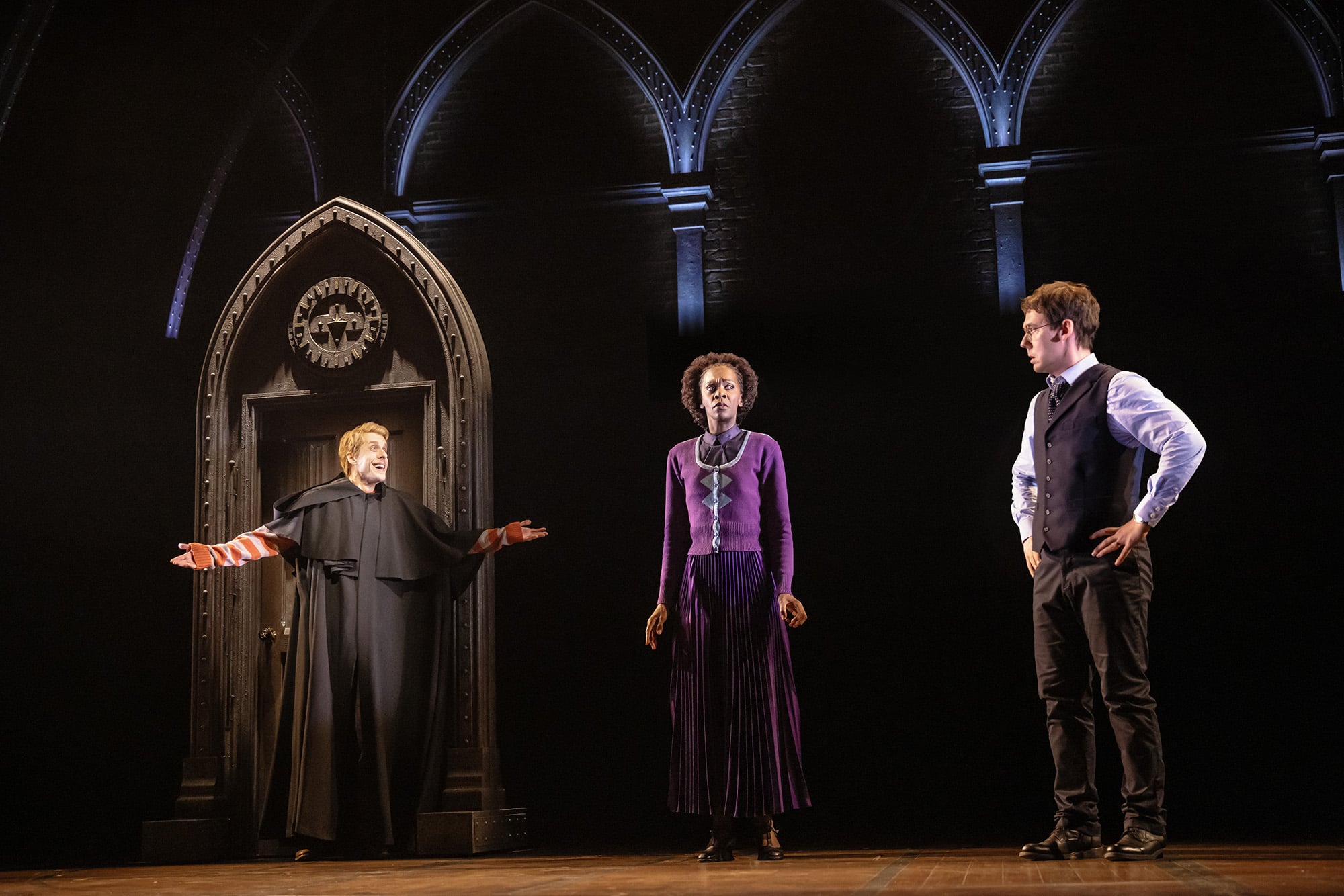
(l-r) Matt Mueller as Ron Weasley, Ebony Blake as Hermione Granger, John Skelley as Harry Potter
Friedman: It took months and months to build the show and fit it into the theaters in London and on Broadway. But over the past two years, we’ve been quietly working away, figuring out how to deliver the same magical experience, the same spectacle, the same wonder, in a way that could be put into and taken out of a theater in much less time, with a running time of under three hours. Between our original two-part, five-anda-half-hour version of the show in London; our condensed one-part for Broadway and for the tour, and our various foreign language productions, we have something for everyone. It’s amazing and without precedent.
Callender: For a long time, we thought we would not be able to create a touring version that didn’t require changes to the infrastructure of a theater. It’s a tribute to the collective genius of the creative team that they came up with a way to tell the story while keeping all the magic and illusions that make it so much fun to watch.
Thorne: It’s important to us to share the show with a wider community, even though that’s hard to pull off because the production is so technically difficult. John and the designers worked very hard to figure out how to do it, and we can’t wait to take it on the road.
Tiffany: We have a wonderful show, and we want as many people as possible to see it. The magic will still be there; it will still feel like you’ve entered Hogwarts. As much as possible, we will maintain the experience of seeing it on Broadway.
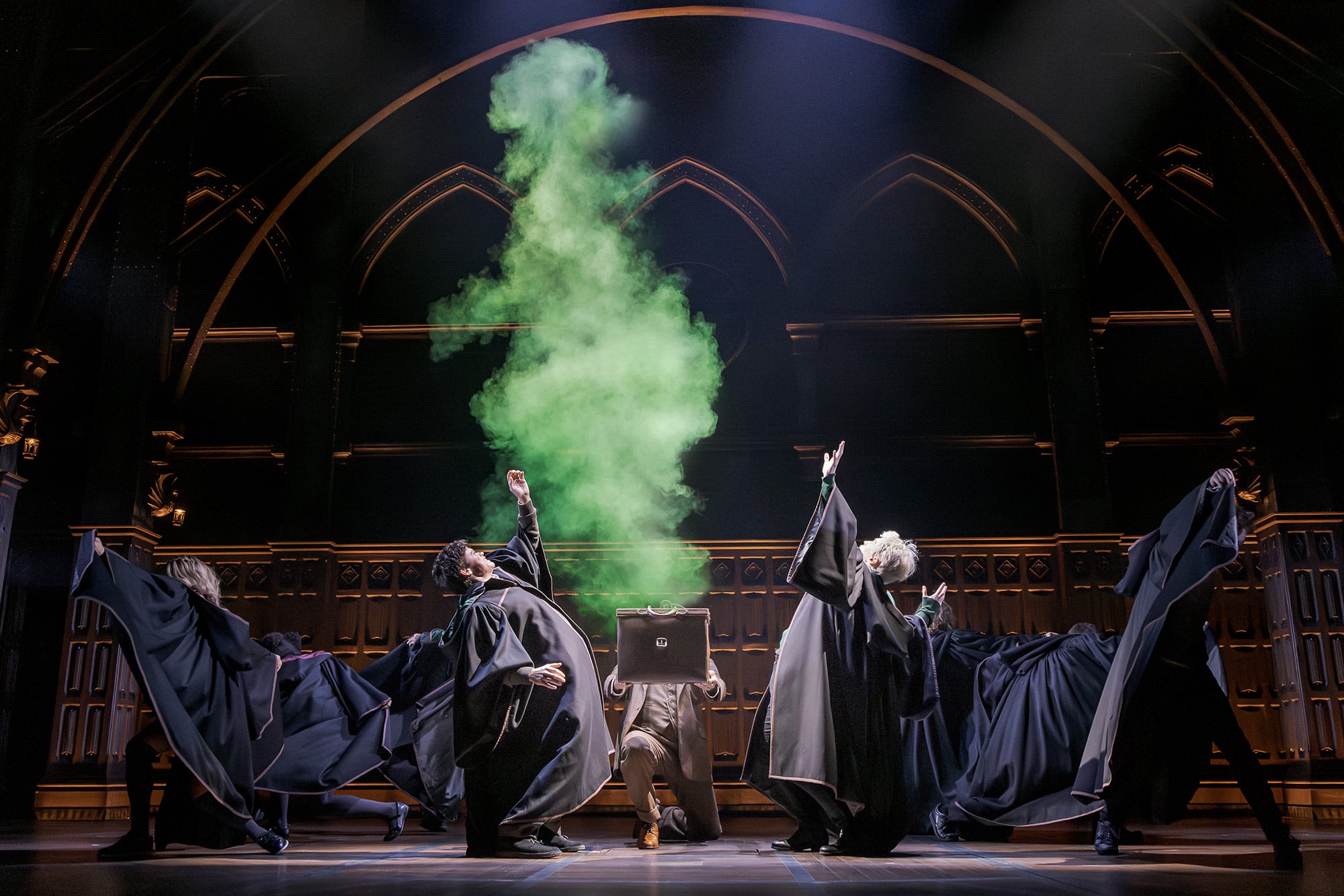
Harry Potter and the Cursed Child North American Tour. Photo by Evan Zimmerman
Thorne: It doesn’t surprise me, because J.K. Rowling is brilliant, and her books are the perfect synthesis of story and storyteller. When I was working on the play, I was so immersed in the books, I felt like I done a Ph.D. in Harry Potter, but when I read them aloud to my son, I discovered even more. They’re works of magic, and we wanted to serve that legacy. I’m pleased audiences think we have done that.
Tiffany: Being a teenager is the hardest thing in the world, especially now with social media, and I think that’s why so many kids cleave to the books. We felt a responsibility to do justice not just to Harry Potter but to theater as an art form. I wanted audiences coming out and saying, “That’s the best way to tell a story ever.”
Callender: There are certain themes at the center of Harry Potter that are universal — good versus evil; an orphan trying to find his way in the world. Our play is the story of Albus Potter and his friend Scorpius Malfoy, but it’s also the story of Harry Potter’s journey as an adult, coming to terms with who he is. It’s very much a story about growing up, so the popularity of that doesn’t surprise me at all.
Friedman: Jo is the most extraordinary storyteller, and her work will live on through generations — we’re seeing that with our show. There is now a version of the play for school groups, ages 11 upward, encouraging them to use their imaginations, which is what theater is all about. The fact that people who weren’t even born when we were thinking about this show will now be performing it in their schools is one of our greatest legacies.
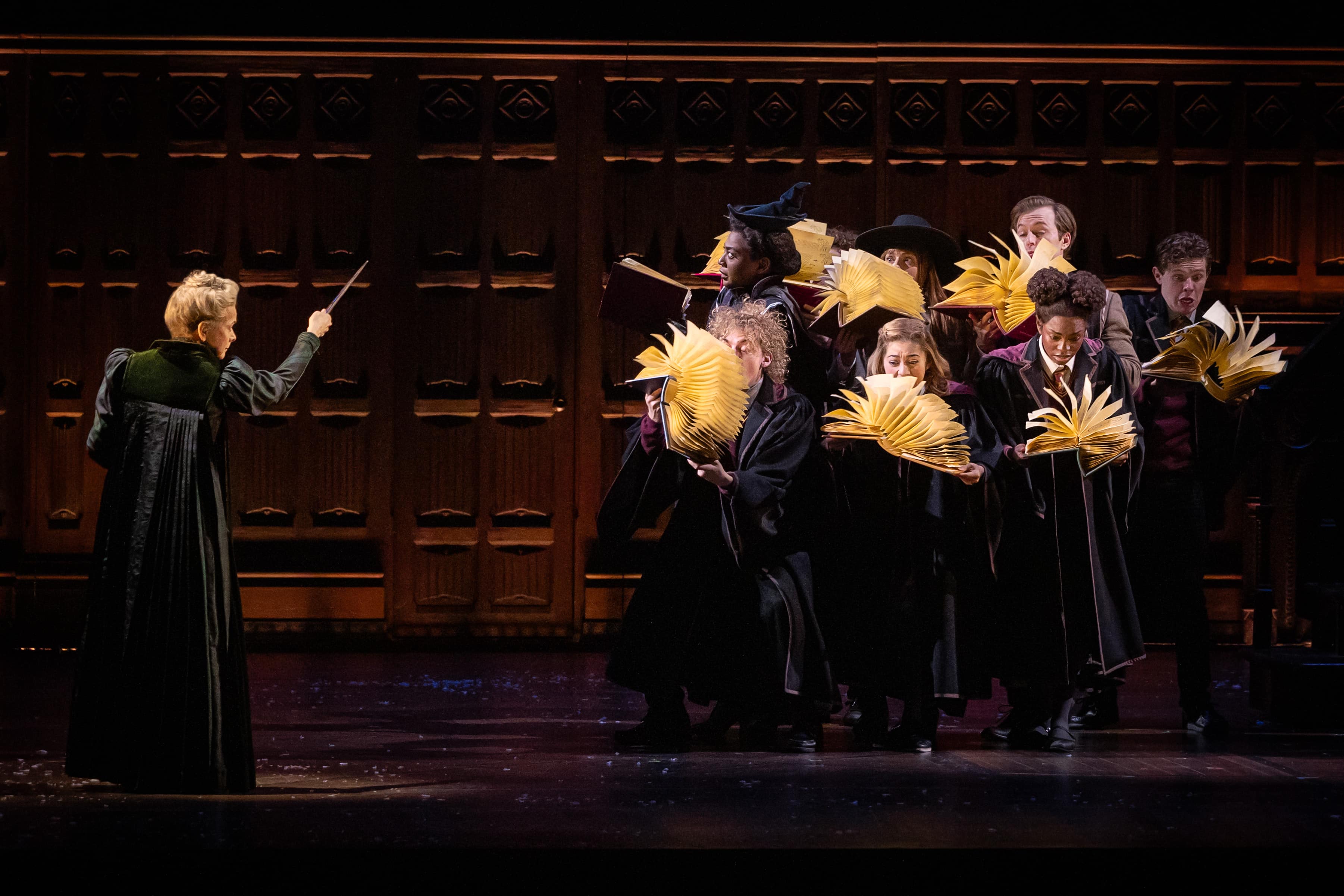
Harry Potter and the Cursed Child North American Tour. Photo by Evan Zimmerman
Tiffany: I’m very proud that what we made is turning younger audiences on to theater. Hearing the gasps and seeing the reactions when surprise characters come out is a great experience.
Friedman: I always stand at the back of the theater because I love watching the audience. It’s the greatest pleasure and privilege to see an idea you had playing out in real time every day; to know that millions of people are having this experience as a family and, because of this show, they will have a collective memory to take through their lives.
Thorne: Seeing the show through my son’s eyes changed my experience of it, and I’m still discovering things as I grow older with it. Just being part of this universe is a tremendous honor.
Callender: I’m very proud we were able to create a real play at the center of the spectacle. There’s a heart and soul to the story that people relate to. They’re mesmerized by the magic and illusions, but they’re equally caught up in the story of a parent and child finding common ground. For me, the biggest thing is watching the audience get involved in the play emotionally while saying, “How the hell did they do that?”
The Denver Center for the Performing Arts (DCPA) NewsCenter is the organization’s editorial platform for stories, announcements, interviews, and coverage of theatre and cultural programming in Colorado. We are committed to producing accurate, trustworthy, clearly sourced journalism that reflects our mission and serves our community.