DCPA NEWS CENTER
Enjoy the best stories and perspectives from the theatre world today.

By Suzanne Cohen
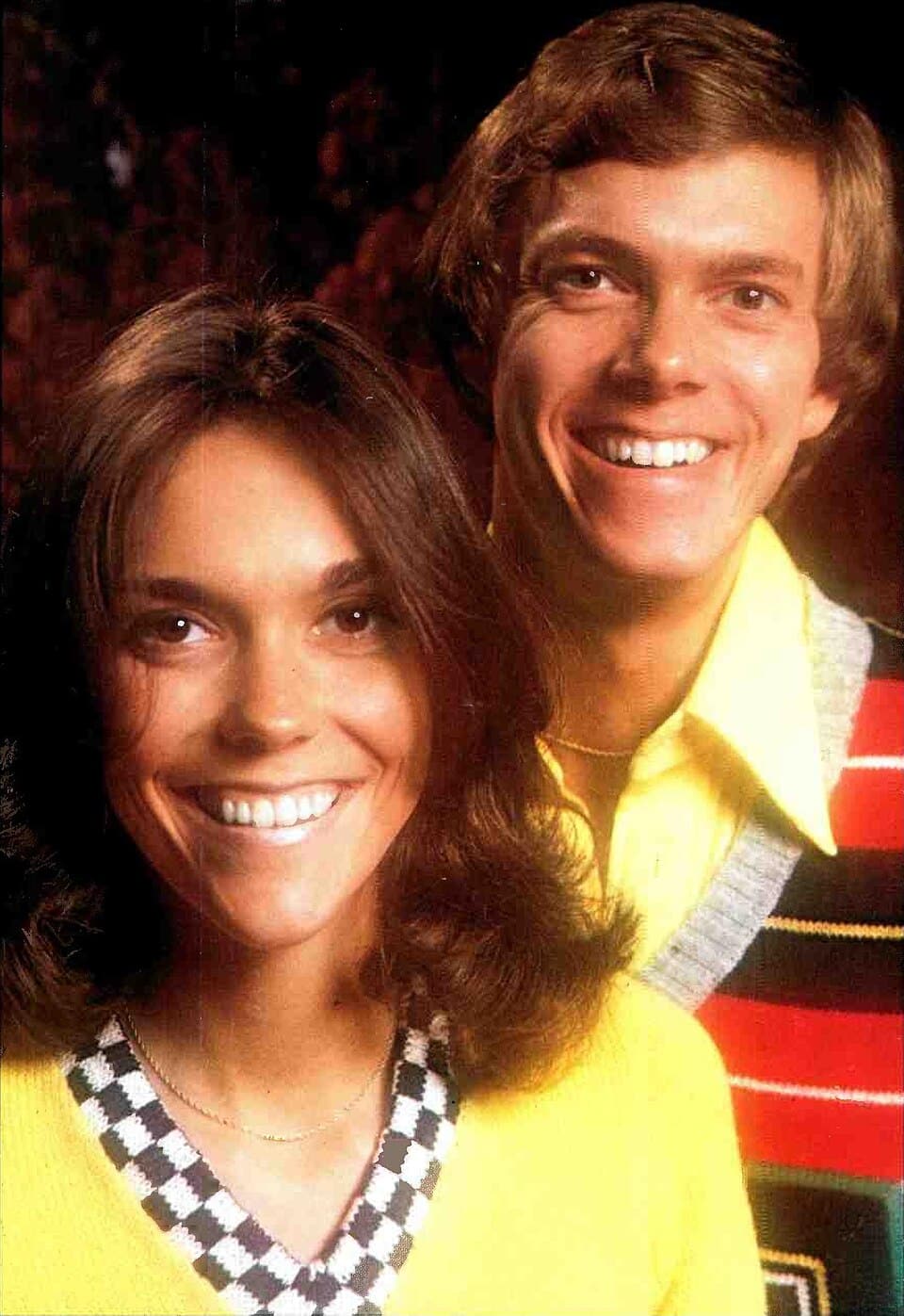
The Carpenters. Photo by A&M Records. 1974
You may have heard — or even sung along with — “Top of the World,” “Superstar” and “Rainy Days and Mondays,” songs that helped catapult siblings Karen and Richard Carpenter to pop royalty in the 1970s. Karen’s rich contralto voice and Richard’s instrumental talent shaped their signature sound: lush harmonies, orchestral arrangements and a warmth that still resonates decades later.
Although often called “The Carpenters,” the duo’s official name was simply “Carpenters.” They cited the Three B’s — The Beatles, The Beach Boys and Burt Bacharach — as major influences.
In just 14 years as a band, they sold over 100 million records worldwide and landed three No. 1 singles and five No. 2 singles on the Billboard Hot 100. They released 11 albums, won three Grammy Awards and starred in five television specials and a short-lived TV series.
Born in 1946 in New Haven, Conn., Richard grew up listening to his father’s big band and classical records. He picked up the accordion, started piano lessons at age 11, and by 15 was studying piano with professor Seymour Fink at the Yale School of Music and playing in a local jazz trio.
When the family moved to California in 1963, Richard joined the Downey High School marching band because it fulfilled his physical education requirement (a plan complicated by the fact that pianos don’t march). The director heard him play and invited him to audition for the concert band instead.
Karen was born in 1950 and joined the same marching band in 1964. Inspired by a bandmate’s drumming, she experimented with chopsticks and bar stools as improvised drums and quickly showed a natural gift for rhythm, years before she became known for her voice.
While studying music at California State University, Long Beach, Richard performed in bands and met talented tuba and string bass player Wes Jacobs. With Karen, they formed the jazz instrumental group, the Richard Carpenter Trio, in 1965.
In 1966, the Trio won the Hollywood Bowl Battle of the Bands (instrumental category), an early sign of the musicianship that would define their later work.
Karen and Richard signed with A&M Records in 1969, and in 1970, “(They Long to Be) Close to You” became the duo’s first No. 1 hit.
Their clean-cut image and polished sound were syncopated against the 1970s counterculture. Richard and Karen’s tight harmonies and unashamed devotion to melody stood out in an era defined by harder rock, the birth of punk and disco, and political protest anthems.
The same drive for perfection that shaped their sound also touched every area of Karen’s life — and came at a cost: She lived with depression and anorexia nervosa, dying from heart failure related to the latter in 1983.
Their legacy endures more than 50 years after their first album. They have a star on the Hollywood Walk of Fame, and Richard has safeguarded the band’s catalog, including remasters and reissues. Their coda? Richard shared his perspective in the 2021 biography Carpenters: The Musical Legacy. And he continues to make music, including a 2022 solo piano album, Richard Carpenter’s Piano Songbook.
The Denver Center for the Performing Arts (DCPA) NewsCenter is the organization’s editorial platform for stories, announcements, interviews, and coverage of theatre and cultural programming in Colorado. We are committed to producing accurate, trustworthy, clearly sourced journalism that reflects our mission and serves our community.