DCPA NEWS CENTER
Enjoy the best stories and perspectives from the theatre world today.

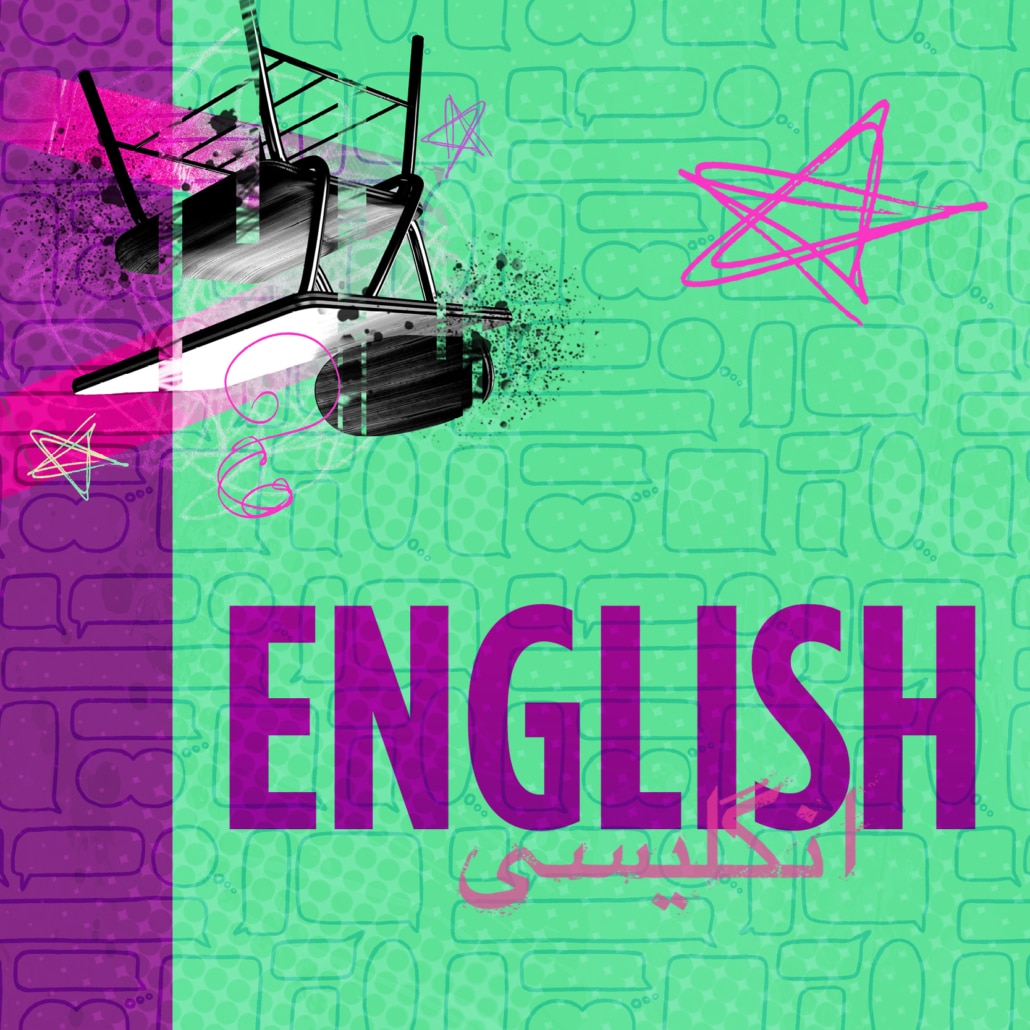

English Only. It’s a simple rule, but sometimes the simplest rules are the hardest ones to follow. For the students enrolled in Marjan’s advanced English course, the temptation to switch to their native tongue, Farsi, is often too great to resist. But in this particular classroom in Karaj, Iran, the magic of theatre means that English is indeed the only language the audience hears.
In Sanaz Toossi’s Pulitzer Prize-winning play English, the titular language manifests in two forms. When the characters practice their English aloud, they do so with a Persian accent. That accent may be light, as in the case of star pupil Omid, or it may be thick, as in the case of Elham, five-time taker of the TOEFL (Test of English as a Foreign Language) exam. But in every case the accent is present, a reminder to the audience — and the characters themselves — that English is not their first language. When they switch to Farsi, however, we hear them as they hear themselves: unaccented, with an ease of expression that some members of the class can only dream of attaining in English.
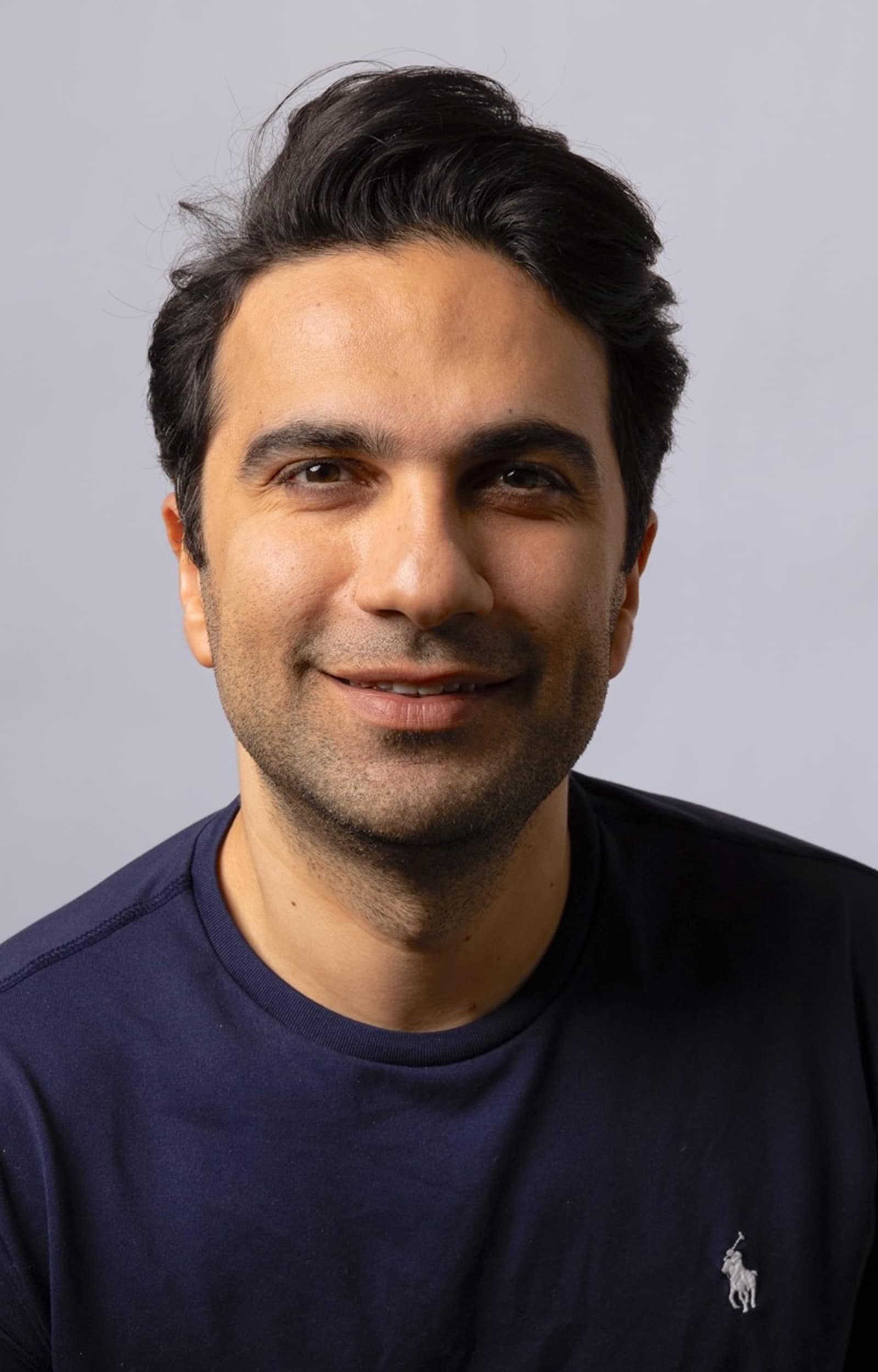
Hamid Dehghani
There are many plays — not all of them bad — in which accents are treated like costume pieces, as a means to imbue an otherwise forgettable character with a little extra “flavor.” At the risk of stating the obvious, English is no such play. “Changing the accent is a very important theatrical tool in this play,” explains director Hamid Dehghani. “It’s part of the plot, the motivations for characters, what’s happening between the characters.”
Because of how quickly the dialogue shifts between English and Farsi, Dehghani says the characters on stage are not the only ones learning a new language. “It’s very important to teach that language, that theatrical language, to the audience at the very beginning of the play,” he says. “The play itself introduces us to that feature early on, but for [the] performers and actors, if you are not able to stick to that set of rules, I think often the audience will get so confused.”
To prevent such confusion, Dehghani and the rest of the artistic team have to pay painstaking attention, not only to the mechanics of language — for example, which sounds give Farsi speakers the hardest time in English — but also to the characters’ motivations for switching between languages. What internal conflict might compel a character to abruptly switch to English, or to purposefully defy the class’s English Only rule? “We tracked all of those moments,” says Dehghani. “Beat by beat, word by word, letter by letter.”
It’s a demanding task, but one that Dehghani is amply prepared for — both professionally and personally. In addition to directing a previous co-production of English at the Goodman Theatre and the Guthrie Theater, Dehghani grew up in Iran and built his theatrical career there before coming to the U.S.
“I had the same experience of all of these characters in the play. I was 30-something years old when I started learning English. So I could feel and relate to these characters so much.” — Hamid Dehghani, Director
English is what Dehghani calls “a political play in a very non-political way.” It is set in 2008, at a time in Iran when, as Dehghani recalls, “there was some hope that it’s going to change, we are going to be free more, and that energy was in the air.” And while the intervening years have brought some changes — Dehghani notes how common it has become for Iranian women to go out in public without a hijab — there is no escaping the present-day realities of repression.
This past January, shortly after Dehghani’s most recent visit to Iran, the government responded to nationwide protests with a brutal crackdown that left thousands dead. For Dehghani, the violence has raised new questions as he prepares to bring English to the Denver Center stage. “Should I bring something that is more immediate that people can see outside, that is connected to the present moment? Or should I just look at this production as its own, without looking at the context or what’s happening outside in the world?”
Ultimately, Dehghani says his artistic choices are guided by the humanizing power of theatre. “You see cellphone footage of people protesting or getting shot on the street,” he says, “but you don’t know them. Seeing a play like English as itself, as authentic, as true to the life of these characters, I think in a very honest and deep way connects you to people on the street.”
RELATED: Learn to Speak English or Farsi as a Second Language
As Dehghani sees it, that sense of connection isn’t limited to people half a world away — it also extends to those who have recently arrived in one’s own community. “This is an immigration story,” he says. “It’s like the first chapter of an immigrant’s story.” Whereas most immigrant stories open at the moment of arrival, English is in many ways a story of departure, of the struggle and self-doubt that comes with deciding to leave one’s home — and hopefully, somehow, find a new one.
“I still feel that duality,” says Dehghani, “of being both Persian and living in an English culture and country.” And while he acknowledges that duality can be a source of challenge, it is also, in his telling, a gift. “Producing this play here, in the U.S., for me…feels like home. Bringing a piece of home on a stage.”
Editor’s Note: This interview took place before the recent U.S. and Israeli actions in Iran and were not part of the conversation.
The Denver Center for the Performing Arts (DCPA) NewsCenter is the organization’s editorial platform for stories, announcements, interviews, and coverage of theatre and cultural programming in Colorado. We are committed to producing accurate, trustworthy, clearly sourced journalism that reflects our mission and serves our community.


 ©Denver Center for the Performing Arts