DCPA NEWS CENTER
Enjoy the best stories and perspectives from the theatre world today.

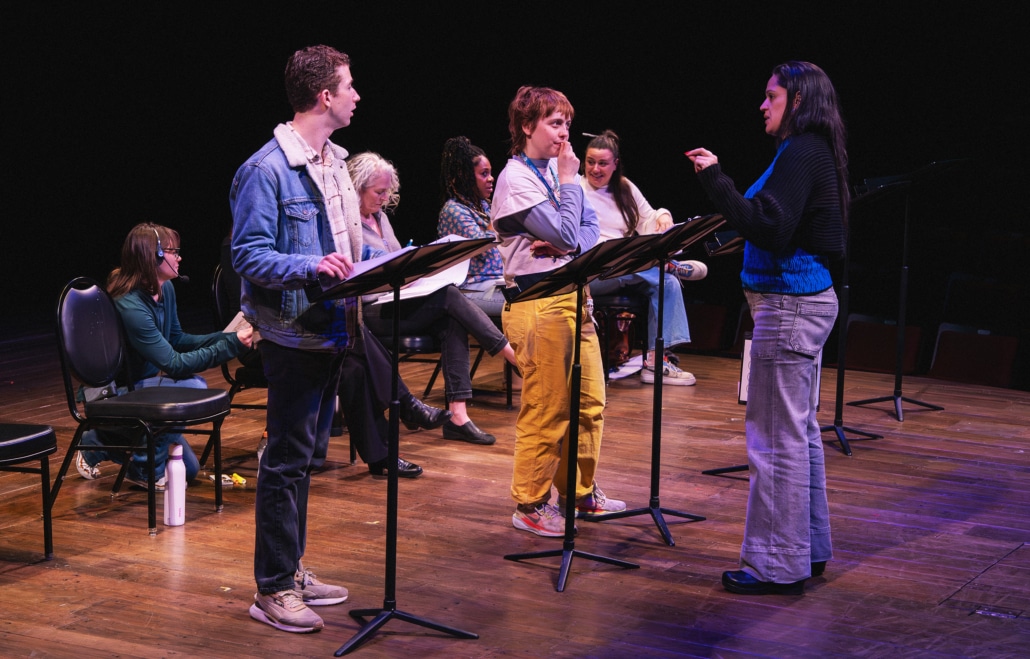
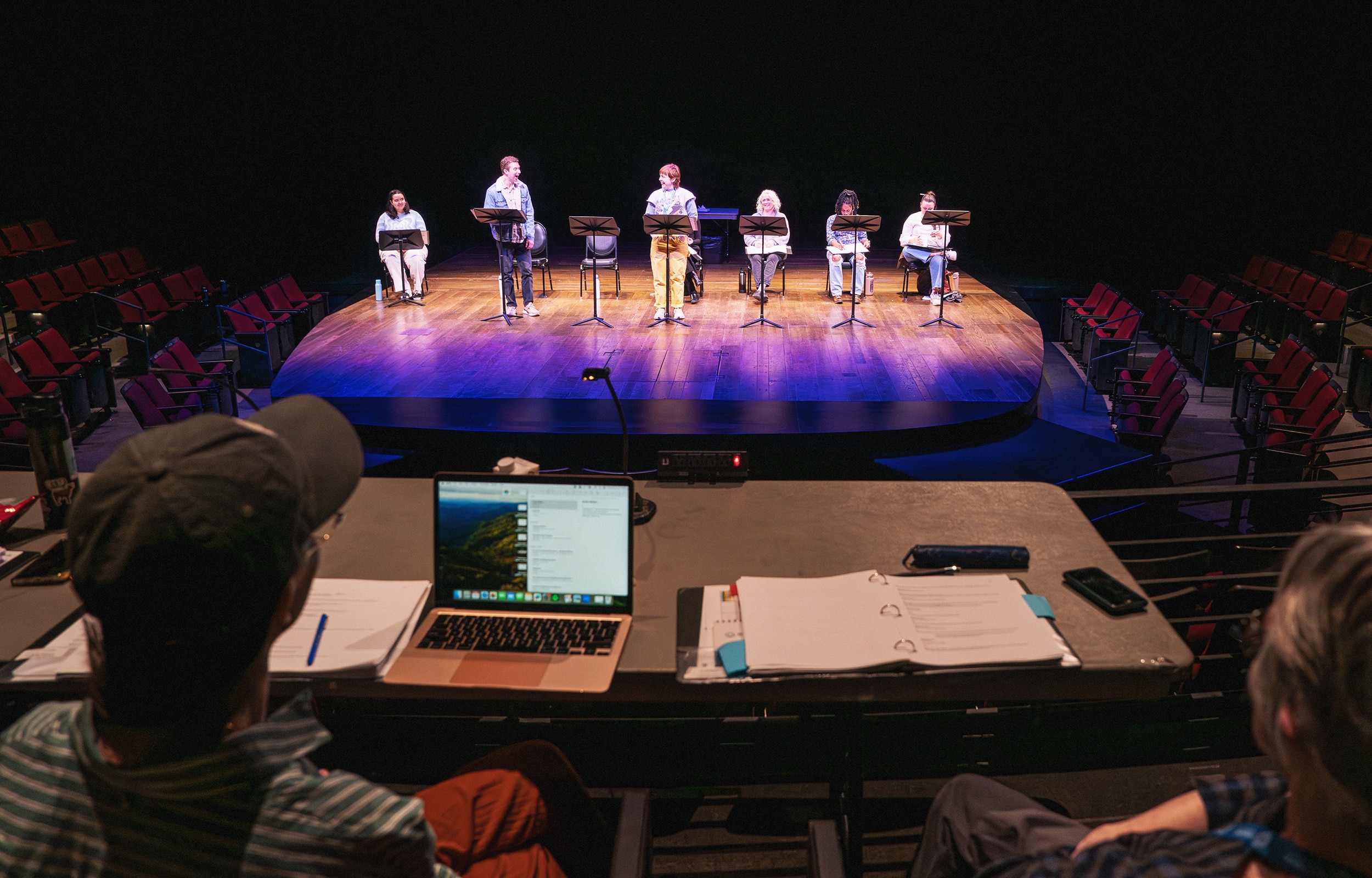
The cast of Lemuria. Photo by Amanda Tipton Photography
What follows is an anecdote — “as told to” but hardly apocryphal. During the recently concluded Colorado New Play Summit, a group of theater-fond women, who had walked from their towering apartment building on 15th street to the Helen Bonfils Theatre Complex, expressed their concern about the annual gathering of staged readings. Why didn’t more people know about it? They fretted.
It’s a fair if not quite accurate question, one that speaks more to the pleasures of the annual gathering than to the facts of its reach. And yet, who wouldn’t feel the same? When you love an arts gathering, you want everyone to know about it and nothing short of the world’s masses will do. And this annual event — featuring expertly performed readings of four plays in various stages of development as well and the world premieres of two works that received a reading at an earlier Summit — inspires ardor. Even addiction.
For all the Denver Center for the Performing Arts’ tremendous resources, its Summit makes an eloquent, even thrilling argument for the bare-bones marrow of the language of theater.
Celebrating its 20th installment, the Colorado New Play Summit is beloved by theater-loving locals and admired by the nation’s theater professionals. Should it be packed to the gills? Absolutely. Be sold out months in advance? It deserves to be. Become a destination for out-of-towners and the arts tourist looking for the perfect weekend or week to visit the Denver Center for the Performing Arts as well as our city-center restaurants and other culture offerings (including a Nuggets or Avs game )? Surely.

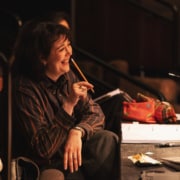
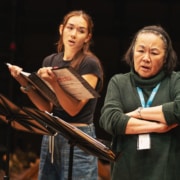
Top row l-r: Jacob Meyerson, Scout Backus, and director Melissa Crespo in Lemuria; Lemuria dramaturg Janice Paran, playwright Bonnie Antosh, and director Melissa Crespo; Influent playwright Isaac Gómez; Heather Lee Echeverria and Elizabeth Ramos in Influent.
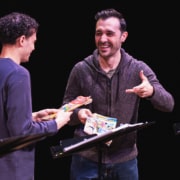
Bottom row l-r: You Should Be So Lucky playwright Alyssa Haddad-Chin; Julia Cassandra and Emily Kuroda in You Should Be So Lucky; Luan Taveras and Frankie Alvarez in The Myth of the Two Marcos; The Myth of the Two Marcos playwright Tony Meneses. All photos by Amanda Tipton Photography
This year, the nation’s theaters and theater-makers were well-represented. Among the attendees: Texas’ Alley Theater, Dallas Theater Center and Stage West Theatre, the Cincinnati’s Playhouse in the Park, the Milwaukee Repertory Theater, Oregon Shakespeare Festival, Utah Shakespeare Festival, Chicago’s Steppenwolf Theatre Company, South Coast Repertory, the Seattle Repertory Theatre, New Jersey’s Two River Theater, and Arkansas’ TheatreSquared were in attendance, along with an uptick in local single-ticket buyers and pass holders over last year.
The two recent alums of the Summit process getting world premieres were Terence Anthony’s neo-Western, Godspeed, and Nina McConigley and Matthew Spangler’s Cowboys and East Indians, based on the former’s award-winning short story collection about growing up South Asian in Wyoming. At the Summit dinner held in the Seawell Ballroom, Theater Company Artistic Director Chris Coleman announced that Cowboys and East Indians would be getting a production at TheatreSquared in Fayetteville, Arkansas. The play joins a fine list of works that have gone on to have an extended life in regional theaters and some in New York, among them: Lauren Gunderson’s The Book of Will, Matthew Lopez’s The Legend of Georgia McBride, Samuel D. Hunter’s The Whale, José Cruz González’s American Mariachi.
It’s great news. Even so, the stars of the Summit were the playwrights whose emerging plays were getting readings.
 Bonnie Antosh, Lemuria
Lemuria (directed by Melissa Crespo) is decidedly Shakespearean drama of inheritance unfolding at a research laboratory for lemurs, those primates made famous by the DreamWorks animated feature Madagascar. By the by, do not ask Antosh about the zoologic license the film studio took with the species, unless you want to know that — starting but likely not ending with the studio’s overlay of a patriarchal tale upon a matriarchal species. Much was taken. But the saga of the lab’s star primatologist Annabelle deciding who among her proteges shall proceed her in the role as honcho — former lovers Miriam or Reagan? — is one that puts the questions and quandaries of legacy squarely in a female-centered tale.
Although Lemuria has gotten workshop time elsewhere, this is Antosh’s first time at the Summit.
“It’s going phenomenally,” Antosh said at the start of an interview on the eve of the Summit. The resources and talent — actors and creative teams — the Denver Center brings to new play development is often praised.
“This play has a level of exactitude that requires extraordinary collaborating artists. [It] has a really strong and insistent sense of rhythm. And I think these actors picked up on the natural rhythm of the play so quickly that it’s actually given us a lot of time to fine tune the text and to figure out where there were obstructions in the story we want to tell and make the play more itself. The first impulses of the people working on this project this week we’re so strong that we were starting from a place that felt like we were weeks into rehearsal.” — Bonnie Antosh, playwright of Lemuria
Indeed, the cast — Tara Falk, Jamie Lee Romero, Cherrye J. Davis, Ceci L. Fernandez, and Scout Backus, and Jacob Myerson— were so delightful that if the play is produced here, it may tempt the amusing Summit tradition of audience members complaining (if need be) about the reading’s cast being better than that of the full production.
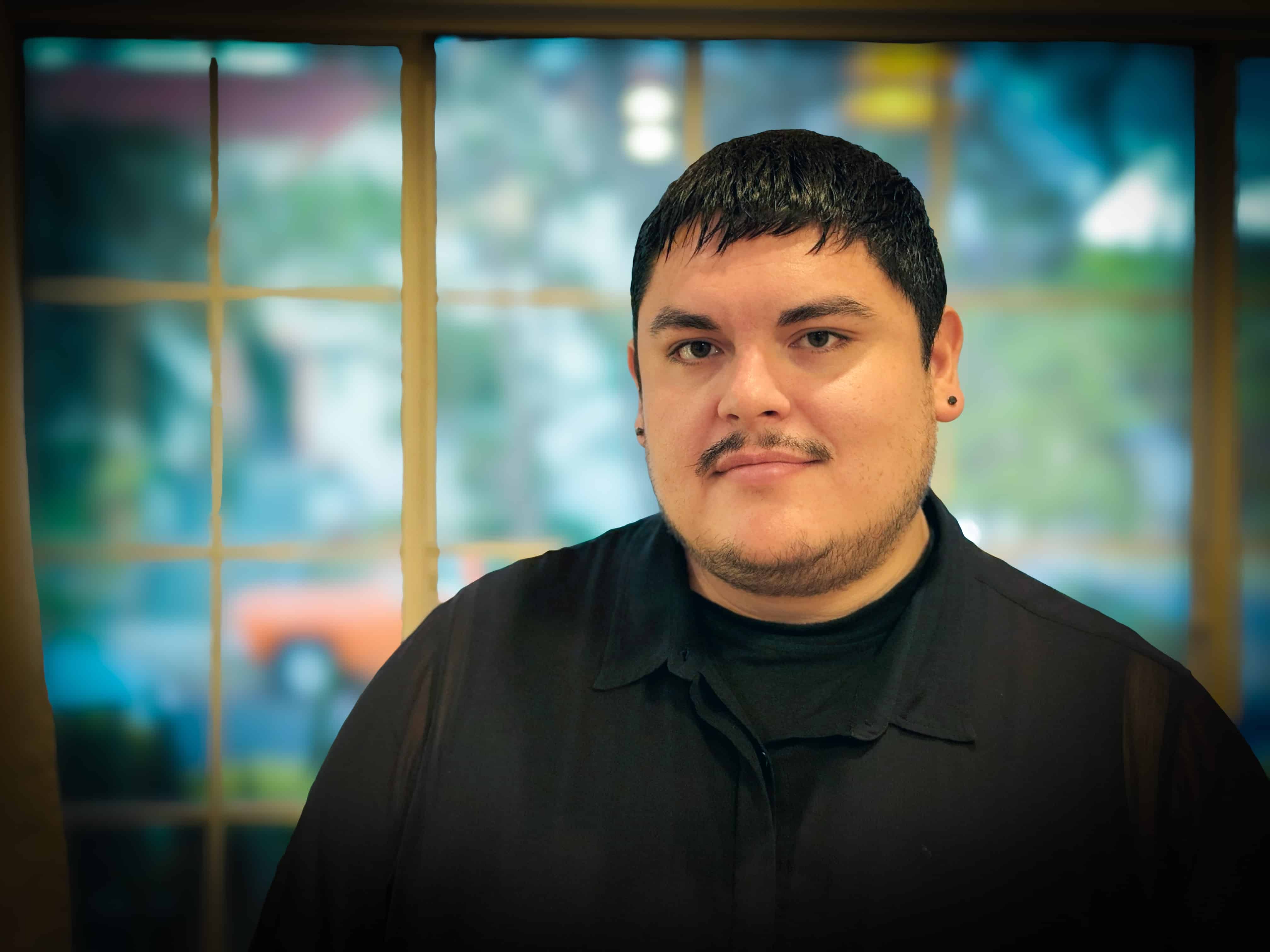 Isaac Gómez, Influent
As is the way with so many internet-nurtured relationships, it’s hard to suss whether the young women Yaya (Heather Lee Echeverria) and Carmen (Elizabeth Ramos), in Isaac Gómez’s two-hander Influent, (directed by Jessi D. Hill) are friends or frenemies. Credit, this delicate, often ouchy dance to Gómez’s textured and tender grasp of the demands of influencer culture.
What happens when a passion becomes a professional obligation? Your identity a brand? What if that identity is also bound up with culture, like it is for these two Latinas beauty influencers and one of you goes off the rails? (“Friendship in the Time of Cancel Culture” perhaps.)
“The incredible team here has really pushed me to go deep and really investigate within myself what it is personally I’m trying to explore here,” Gómez says of the rigorous development process. “And the answer that I surfaced in the last few drafts of this play has been ‘shame,’ I think so many of us — regardless of your connection or understanding of content creators or influencers or social media — know what it feels like to experience shame, to make a mistake and to feel like you don’t have an opportunity to have a second chance.”
This is Gómez’s second time participating in the Summit. His commission Wally World was read in 2019. In 2024, his adaptation of the Erika Sánchez’s I Am Not Your Perfect Mexican Daughter was part of the Theatre Company’s 2024/25 season.
What brings him back? After all, a lot of regional theaters embrace new work but don’t have the resources to develop it and only have so many slots in a season to stage it. “For me, it actually stems from the commitment to the artists. Thankfully, a place like Denver Center has a plethora of opportunities for writers, whether it’s through their commissions, through the new Play Summit or through their general programing that allows for the ability for people who’ve never worked here before to come, while also maintaining a relationship with those for whom it feels like a symbiotic relationship. And with Denver Center, for me — and I’m really not saying this because of the recording, like I’m dead serious — being here feels like coming home.”
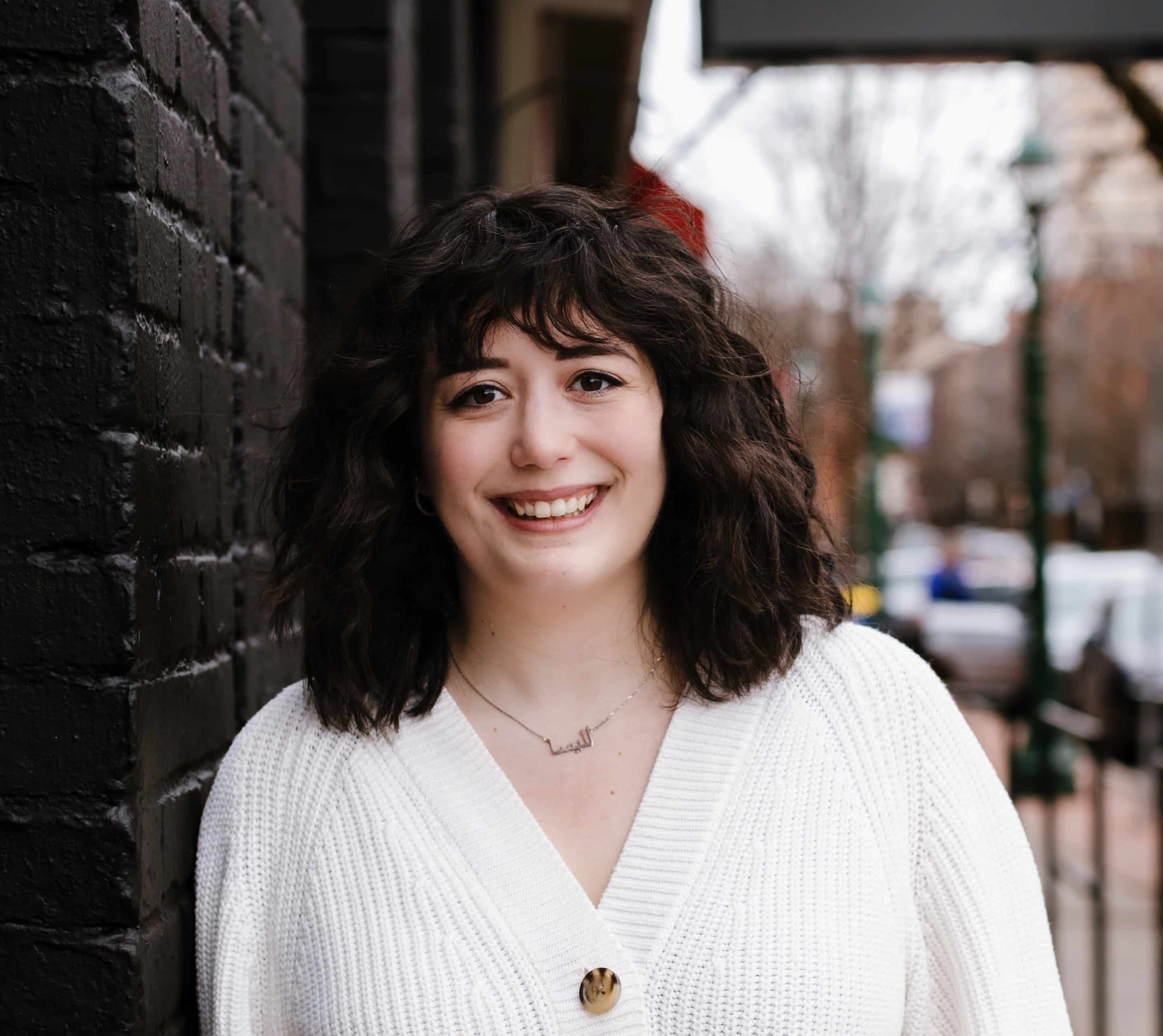 Alyssa Haddad-Chin, You Should Be So Lucky
In Alyssa Haddad-Chin’s You Should Be So Lucky (directed by Jesca Prudencio), the intragenerational sparring of Gomez’s play shifts to an intergenerational minuet as grandmother Poh Poh (Emily Kuroda) and granddaughter Jenny (Julia Cassandra) gather in the former’s Chinatown apartment to make dumplings ahead of the Chinese New Year. What transpires is a sweet-and-sour afternoon in which much love is expressed, and gentrification rears its devouring head. The title nods to a moment in which Poh Poh flips the meaning of that quip from its rather excoriating quality to a celebratory one.
The play is a tribute, says the playwright, to her grandmother-in-law. “She spent most of her life in Manhattan’s Chinatown,” said Haddad-Chin, who currently lives in Brooklyn. “But really, the play is about generations of women trying to come together, despite huge differences and kind of thinking they know it all about life.”
A note on Haddad-Chin’s website distills the essence of the Lebanese playwright, who came to theater by way of comedy: “Her work typically centers women, Arab and/or Asian-Americans, and is mostly funny (until it’s not).”
So how does that nuance work, exactly?
“I think I see the world through humor. I started my career in comedy, and through comedy found comedic theater and absurdist theater. And that’s kind of how I found my way,” she said. “I think humor is a device that connects people. Especially when you’re telling stories of people that often are not seen in the American theater or even in the world. I think humor is the easiest way to get kind of everybody on your side.” — Alyssa Hadad-Chin, playwright of You Should be so Lucky
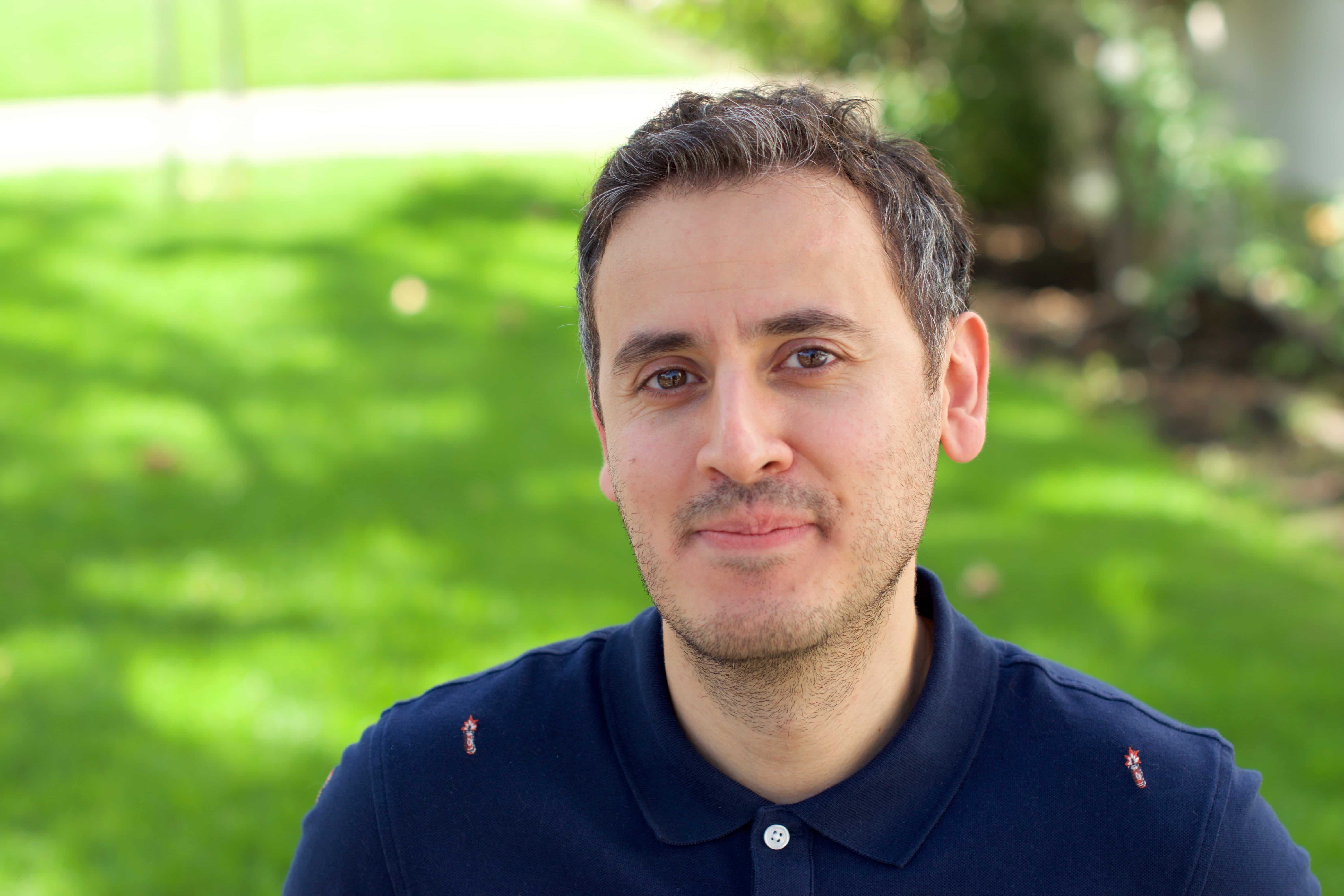 Tony Meneses, The Myth of the Two Marcos
The early moments of a friendship share some of the energies of a crush. Indeed, friendship might be the best romance of all. Is it a surprise then that its demise can tease a kind of regret, a quiet, sustained heartache? Such is the territory of Tony Meneses’ The Myth of the Two Marcos (directed by Danny Sharron), which turns a nostalgic lens to the friendship of the two teenagers who meet in a high school classroom in Albuquerque, New Mexico, and find a happy refuge in a local comic book store.
This is Meneses’ second Summit drama. His first, the Theatre Company commissioned twenty50 — set in a near-ish future in which the nation’s white majority has become a minority and wants to boost its demographics and maintain political power by allowing some Latinos into the club — was workshopped in 2019 and produced at the Denver Center in 2020, two weeks before COVID threatened an extinction-level event for live performance.
It’s a welcome return. “They developed the play and produced the play,” says Meneses. “That’s kind of like the dream scenario with new play development. But now being back, you know, my life has changed dramatically [he got hitched]. I’ve had more work out there. So, it’s kind of nice to kind of return to a space.”
Nostalgia and the mysteries of time captured the playwright’s imagination during a time when so many of us had a lot of time on our hands: during the pandemic when the subject of nostalgia and reconnecting with the past bubbled like sour dough starter.
“I was fascinated [to hear] nostalgia was such a, a refuge for all of us…it was a sanctuary for reconnecting with, old friends, memories, places, hobbies. And, for me, it was comic books.” He smiles. “Specifically, the go-to for so many kids who felt their own outsider, slightly mutant vibes: ‘X-Men.’ I’d love to say that Tennessee Williams and Chekhov are my influences — and they are — comic books and X-Men, the cartoon, really imprinted themselves on my artistic development.” — Tony Meneses, playwright of The Myth of the Two Marcos
Much like one of the Marcos, Meneses grew up in Albuquerque and then moved to Dallas. “The play interrogates a little bit some demons and some unresolved feelings about that move and what happened,” he said. If that sounds heavy, perhaps. But befitting the yearning that nostalgia calls forth, The Myth of the Two Marcos has joy, too.
Did we say four playwrights? That’s rude. Since the three finalists of the Denver Center’s annual Middle & High School Playwriting Competition more than earned the applause that came at the end of their staged readings, held on the Summit’s final day. It’s shouldn’t come as a surprise but always piques wonder, the depth of these young authors’ insights and feelings about this mortal coil.
Audrey Fiege’s Scraps revolves around a young, unhoused woman and the security guard and the bookstore owner who increasingly worry about her. A tart comedy set in Eternity’s anteroom, Number 47 by Kaylee Johnson and Carson McConathy, offers quite the character study (literally and figuratively) as it delves into the afterlives of the folks awaiting their number. “Bajo La Misma Luna, by Flavia Armas, finds two teens gently falling for each other as issues around immigration and belonging intrude on their rooftop haven.


Now in its 14th year, the competition provides the playwrights the same sort of support the Summit’s main attractions receive. In addition to a well-rehearsed cast (of burgeoning and veteran talent), each reading had director (or two), a stage directions reader and, in a rightly inclusive touch, an ASL interpreter.
This year’s competition received 288 script submissions and offered 159 workshops, said Allison Watrous, executive director of education at the Denver Center and codirector (along with Rick Mireles) of Bajo La Misma Luna. In her introductory remarks, Watrous made an eloquent pitch for the nurturing of “the next generation of playwriting talent.” Which led to this hastily scribbled question in a reporter’s notebook, “So how do we build the next generation of audience members?” Because these one-acts deserve new theatergoers who are as deep — and, often, witty— as they are.
There was one quibble arising at the end of the readings: these playwrights are too young in their careers to be indoctrinated into Denver’s suspect cult of the standing ovation. The habit has begun to feel like the arts-and-culture version of a participation trophy. They deserve something more diligently honest from us.
The behind-the-scenes portion of the Summit began on Monday, Feb. 9, as the playwrights arrived to begin rehearsals with their directors and dramaturgs, cast and stage managers. The public-facing part had a soft opening when the Summit dramaturgs gathered for a panel held at Denver Book Society, owned by DCPA supporter Rich Garvin.
In addition to a director and stage manager, one of the greatest resources the Denver Center offers its Summit playwrights is a dramaturg. Sometimes as mysterious as it is essential, dramaturgy grounds the work (and its playwright) in an external and internal logic. They are world-building helpers, whatever that world might be. At least, that’s one notion of the practice.
Indeed, the panel began with Influent dramaturg and the Theatre Company’s Director of Literary Programs, Leean Kim Torske, asking her fellow dramaturgs — Sonia Fernandez (The Myth of the Two Marcos), Janice Paran (Lemuria), and Annie Jin Wang (You Should Be So Lucky) how they might define the practice.
Unsurprisingly, their responses were poetic and varied. So much so that one audience member interrupted the women (there’s always gotta be one) to ask, somewhat plaintively, “Could someone define what dramaturgy is?” To which Torske replied gently, thoughtfully, “I like to think of dramaturgs as professional question askers, people helping facilitate, investigate the storytelling as it is happening on stage.”
At the panel, the DCPA’s Director of Casting and Associate Producer, Grady Soapes, introduced dramaturgs as the unsung heroes of the new play development process. And he’ll get no rebuttal from us. But there might be others. One of the too unsung pleasures of the staged readings is the reading of stage directions. What could seem like a cheat — with rare exceptions, stage directions aren’t usually vocalized in actual productions — they are indisputably part of the delight here. Kudos, then, to Janay Dixon (You Should Be So Lucky), Maria Cine (Influent), Claylish Coldiron (Lemuria) and Iliana Lucero Barron, whose drumming added immeasurably to the intriguing passages of time in The Myth of the Two Marcos.
In 2019 B.C. — Before Covid — the Summit stretched over two weekends of performances: the opening weekend was for the public, the second weekend hosted industry. Now these two vital audiences for emerging work rub shoulders in the dark and then may share insights over a sit-down dinner in the Denver Center’s Seawell Ballroom. (Not a bad thing, by the way.) But there were other signs that a tightened budget remains in effect: a couple fewer meals; and the closing-night party, relocated to the Helen Bonfils lobby from the ballroom, was missing the more “get your groove on” vibe of bygone years.
Still this year’s installment honored its anniversary the best way possible: with its roster of strong, even exceptional work. So a wish for more of the same next year. We should all be so lucky.
The Denver Center for the Performing Arts (DCPA) NewsCenter is the organization’s editorial platform for stories, announcements, interviews, and coverage of theatre and cultural programming in Colorado. We are committed to producing accurate, trustworthy, clearly sourced journalism that reflects our mission and serves our community.