DCPA NEWS CENTER
Enjoy the best stories and perspectives from the theatre world today.

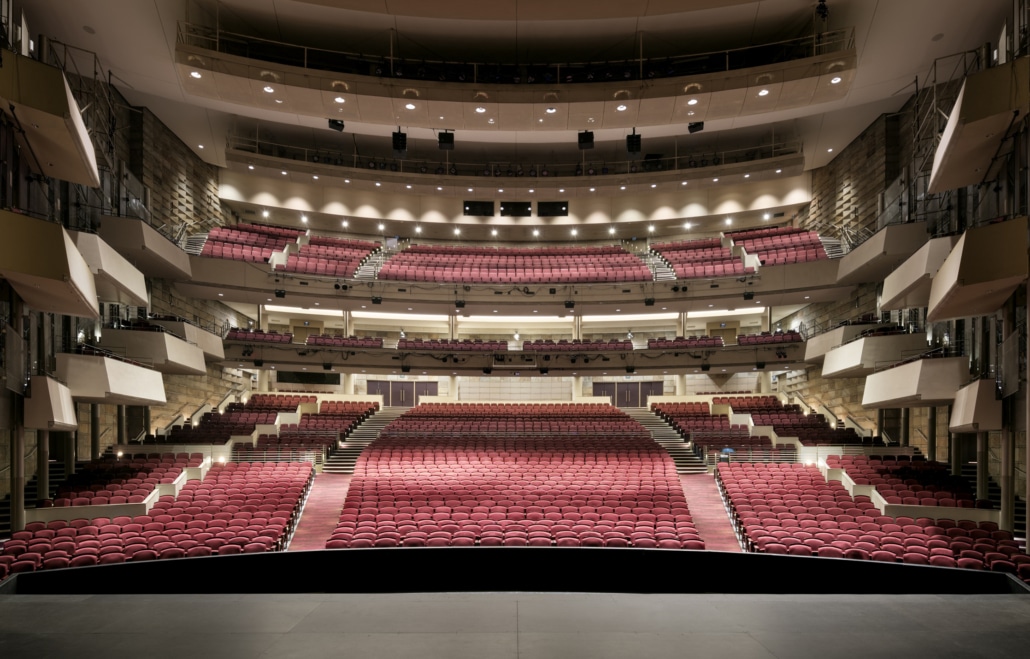
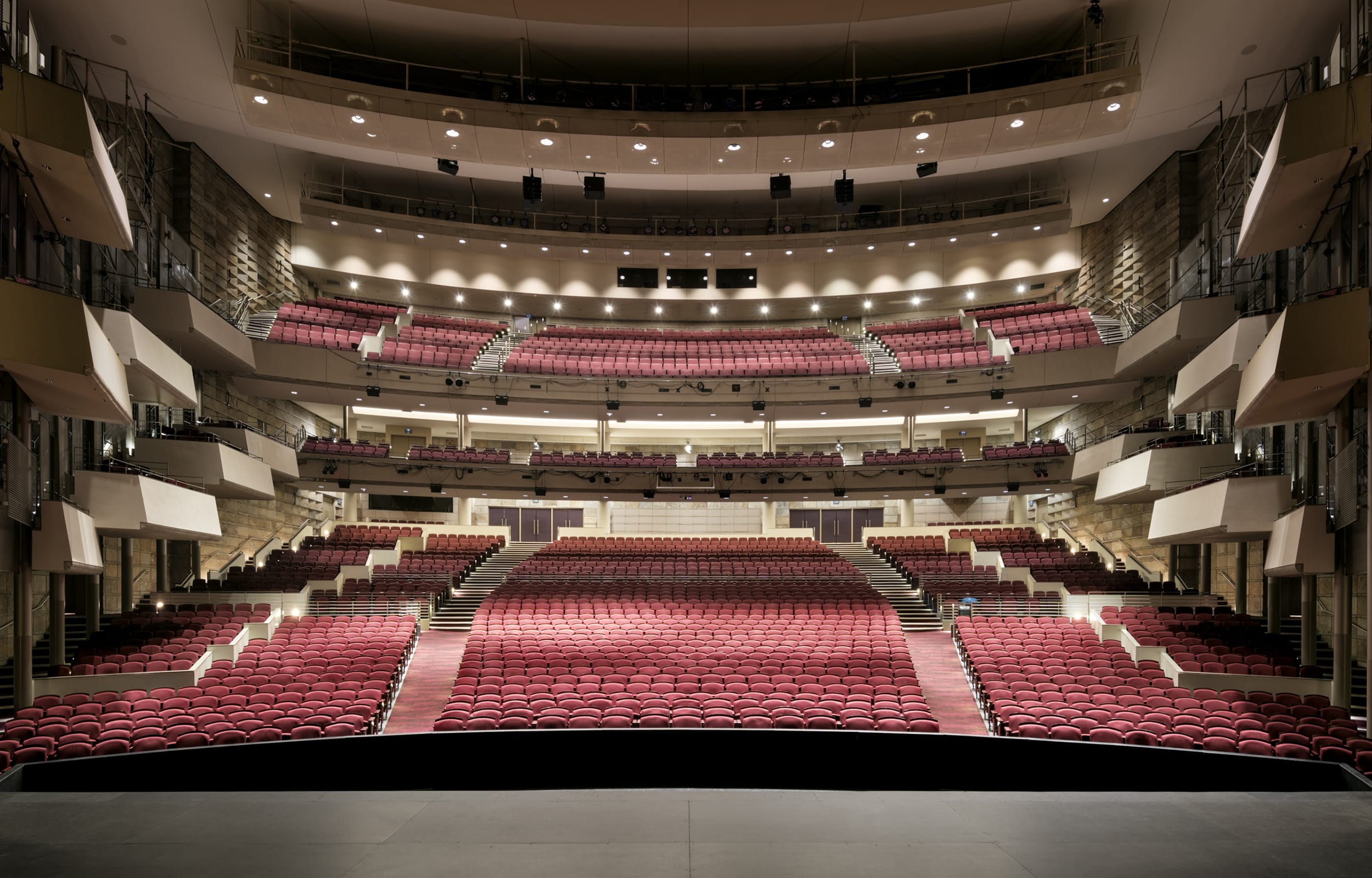
Temple Hoyne Buell Theatre. Photo by David Lauer
It started out as an addition to the 1908 Denver Municipal Auditorium and became the highest grossing theatre of its size in the nation. The former Denver Auditorium Arena (1940-1989) was added adjacent to the municipal hall as a sports arena. In 1991 it was transformed into the 2,830-seat Temple Hoyne Buell Theatre, and 35 years later, it welcomes back the first Broadway touring show to grace its stage — The Phantom of the Opera.
When the Denver Auditorium Arena opened, it became a mecca for sports enthusiasts. The Denver Rockets (which became today’s Denver Nuggets), tennis, volleyball, wrestling, boxing, and amateur sports filled the space, foreshadowing Denver’s emergence as a top competitor in national sporting leagues.
As newer venues like McNichols Arena opened, the Denver Auditorium Arena’s days as a sports facility were numbered.
However, new plans for the four-block, 12-acre area surrounding the municipal hall were taking shape. Long-time presenter, Robert Garner, had been filling the Denver Municipal Auditorium with Broadway tours since 1961. But the Auditorium couldn’t accommodate the size of shows such as The Phantom of the Opera and Miss Saigon.
In 1989, it was time for the final piece of the original Arts Complex master plan — converting the Arena into a theatre.
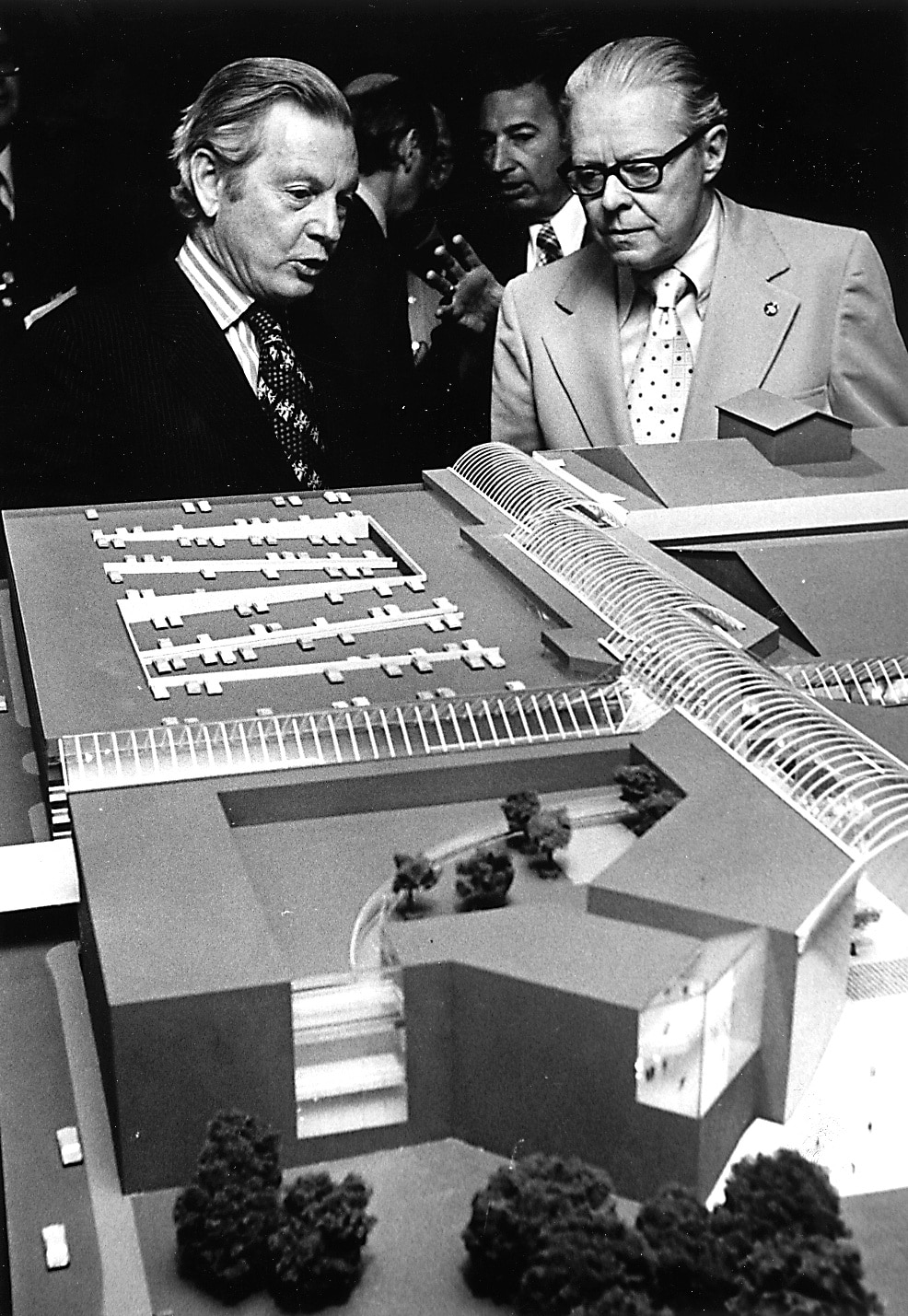
DCPA Founder Donald R. Seawell (l) with Denver Mayor Bill McNichols
The creation of the Denver Center for the Performing Arts (now Denver Performing Arts Complex) stemmed from a complicated chapter in the history of The Denver Post. As owner Helen Bonfils faced a hostile takeover attempt, attorney Donald Seawell stepped in to protect her interests. Through legal battles and stock acquisitions, Seawell consolidated the holdings of multiple trusts into the newly formed Helen G. Bonfils Foundation, including her father’s, which was to be used “for the benefit of mankind.”
Seawell realized that fulfilling Frederick’s requirement would necessitate a transformative cultural project — something far larger than the repertory company he and Helen had originally envisioned at the old Bonfils Memorial Theatre on Colfax. In his 1998 oral history, Seawell recalled inspiration struck suddenly: “I was coming back from lunch and stopped…at the corner of 14th and Curtis, and said, ‘Wouldn’t this be a wonderful place to build a performing arts center for the benefit of mankind?’” Within days, he secured probate approval, briefed Denver’s mayor and Colorado’s governor, and set in motion what Mayor Bill McNichols soon called “the greatest gift ever given to the City of Denver.”
“One of the things I realized when I was sitting on that curb,” Seawell said, “was that McNichols Arena had just been built, so ultimately the [sports] arena would become available.” Additionally, plans were already underway for a nearby symphony hall plus the former police building was set for demolition, so Seawell’s plan not only encompassed the new symphony hall and the Municipal Auditorium, but it also laid plans for the Helen Bonfils Theatre Complex, a parking garage, and conversion of the arena into a large theatre.
Once the properties were secured, he enlisted Kevin Roche of Roche-Dinkeloo and Associates to create the master plan for a comprehensive a multi-disciplinary performing arts complex.
A native of Chicago, Temple Hoyne Buell served in World War I but was diagnosed with tuberculosis after being exposed to phosphene gas. He relocated to Colorado to rehabilitate and established the largest architectural firm in the Rocky Mountain region. His company contributed designs for more than 300 structures including the Paramount Theatre and the original Cherry Creek Shopping Center, which served as the prototype of today’s malls.
He established the Buell Foundation in 1962 with an original focus on major capital projects or endowed positions at area universities. Following his death in 1990 at the age of 94, the foundation made a $3 million gift to the Arts Complex, ultimately honoring the innovative Denver architect and philanthropist for years to come.
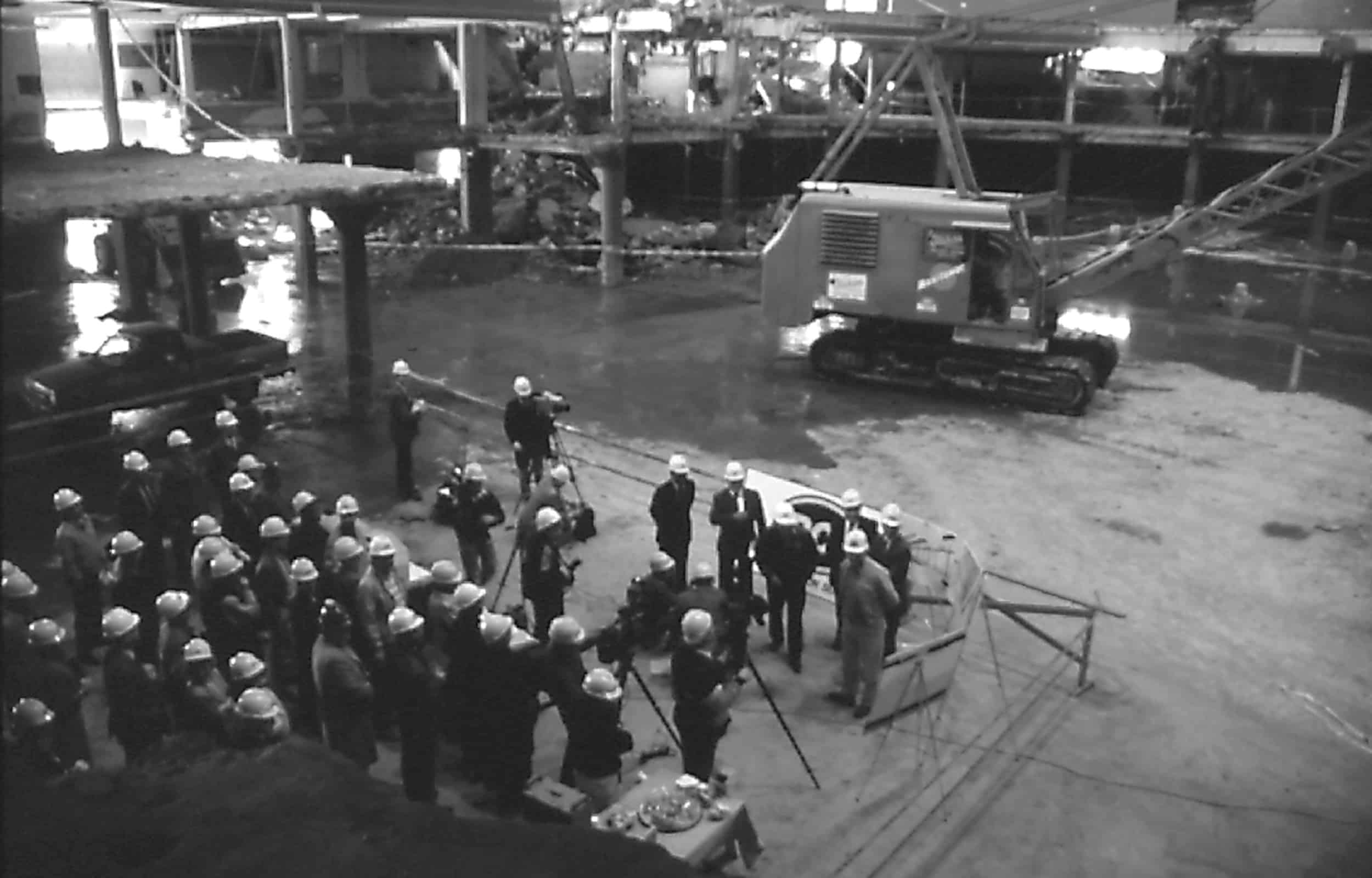
Construction begins on Temple Hoyne Buell Theatre
Despite early predictions that the Buell Theatre would host Phantom once and then sit empty, construction began in 1990. The $28.15 million cost was funded by a city bond and $6 million from private donations.
With a lobby and façade by Beyer Blinder Belle, a theatre by Van Dijk, Johnson & Partners, and construction by PCL Construction, the venue needed to accommodate both big Broadway musicals and the natural acoustics appropriate for opera and ballet. “It has to be drier than a symphony hall,” Peter van Dijk said, “but not as dry as a lecture hall.” That dry-but-not-too-dry sound was accomplished with materials from Colorado. “All 250 tons of it is Colorado sandstone — unique in the world for its unusual hardness — was produced by the Colorado Stone Co. of Longmont,” reported the Denver Business Journal.
The theatre also incorporated a 41‑foot removable proscenium arch and sound‑absorbent ceiling panels that allowed technicians to fine‑tune the acoustics, according to The Denver Post.
In order to lure Denver’s first engagement of Phantom, provisions had to be made to accommodate its signature chandelier that flies out over the audience. “A special steel girder in the ceiling over the 6th row will support the 1,200-pound chandelier,” The Denver Post reported.
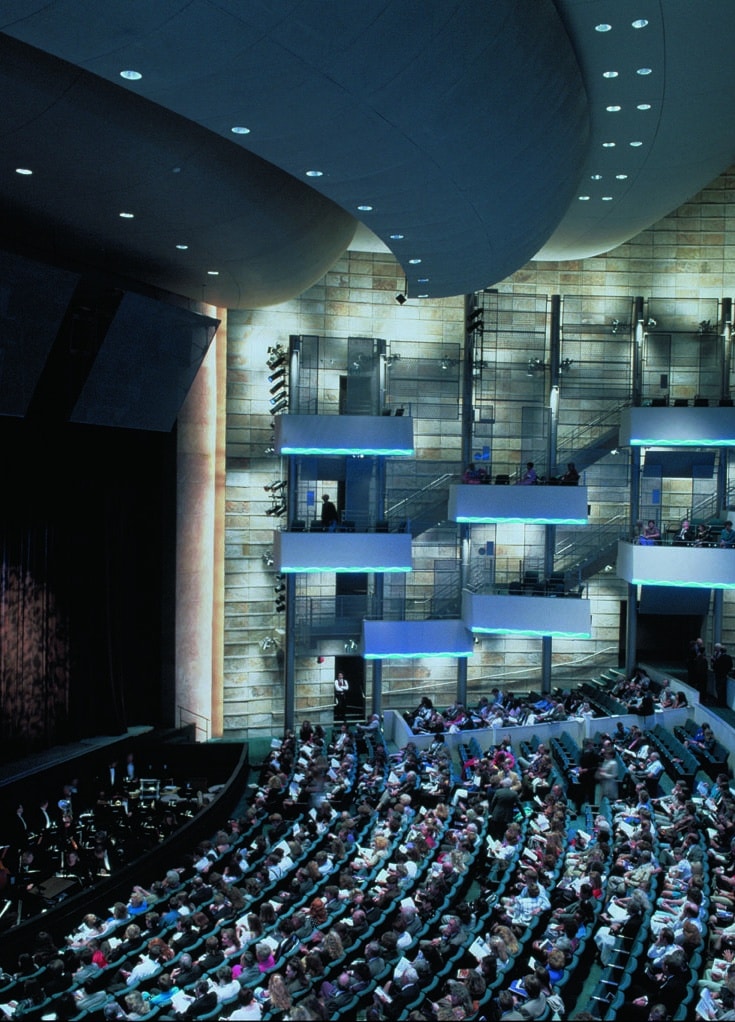 Beyond these specialty enhancements, the project also featured:
• 2,830 seats
• Flexible orchestra pit accommodating up to 90 musicians
• Stage measuring 55′ deep × 123′ wide × 69′ high
• 90 battens for hanging scenic elements
• Dressing rooms for up to 74 performers
• 70-foot glass façade with seven “Romeo and Juliet” balconies
• Loading dock with capacity for six trucks
• One restroom for every 25 patrons
Once the final pieces were in place, the city marked the opening with a three-day celebration, including a nationally televised gala presided over by Emmy winner Tony Randall and starring singer Dan Fogelberg, violinist Eugene Fodor, cowboy poet Baxter Black, and various acts from the resident companies. “With more than 2,500 at the black-tie event,” commented The Denver Post, “Denver needed help from neither the Broncos nor the CU Buffs for national coverage as it basked in the warmth of reaching a cultural milestone that was a long time coming.”
Following the official opening, the reviews were glowing:
“The Temple Hoyne Buell Theatre…rises in the heart of downtown like a cultural crown…. [It] is now a sparkling gem anchoring the Denver Performing Arts Complex,” said Jackie Campbell in the Rocky Mountain News.
“Denver’s new Buell Theatre probably ranks with Washington’s Kennedy Center as the best theater in the nation,” John Paull, The Phantom of the Opera Technical Production Manager in The Denver Post.
“If old ballparks help define a city’s collective soul, new cultural edifices can perform the same function,” enthused J. Sebastian Sinisi in The Denver Post. “New halls don’t always work, but the Buell does. And even though they don’t build baroque houses like New York’s old Metropolitan Opera or Milan’s La Scala anymore, it’s no great stretch to say the new Buell can take a place alongside latter-day halls at Lincoln Center, the Kennedy Center in Washington, and the Mark Taper in Los Angeles.”
Upon opening, the naysayers were quickly quieted when the Greater Denver Chamber of Commerce published a study about the venue’s potential economic impact. “ [It’s] estimated the new theater will increase revenues from the entire performing arts complex from about $17 million in 1990 to about $23.5 million in 1992,” reported Gary Miner in the Denver Business Journal
“With the Buell, the Complex becomes the second largest in the nation [with 9,349 seats],” said Charles Ansbacher of the Foundation for the Performing Arts Complex in the Rocky Mountain News. “It puts an identity in people’s minds that we have a great arts facility here.”
Far from sitting empty after The Phantom of the Opera, the Buell has become a major economic driver to the region. It consistently ranks as the top grossing venue of its size in the nation and has hosted the tour launches of Disney’s The Lion King, Sunset Boulevard, Pippin, and Dear Evan Hansen among others. In its 2024/25 season, Broadway tours alone accounted for a $275,924,451 economic impact on the region.
Now in its ninth engagement in the Buell Theatre, The Phantom of the Opera has been a powerful economic engine for the Arts Complex since its first sold-out, 10-week run in 1991/92, which brought in more than $11 million.
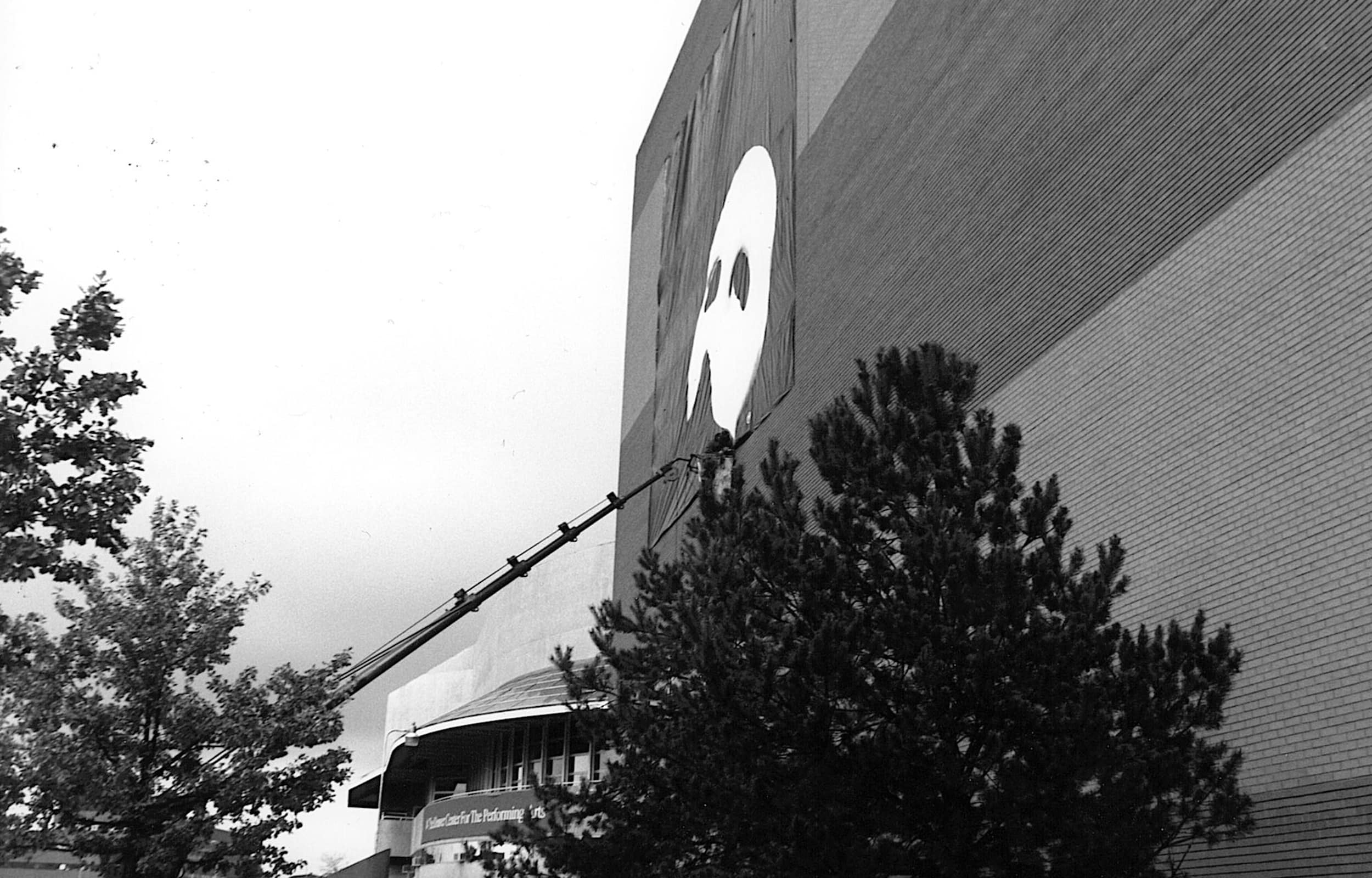
The Phantom of the Opera first appeared in Denver in 1991.
Before the Buell Theatre, Denver lacked a venue capable of hosting a show as large as The Phantom of the Opera. When Garner shared plans for the Buell Theatre with the show’s producers, they essentially told him, “If you build it, we will come.” Five years later, Denver was named as one of 20 cities to host the second national tour of the show.
Preparations were soon underway to make the show transportable in 28 semi trucks. The designer constructed 70 scale set models, which included 184 trap doors “with candles that pop up for a scene in the labyrinthian catacombs of the Paris Opera House,” reported the Rocky Mountain News.
While the floor was elaborate, the 12-ton, 61-foot overhead proscenium was even more so. “The proscenium arch can be adjusted to three different widths and three different heights or nine different sizes,” Paull explained to the News. It took eight months to build and, ultimately, the ends had to be cut off and welded back on to fit into the Buell.
From the 2.5 ton “Masquerade” staircase that featured 15 mannequins among the live actors to the reinforced rig that allowed the 1,200-pound chandelier to swing out over the audience, every moment relied on extensive technical effects. The show used 14 pyrotechnical effects, 10 moving light curtains, 75 lighting special effects, 52 automated effects, 21 winches, 54 motors, 22 radio microphones, 35 communication headsets, and 11 control consoles.
Once it arrived in Denver, it took 15 days to load in and assemble on the Buell stage. The show featured 22 scene shifts, 281 candles, 280 costumes, 479 lighting instruments and 550 pounds of dry ice. It required 36 performers, 32 orchestra members, 37 scenery and electrical system operators, and 60 crew members.
In short, nothing like it had ever been seen on a Denver stage.
In 1991, tickets were still sold by mail, and more than 7,000 order forms were received just two days after advertising began. Of those, 300 requests arrived via FedEx and letters were postmarked from as far away as Louisiana.
As The Denver Post noted, “some of the first nighters who showed up to launch the biggest theater event in Denver history were the cultural equivalent of baseball fans who manage to score World Series tickets without ever having spent an afternoon in the bleachers.”
The sold-out show welcomed nearly a quarter-million people to The Phantom of the Opera many of whom had never been to the Arts Complex and thousands of whom had never attended live theatre.
“The Phantom will be easily the largest theatrical production — longest run, biggest audience — in Denver’s and Colorado’s history,” reported the Rocky Mountain News. “But beyond that, the 10-week schedule of performances may demonstrate that given the right show in the right place, Coloradans will support theater in droves.”
Thirty-five years later, the Denver Center for the Performing Arts has hosted 516 Broadway shows, including well-known titles such as Hamilton, Wicked, the national tour launch of Disney’s The Lion King, and the pre-Broadway engagement of Disney’s Frozen. And together, they live on in the music of the night.
The Denver Center for the Performing Arts (DCPA) NewsCenter is the organization’s editorial platform for stories, announcements, interviews, and coverage of theatre and cultural programming in Colorado. We are committed to producing accurate, trustworthy, clearly sourced journalism that reflects our mission and serves our community.