DCPA NEWS CENTER
Enjoy the best stories and perspectives from the theatre world today.



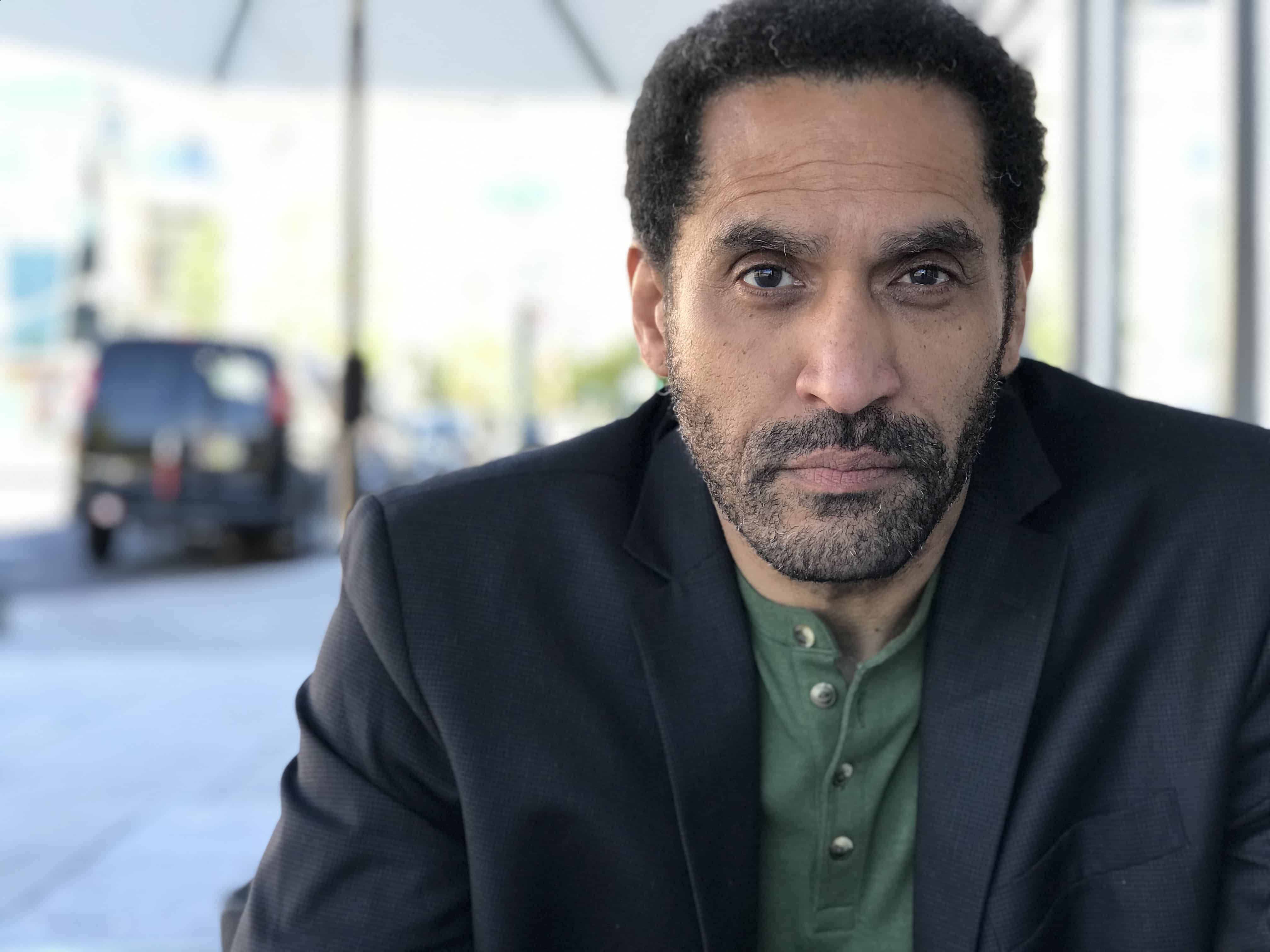
“I always loved westerns as a kid — the showdowns, the gunfights, all that,” playwright Terence Anthony said during a video conversation. His own contribution to the genre, Godspeed — a rousing saga about a formerly enslaved woman on a mission in post-Civil War Texas — is having its world premiere at the Denver Center Theatre Company.
In the popular imagination, the Western has made a home in the theater. The movie theater, that is.
After all, film captures the big sky we westerners dwell beneath. It depicts a vastness that humbles the heart but has also fueled ravenous ambitions. Cinema spent much of its first 100 years making manifest onscreen the designs of Manifest Destiny. Yet, in more recent decades it’s offered up revisions of those earlier stories — for good reason.
This is something the playwright gleaned over time.
“At a certain point, I realized, ‘Oh wait a minute, why are all the Indians the bad guys all the time? What’s going on?’” He began paying a different sort of attention.
— Terence Anthony, playwright of Godspeed
Anthony reels off a few of his favorite westerns, including two that fall under the revisionist rubric and feature black actors with storylines: 1985’s Silverado with Danny Glover and Lynn Whitfield as siblings and homesteaders, and John Ford’s 1960 drama Sergeant Rutledge, about the eponymous army man (portrayed by Woody Strode) being tried for the sexual assault and murder of a white woman.
“The genre of the Western is just such an amazing vehicle for talking about all the things American. All the things that led to where we’re at today,” Anthony said, joined by the play’s director, Delicia Turner Sonnenberg. “You can really trace back to how the west was ‘won,’ and the histories that were covered up. That a quarter or more cowboys were black, but we never saw that in books or films.”
The black quasi-cowboy protagonist of Anthony’s creation is actually a formerly enslaved woman named Anna who rechristened herself Godspeed. The play is set in Texas, shortly after the Civil War’s end. But it is no Juneteenth celebration. Texas is roiling. The once enslaved are unsure of where to go, how to begin negotiating their new lives: Is there a way to reset economically their relationship to their enslavers?
As for Godspeed, she has retribution in mind. For that dark if righteous payback, she totes a gun with one bullet.
Godspeed is one of the two plays getting its world premiere having had a well-received staged reading during the 2024 Colorado New Play Summit. (The other, Cowboys and East Indians, also wrestles with the ethos of the West.) Its settling in the Kilstrom is cause for applause but also curiosity. How does a genre so doggedly cinematic yield to the intimacy of the theater? Indeed, the script seems to call for cinematic gestures, like intertitles and maps charting Godspeed’s journey from Mexico up through Texas toward a reckoning. It’s easy to imagine the creative team defaulting to visual projections to nudge the storytelling. Cue Sonnenberg.
“Some of the vocabulary of the western — or just the West — is land and sky. I’ve been thinking a lot about that. Because we’re in the round instead of a proscenium. All of our theatricality is old school theatricality because it’s just a floor and an audience all around. So, the things that are strong in the play have to be strong in the production, and that is the relationships between the people.”
— Delicia Turner Sonnenberg, director of Godspeed
Sonnenberg is the founder and former artistic director of MOXIE Theatre, a San Diego-based company focused on presenting works by Women+ creatives. “Delicia has told me she usually doesn’t do ‘boy plays,’ so I was very honored that she was interested,” Anthony recalled, smiling.
But then how many plays have a protagonist as ferocious and mysterious as Godspeed? “A person shows up, then we find out it’s a woman, then we find out that she’s changed her name from Anna to Godspeed, and she’s on a journey,” said Sonnenberg. “It grabbed me from the very first scene. And then there’s the dream sequence, right? And then we get a two-person scene and half of it’s in Spanish!” Sonnenberg said that last bit with a hint of marvel.
Because Anthony has paired his thorny hero with — well, in a different era, Peklai Cobos, might have been called “sidekick.” The play’s not having any of that. A Mexican woman of Coahuiltecan descent, she often gives Godspeed as good as she gets — answering, arguing, advising, always in untranslated Spanish. It’s a gesture that will please some and fluster others.
“I think theater is at its best when it’s subversive,” Sonnenberg said about the playwright’s choices. Not just his refusal to translate Peklai’s dialog but his interest in a period of American history in which post-Civil War opportunity was met with the rise of Jim Crow suppression and violence.
In navigating the facts and context of the era, the duo found a partner in dramaturg Arminda Thomas. “I am drawn to stories about Reconstruction, and this one is a Reconstruction story in an underexplored setting (South Texas), and with a larger scope than most of those stories, that looks back to the Middle Passage, the annexation of Texas, the Spanish conquest…there’s a lot to dig into!” she wrote in an email.
“Part of what drew me to the play is the ballsiness,” Sonnenberg says. “I like swagger and it has it. There’s real muscularity in the writing. Like, ‘I’m gonna tell you a story and it’s gonna be good, and here we go!’”
Or, to borrow a phrase, “Giddy up!”
DETAILS
Godspeed
Jan 30-Feb 22 • Kilstrom Theatre
Tickets