DCPA NEWS CENTER
Enjoy the best stories and perspectives from the theatre world today.

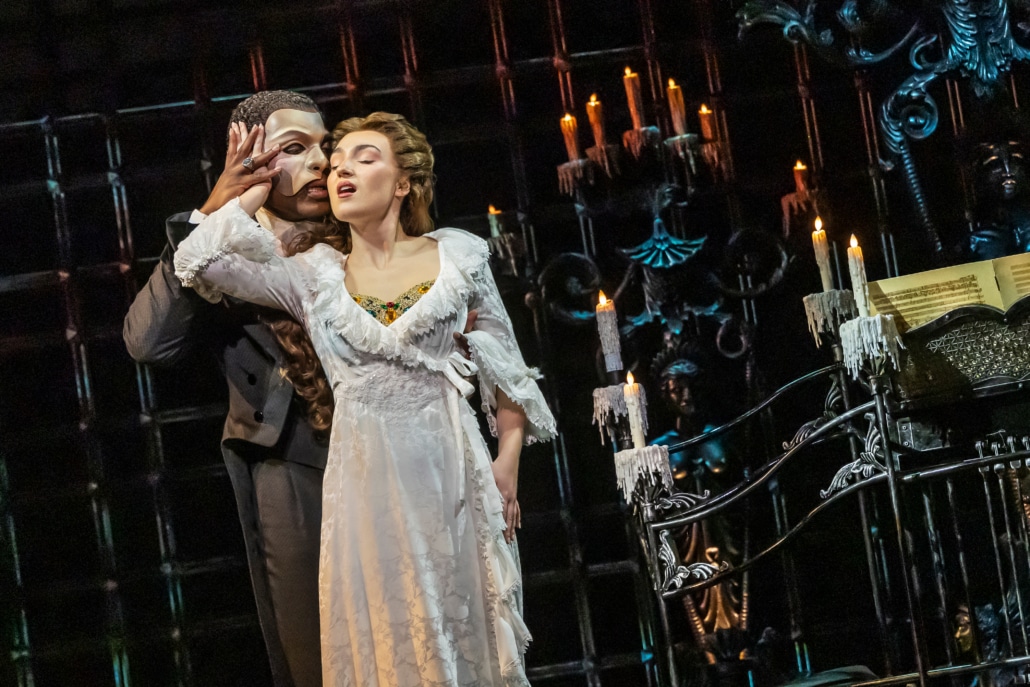
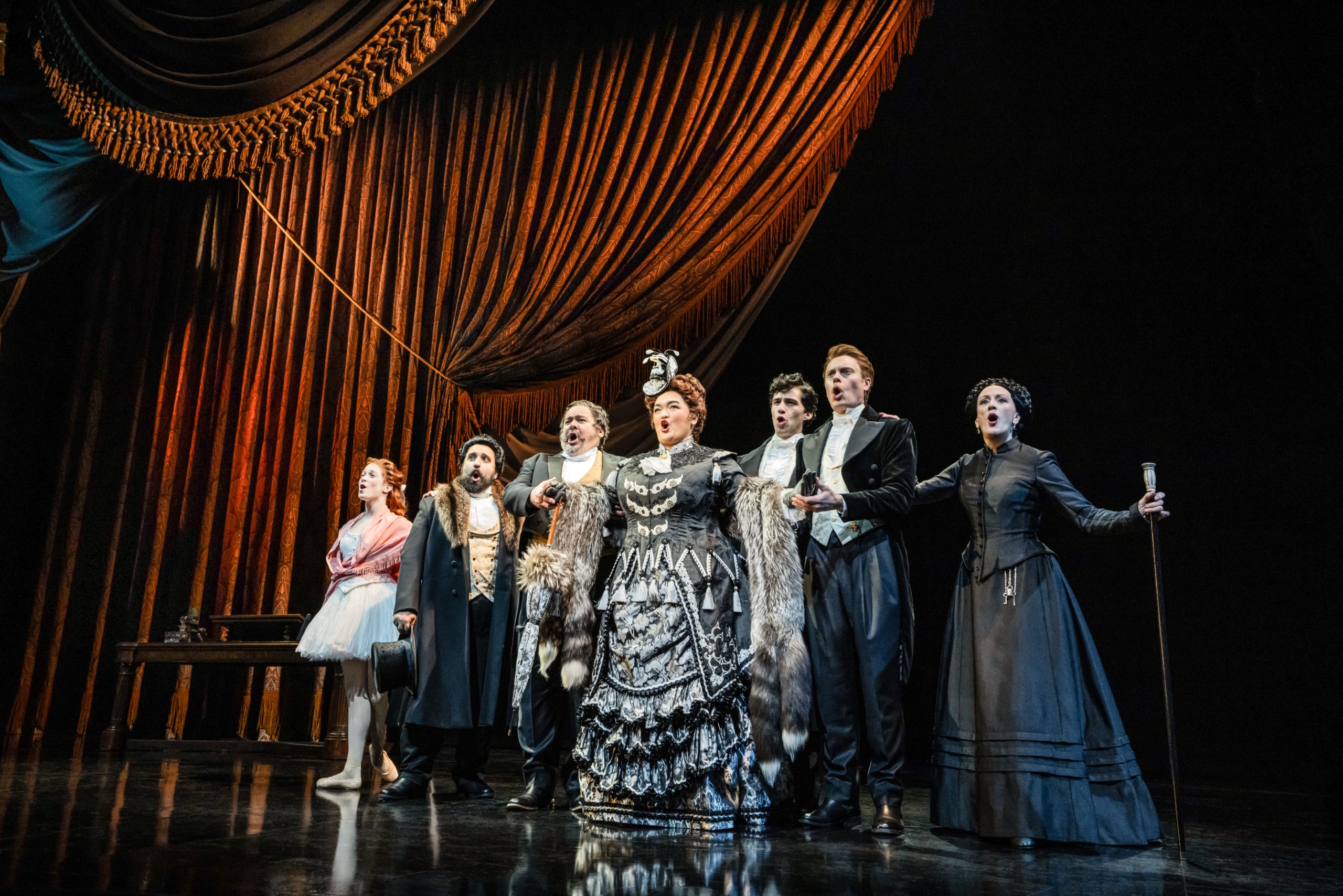
Melo Ludwig, Christopher Bozeka, William Thomas Evans, Midori Marsh, Daniel Lopez, Carrington Vilmont, Lisa Vroman in The Phantom of the Opera 2026. Photo by Matthew Murphy and Evan Zimmerman
Most national Broadway tours travel with only a small core of musicians; the remaining artists are hired locally. It is a model built on trust — trust that a city will offer not just skilled performers, but collaborators capable of matching the spirit and precision of Broadway.
For the recent Denver engagement of Some Like It Hot, that meant four touring musicians joining eight Colorado players at downtown’s Arts Complex to create a lush big‑band sound. For The Phantom of the Opera,10 local musicians will support that iconic score.
“You have this short rehearsal, and then you go on that night and play a show you aren’t used to playing in public,” Jim Harvey told CBS Colorado. “There is great security that the touring people know the show, and it is a chance for them to know they can trust the local musicians.”
Harvey’s work behind the scenes has been instrumental in shaping that trust, nurturing a community of performers who can meet any touring conductor’s pace, style, and expectations.
Art Bouton has performed at the Buell Theatre for decades, lending his versatility to some of Broadway’s most challenging scores. Preparation begins long before the first rehearsal. Musicians receive sheet music and conductor‑cam videos weeks in advance, studying the nuances of a pit they have not yet stepped into.
“We watch the conductor videos for maybe a month in advance,” Bouton said. “The traveling production comes in, and the skill we bring is that we are able to meld with what they are doing very quickly.”
That merging — the moment when individual players become a single organism — is where Bouton feels most alive.
“You can feel the energy from the audience,” he said. “It is about as much fun as you should be allowed to have. I tell everyone all the time that everyone works for a living. I play for a living.”
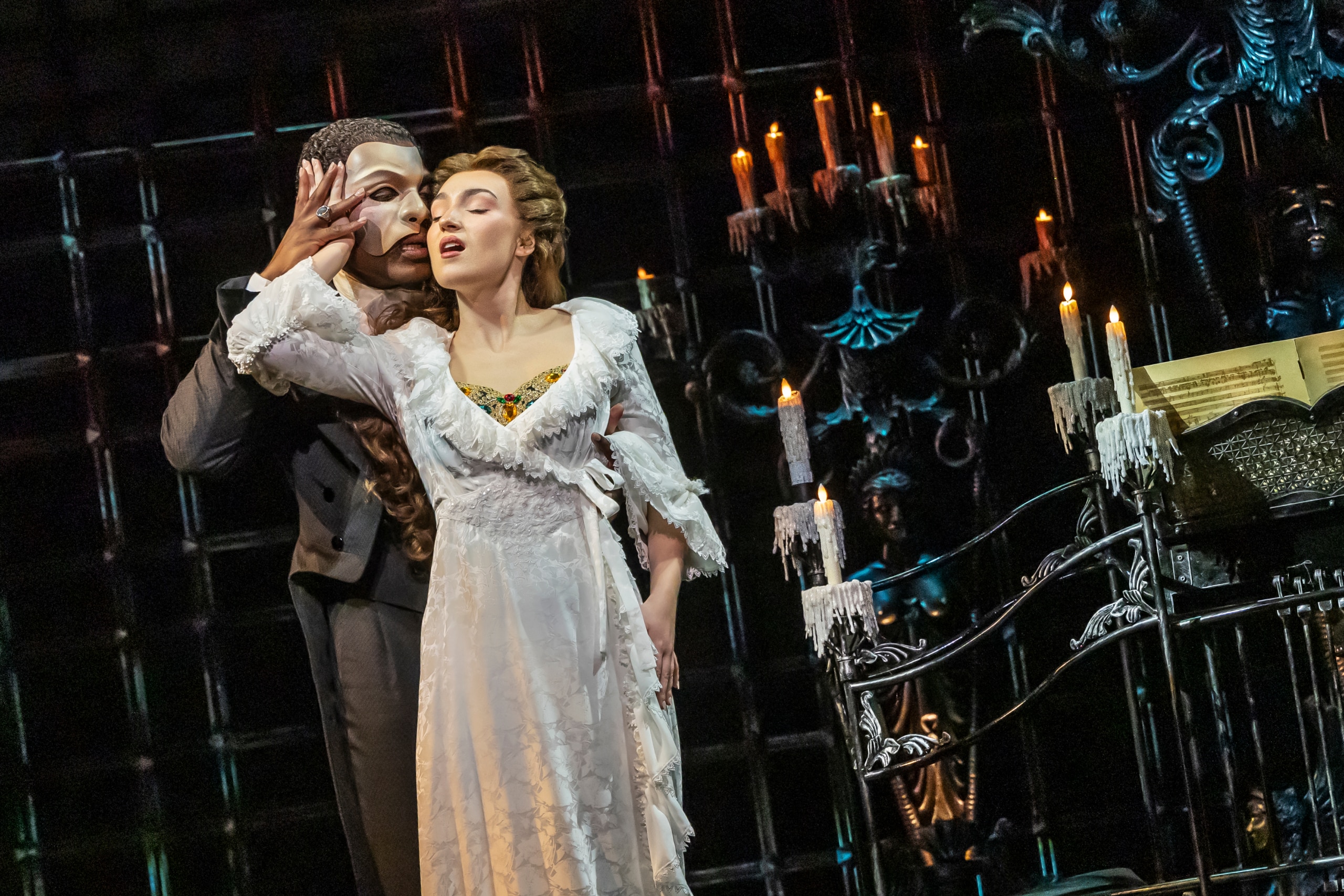
Isaiah Bailey and Jordan Lee Gilbert in The Phantom of the Opera 2026. Photo by Matthew Murphy and Evan Zimmerman
When The Phantom of the Opera returns to Denver’s Buell Theatre, it will mark 35 years since Jim first contracted the local talent for the show, including placing Bouton in the pit.
For Bouton, The Phantom of the Opera remains an artistic pinnacle, not because of a single moment, but because of the emotional honesty it demands from its musicians. “It’s called The Phantom of the Opera, but it is so operatic in nature that every emotion is magnified,” he said. “Nobody just has one feeling. They all have feelings. And we have to convey that.”
When asked about his favorite musical moment, Bouton named “Angel of Music,” a piece that centers the show’s tenderness amid its darker themes. But for him, the real challenge — and the joy — lies in the level of musicianship Phantom requires. He is tasked with playing several instruments in one single performance.
“My job is to play second flute with a really great flutist, and second clarinet to a strict orchestral clarinet,” he said. “I have to play at their level even though I’m a doubler. There’s zero slack given on that kind of stuff.”
That challenge transformed his career.
“Phantom led to me taking decades of private lessons on flute and clarinet,” Bouton said. “That was the start of it all.”
Rehearsals with touring companies move at lightning speed — often just hours from first downbeat to opening night. Harvey approaches that pace with humor. “Sometimes you turn the page and it is like, did we rehearse this today?” he joked. But what the audience hears is seamless, as if the musicians have been performing together for months rather than hours.
Bouton describes that experience with a kind of reverence. “I equate it to being in a submarine,” he said. “You can play your part really well, but you have to mesh well with the people around you.”
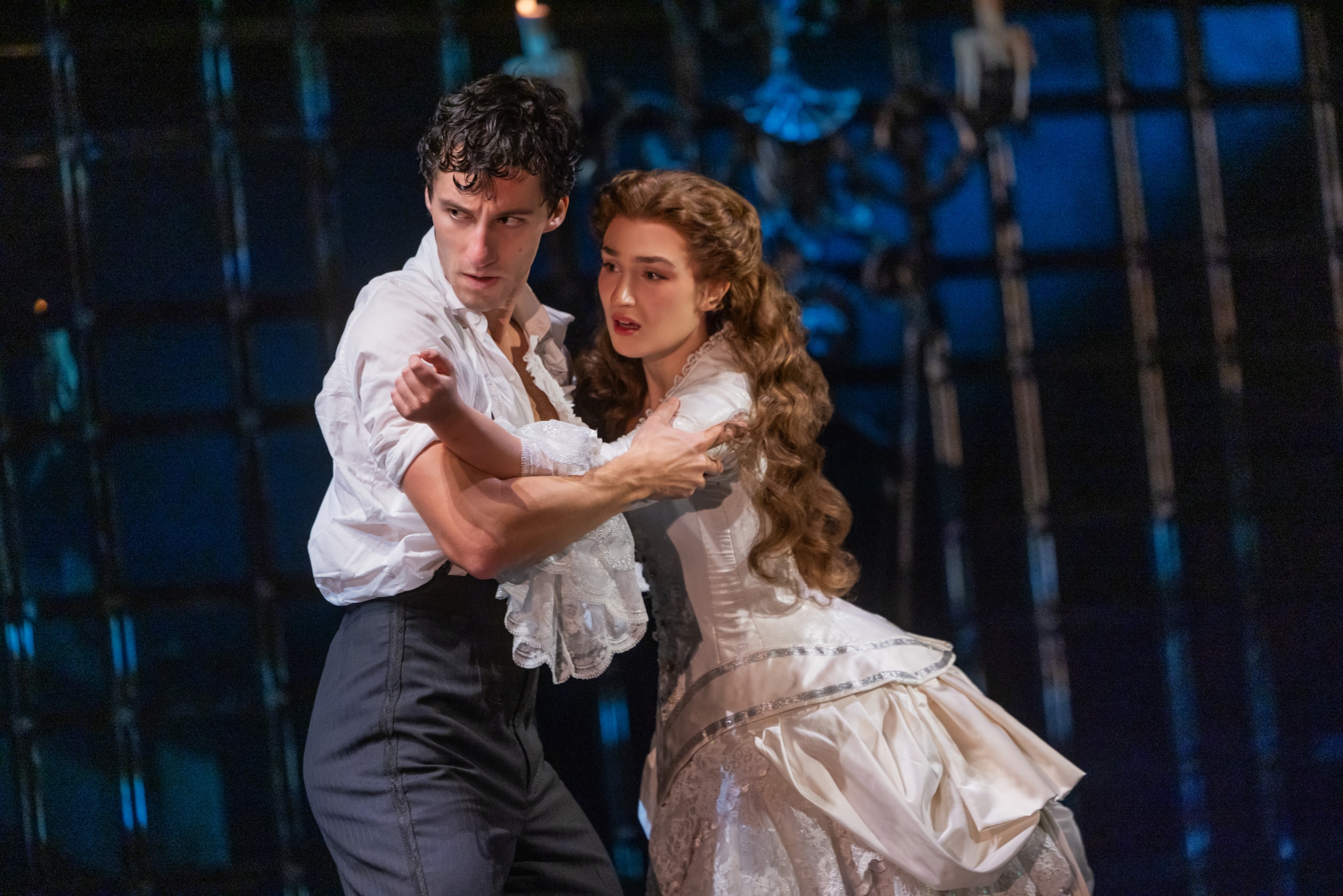
Daniel Lopez and Jordan Lee Gilbert in The Phantom of the Opera 2026. Photo by Matthew Murphy and Evan Zimmerman
Bouton says the ongoing challenge of the work — not just the grandeur of the productions — is what keeps him rooted in Denver’s artistic community.
“It keeps me growing,” he said. “Every production asks something new of me — a new color, a new level of detail, a new way of listening. I love that. The musicians here expect the best of each other, and that expectation has made me a better artist.”
Denver, he added, has become a home for performers who could choose anywhere in the country, but stay because of the depth and warmth of the community. “I work with people all the time who could be first call in New York,” he said. “But they choose Denver.”
For both Harvey and Bouton, The Phantom of the Opera was not just another production — it was a turning point, the beginning of a decades‑long relationship with the Arts Complex and with Denver’s vibrant performing arts community.
“It’s a huge, epic score,” Bouton said. “It’s a big deal.”
And when The Phantom of the Opera rises again in Denver, it will not arrive as a newcomer. For the musicians who helped shape its legacy here, it is a return — a reminder — and a homecoming.