DCPA NEWS CENTER
Enjoy the best stories and perspectives from the theatre world today.

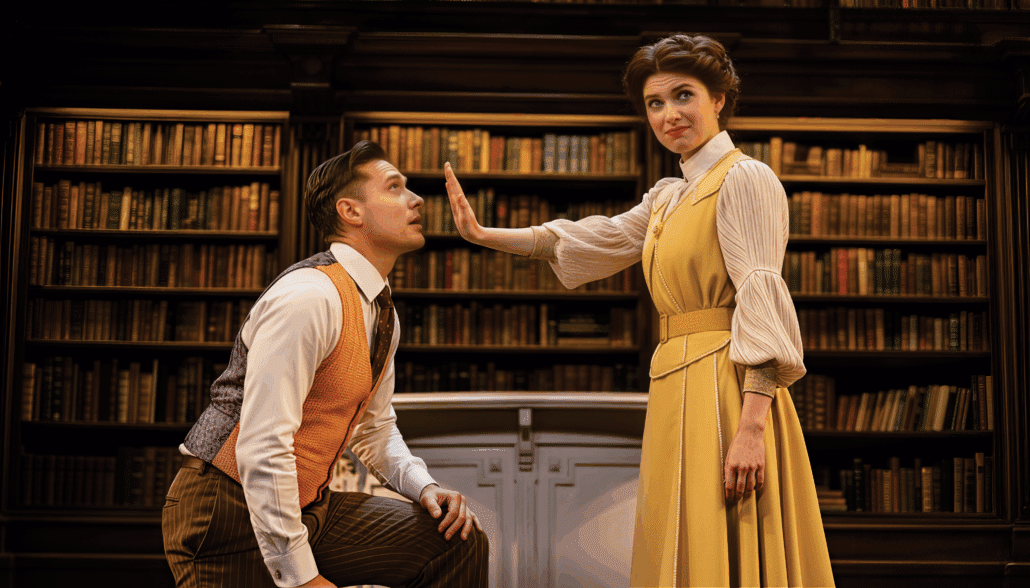
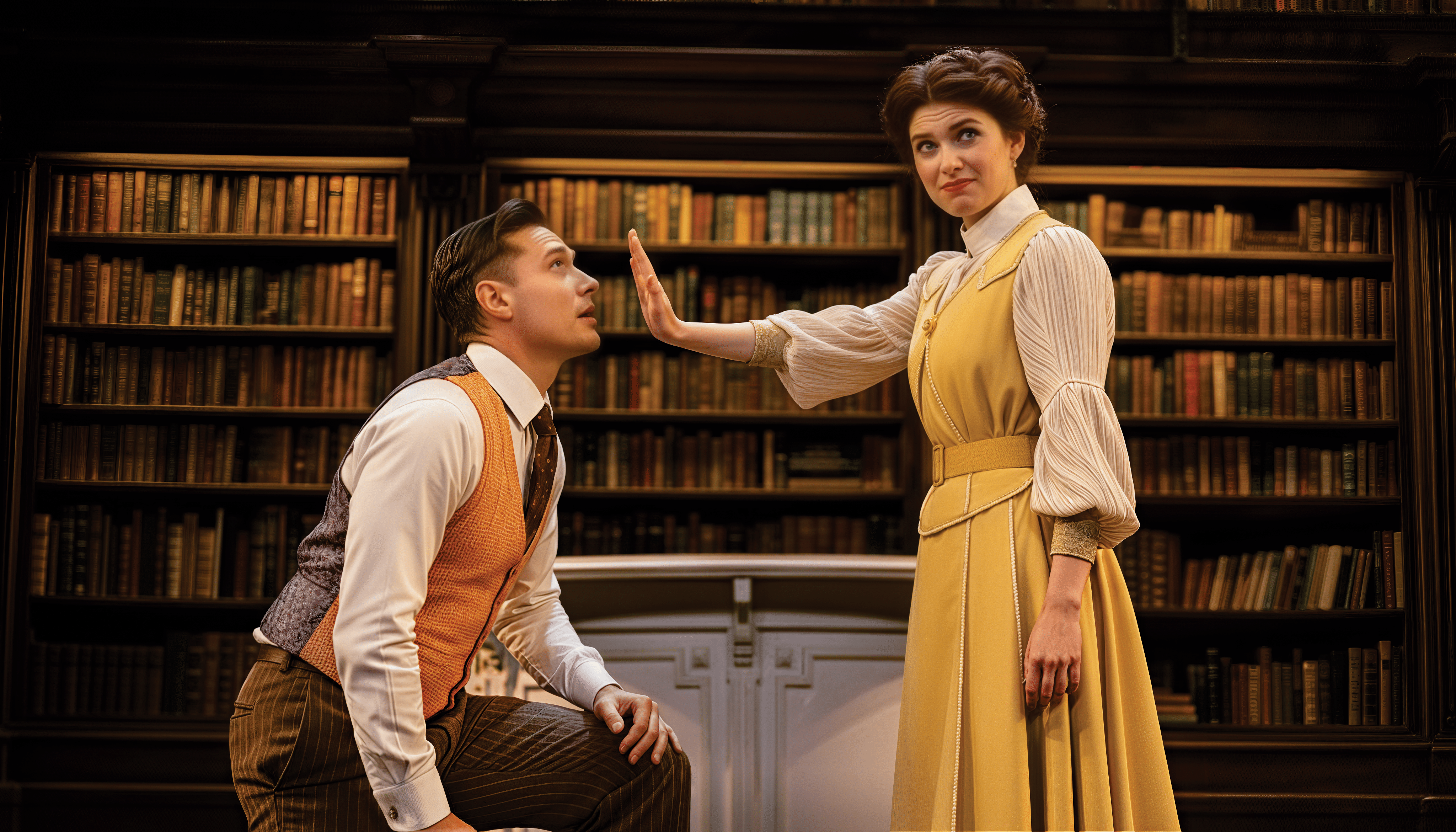
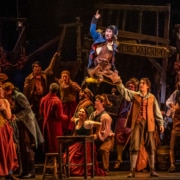
The Music Man
What makes something obsolete – and conversely, what makes it a classic? The very premise of Seven Brides for Seven Brothers – the abduction of young women to care for the brothers, who were inspired by the rape of the Sabine women – keeps it off most stages these days. The King and I requires heavy alterations to overcome its exoticism and condescension toward the culture of Southeast Asia.
One might guess The Music Man, nearly 70 years old, would fall into that category. Meredith Willson’s 1957 musical was drawn from his own childhood in Iowa, as well as his days playing the piccolo for John Philip Sousa’s legendary band. In tiny, fictional River City, Iowa, con man Prof. Harold Hill rolls into town to the rhythm of the train, promising to fix an entire town’s problem by teaching its youth to play band instruments.
But director Matt Lenz sees much relevance in it to our present day, and the culture reflected in the song “Iowa Stubborn.”
“I do think there is something to be heard differently today in terms of what’s happening in society. [River City is] a little bit stuck in its ways, and a little fractured, and a little cynical. And I love that the arts can come in and get them to harmonize, literally, and to change their minds.” — Matt Lenz, Director
The show was ahead of its time in its depiction of disability onstage. Young Winthrop, who could not speak at all in early drafts of the show, has a lisp and finds his confidence through playing the cornet. His older sister, Marian, is initially disgusted by Harold Hill’s con man ways, but won over by the tenderness shown her little brother.
“Marian, who I feel like is a very modern thinker for the era in which she lives, and morally courageous to stand her ground, honestly ends up being the reason that Harold finds his redemption,” Lenz says.
The tour headed to Denver is an entirely new production, a partnership among Big League Productions, director Lenz, and choreographer Josh Bergasse. In addition to helming several national tours, Lenz was the associate director on the Broadway productions of Hairspray and Catch Me If You Can. Bergasse, who was a swing in that production of Hairspray, has gone on to choreograph On the Town and Gigi. The two previously collaborated on the 2017 production of Charlie and the Chocolate Factory.
“It’s chockfull of those amazing songs,” Lenz says. “The first thing I thought was I need somebody like Josh Bergasse to do this with me because there are these huge, athletic, fantastic dances in it.”
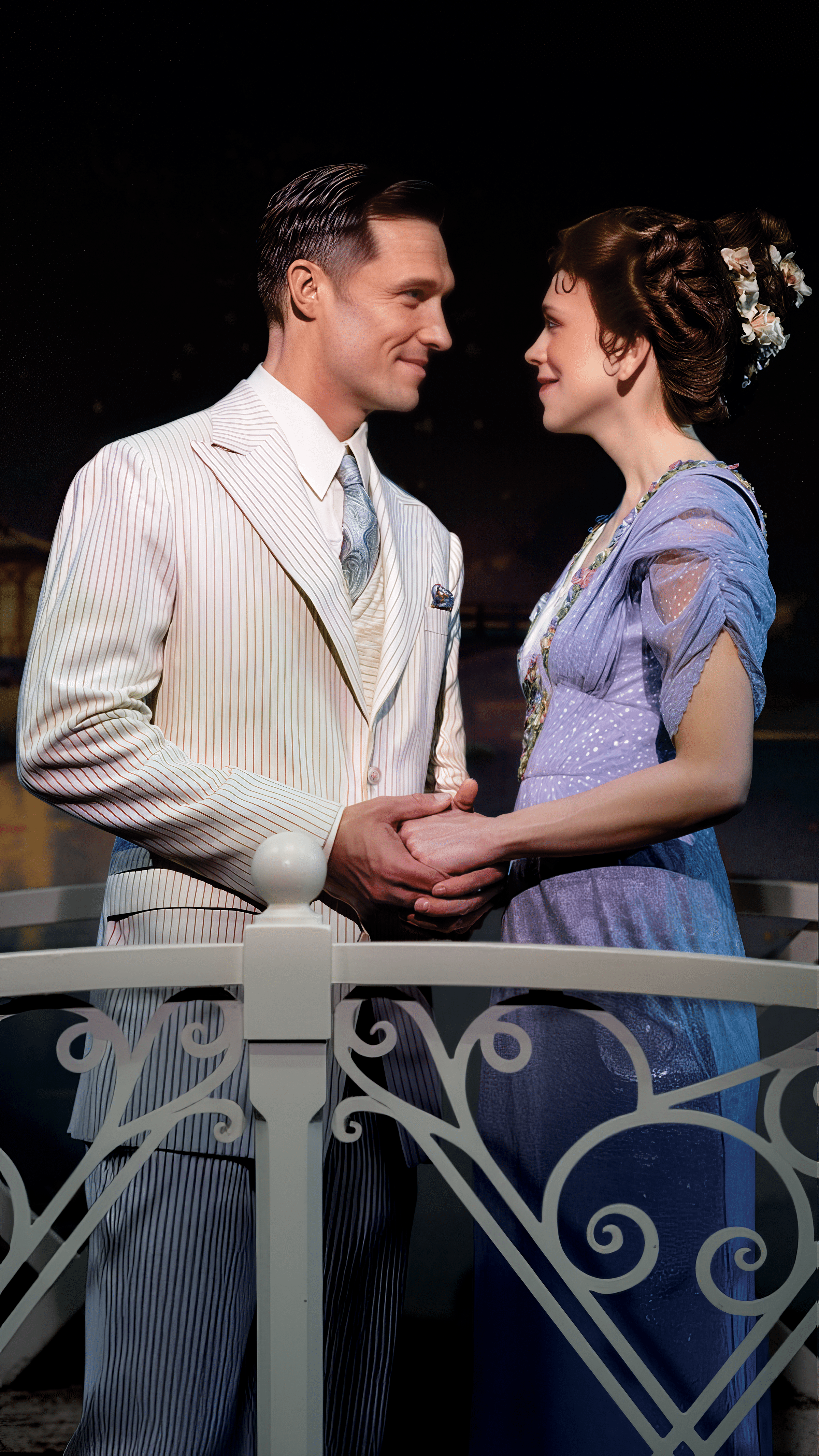
The Music Man
With a 34-member cast and 10 who are dancers first, the show is bringing back the full choreography that used to be a hallmark of musical theater but has become tamped down with more movement than dance in recent years.
“We’ve got to make sure we have a crew of real dancers in this, in kind of the old-fashioned way they did musicals,” Lenz says. “I’m really excited about the dynamism from those dances that surprise people. I don’t think there are tons of shows on the road these days that surprise people with that full-on dance.”
Part of that is the Tetris-like casting of a touring show. Every cast member has to fulfill a need, because they not only have jobs, but housing and food for the run of the tour contract. “What happens is, you’re sending this group of say, 40 performers out, usually less than that even, and because of the nature of touring, you have to cover yourselves, and so all of the leads have understudies, and then you have an ensemble that’s covered by swings,” Lenz says.
This means that swings and understudies have to be able to cover the acting and singing requirements of the principal characters. “Usually the dance is the thing that goes first,” Lenz says. “When you’re really doing the matrix, the choreographer is like, ‘They’re not that great of a dancer, but I see why you need them, because they’re going to have to cover the lead.’”
While little had to be eliminated from the show for today’s audiences (some use of Native American culture for comedy left productions several years ago), the designers met with an eye toward how today’s audiences would see, hear and feel, and what they could do to celebrate the musical’s core while reaching those theatergoers.
“The first thing we talked about was the rhythm of the show, which starts right off the bat with the train, so keeping the pulse and the rhythm of that going throughout,” Lenz explains. “In terms of the design, to make it clean and clear, and to make it pop for these awesome characters. And not to make it overdesigned so that the 30 people we have onstage can dance their butts off.”
Through it all, the design team wanted to emphasize the rhythm of the show, from the clickety-clack of “Rock Island” to the patter of “(Ya Got) Trouble.” That rhythm of the train, and the rap-like precursor of patter (stretching all the way back to Gilbert and Sullivan), all of it underlies the heart of the show, a small town that doesn’t want to be thrown off its rhythm.
“‘Rock Island’ is dialogue that literally just gradually becomes musicalized when the train starts up and you start to hear the rhythm of the train, and the salesmen fall into that cadence,” Lenz says of the opening number. “I want to find a way to carry that through even more. You look back and you think, wow, they were really ahead of their time. It had some Hamiltonian elements to it. Is there something to keep them in a kind of rhythmic lockstep? There’s something about that town just clicking along, and everything being the way it is, and then that relaxing, and then that scaring some people to death.”
And that’s a sensation that never falls into obsolescence.
DETAILS
Meredith Willson’s The Music Man
Feb 7 – Mar 1 • Buell Theatre
Tickets