DCPA NEWS CENTER
Enjoy the best stories and perspectives from the theatre world today.

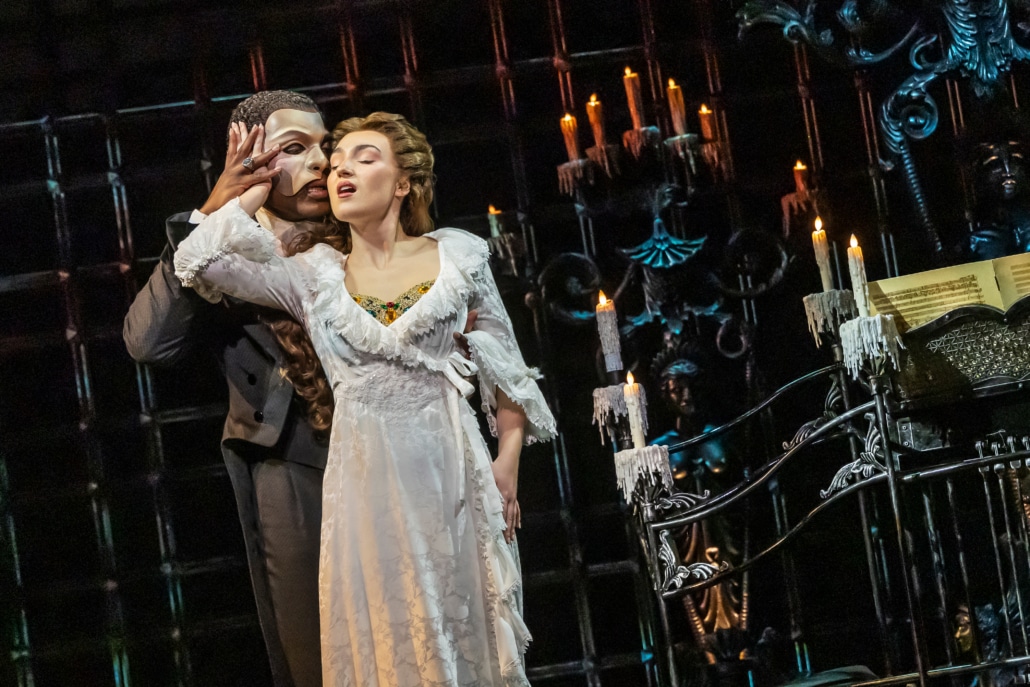
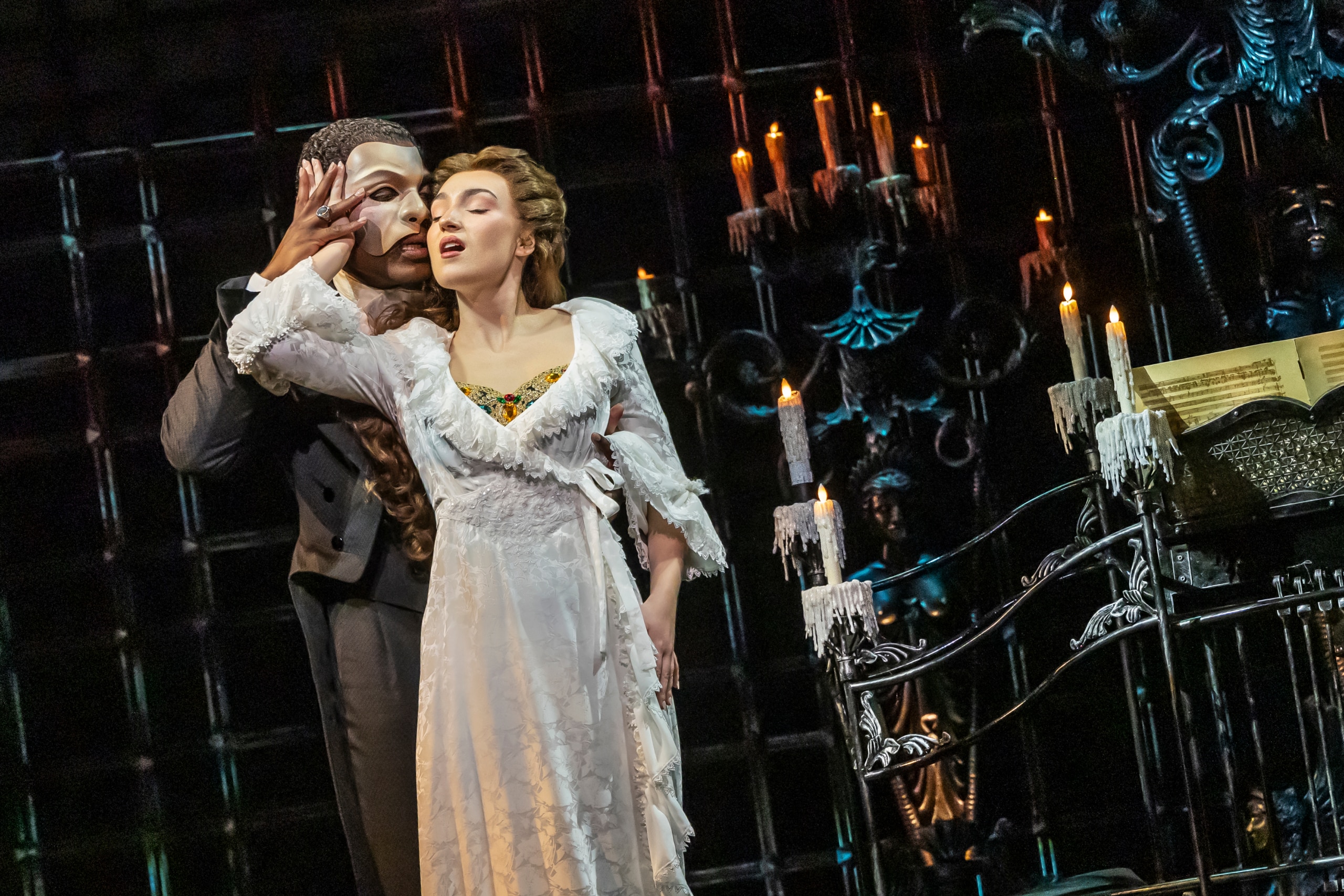
Isaiah Bailey and Jordan Lee Gilbert in The Phantom of the Opera 2026. Photo by Matthew Murphy and Evan Zimmerman
Maybe you saw the original performance on Broadway. Maybe you heard the music on a cassette or CD or through streaming — ripped a track to a mixtape or playlist to sing along to in your car. Or maybe a friend or sibling is a fan, wouldn’t stop talking about the chandelier, and brought you to the show. Whatever it may be, you’re swept up in the phenomenon that is The Phantom of the Opera returning to Denver’s Buell Theatre March 18-April 5, 2026.
“Phantom has become cultural as opposed to just some theatrical musical event,” muses director Seth Sklar-Heyn, whose first experience with the show was as the youngest volunteer usher at his local theatre before eventually assistant stage managing it on Broadway (still as a teenager). “It’s beyond the stage. It’s incredibly special.”
Since the debut of Cameron Mackintosh’s lavish production in 1986, Andrew Lloyd Webber’s haunting story of the enigmatic musical genius and his obsession with a talented young soprano has exhilarated and electrified audiences worldwide. In 2012, the musical celebrated its 10,000th performance and is the longest running show in Broadway history, and the second longest-running West End musical. Forty years later, a new cast balances the tension of honoring the original while simultaneously refreshing the experience for today’s spectators.
“There’s an incredible power that comes from nostalgia. It doesn’t need to mean dusty or tired — there is something vital about it. And for me, the nostalgia that audiences have for the show increases their own investment in the show. They have their own memory, and it’s incredibly strong. They’re introducing it to new generations and other people in their lives who didn’t see it, and that’s what keeps it alive.” — Seth Sklar-Heyn, Director
Done right, nostalgia has the opposite effect of making something feel outdated or mimicked. “It gives a reason for the performance to feel renewed because people want to see it,” observes Sklar-Heyn. “They want to relive an experience, and hopefully we’re now delivering a production that is enhanced in some way, making it even better than they remember it.”
As someone who’s been involved with The Phantom of the Opera from so many different angles and perspectives over the years, Sklar-Heyn’s relationship to the show emanates tenderness, trust, and care for the musical, its casts and audiences, and its history and longevity. “Phantom has been a vocation in a way, more than a job — ‘I do Phantom!’” he laughs. “In many ways, I want to protect it, and I think what’s changed over the years is that it’s not about keeping it the same. It’s about knowing what I know, how it works, and what the creative expectations are. The way I can ‘protect it’ is by keeping it alive, and I have to bend and allow performers to bend, so that it continues to work.”
The challenge of staging Phantom today comes from respecting audience memories, while also rejuvenating the experience — all while sparking and tending to the fiery feelings that may arise from watching the show.
“People will always have criticisms and make some generalizations about how the show tells the story of a mysterious masked man luring an ingenue to the basement of the Opera House,” Sklar-Heyn relates. “But I can tell you there is more to it and we talk about how to frame these human relationships for today without changing the story. And people have noticed it, such as Christine having more agency, autonomy, and presence of mind as opposed to just being a victim who’s seduced or manipulated.”
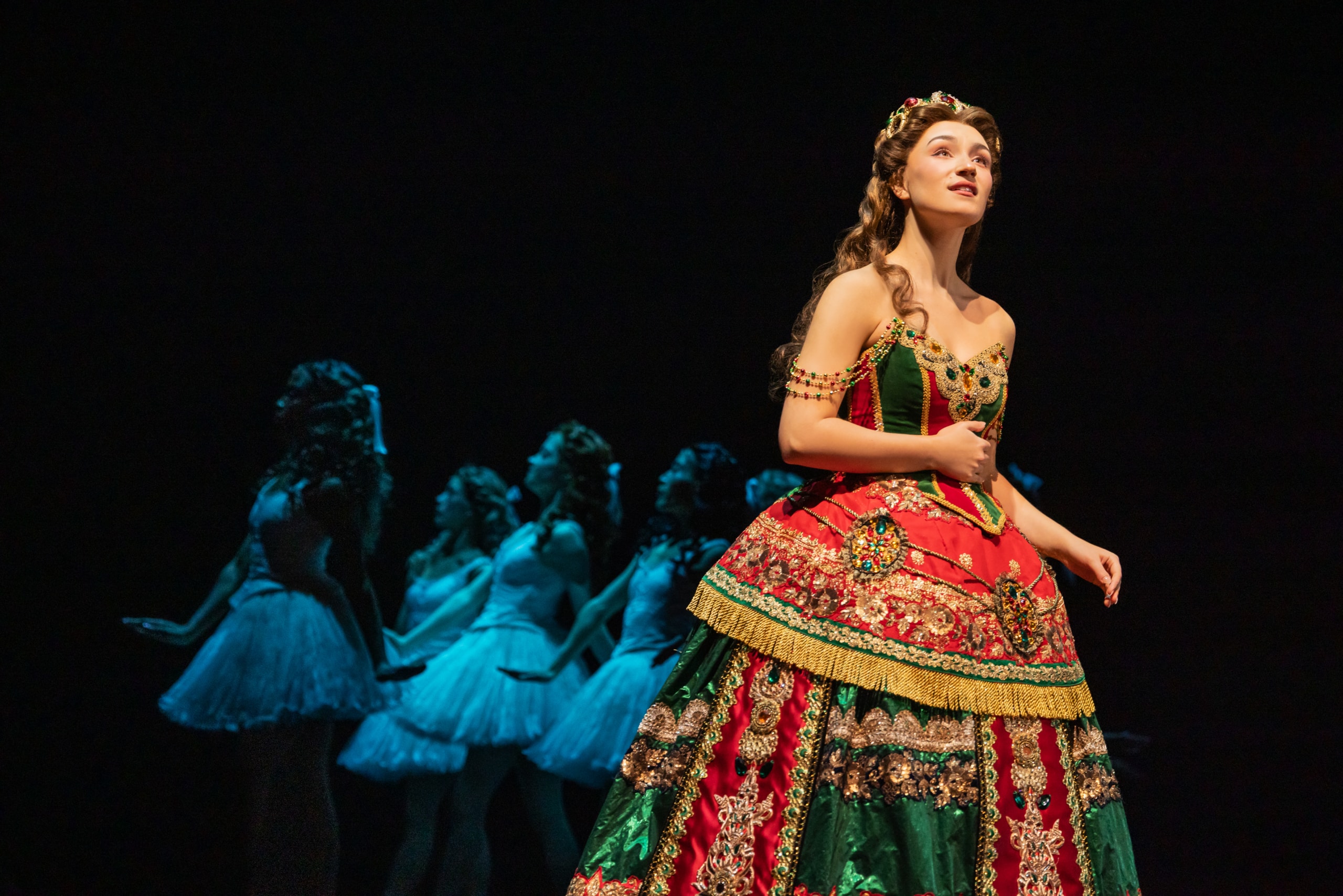
Jordan Lee Gilbert in The Phantom of the Opera 2026. Photo by Matthew Murphy and Evan Zimmerman
The role of Christine Daaé is typically shared by two actresses (a principal and alternate) across different performances due to its vocal demands. In this tour, Jordan Lee Gilbert and Alexa Xioufaridou Moster inhabit the gifted ingénue in their own way. In addition to their scintillating voices, each of them brings their own version of warmth, strength, and groundedness to a character who might otherwise be dismissed as dreamy, naïve, or a victim. And as strength comes in many forms, so does obsession. Isaiah Bailey’s plaintive portrayal of the Phantom’s dangerous longing overflows not with bravado, but with grief. Through Bailey’s burnished voice, the Phantom’s tortured intensity becomes elegiac.
The emotional shifts are a potent approach to revitalizing the musical. In addition to the cast’s nuanced choices, part of crafting a refreshed experience while maintaining the show’s legacy is through making small, incremental changes that all add up to a different kind of elegance than the original. Little costume changes that feel familiar but new. Hand gestures or postures that emanate differently from an actor’s body. Back stories and names — that the audience might never learn — make the performers more than extras or ensemble dancers at a masquerade. Like Christine and her childhood sweetheart Raoul, they are also shocked Opera house guests and witnesses of the Phantom’s grandiose demands and desires.
Sklar-Heyn tells a story about one ensemble actor who suggested maintaining the identity of a specific character during a scene transition which wasn’t previously in the staging, and how as a result, “He’s creating more story — which means for an audience, you’re not just seeing people put on costumes and letting the costumes be the show. You’re seeing people be these characters and bring this world to life.”
The Denver Center for the Performing Arts (DCPA) NewsCenter is the organization’s editorial platform for stories, announcements, interviews, and coverage of theatre and cultural programming in Colorado. We are committed to producing accurate, trustworthy, clearly sourced journalism that reflects our mission and serves our community.