DCPA NEWS CENTER
Enjoy the best stories and perspectives from the theatre world today.

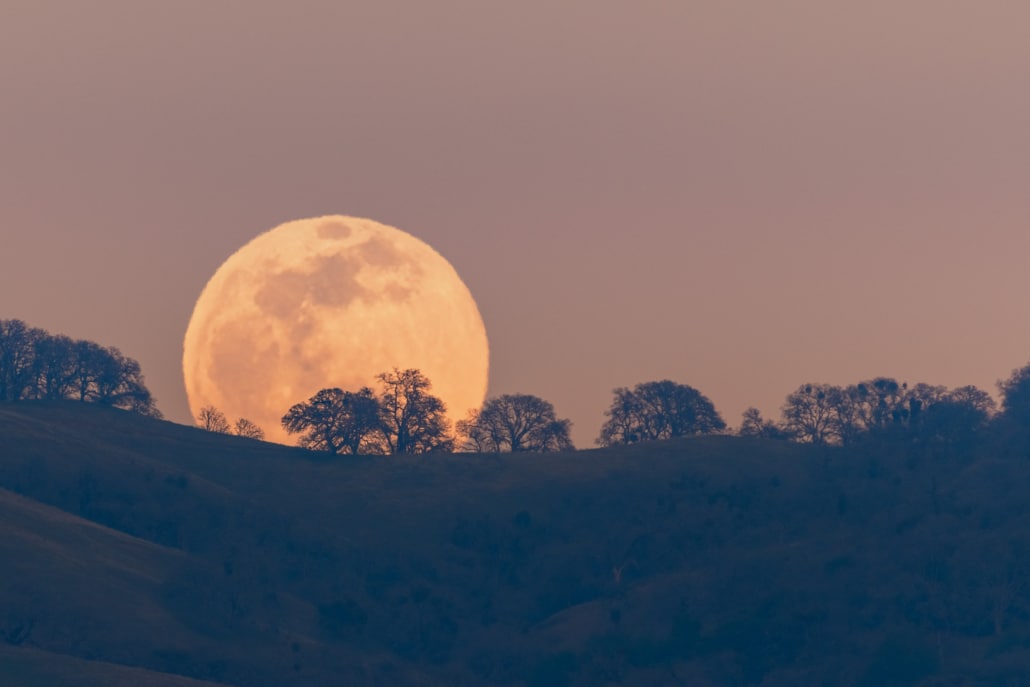
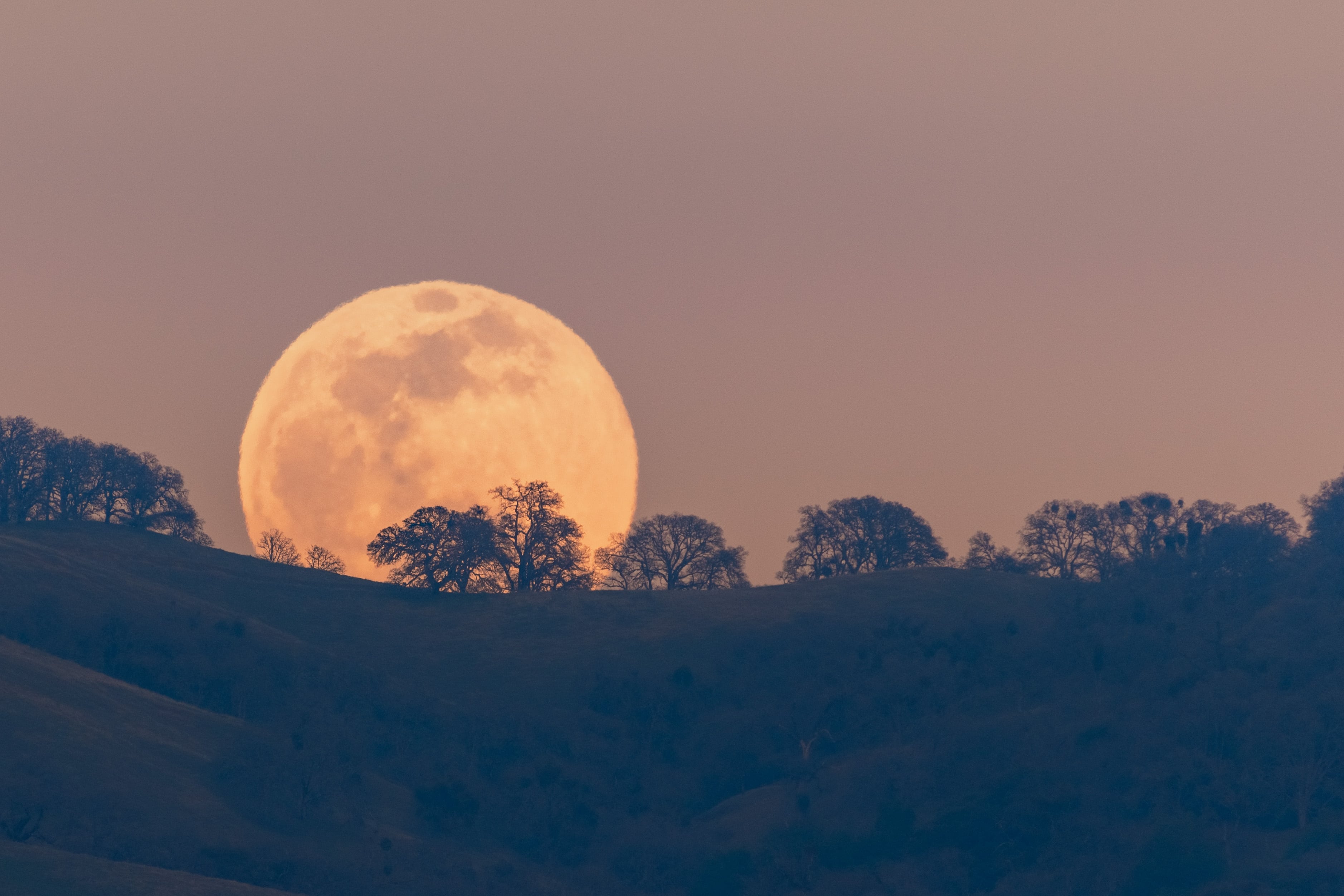
With winter solstice fast approaching and Goodnight Moon about to enter the final month of its Denver Center run (now through Jan 25, 2026), there’s never been a better time to say “Hello, Moon.” So I met up with Mitch Slevc, Educator Performer at the Denver Museum of Nature and Science, in order to learn more about the Earth’s most trusted sidekick. Our following conversation has been condensed and edited for clarity.
The name of the show is Goodnight Moon. But I myself, out in the field, have observed the moon out during the day. What’s going on there? Is something wrong?
The moon is going around the Earth, and it takes about a month. If the moon is on the far side of the Earth from the sun, then the sun will be shining on the moon, and from the Earth we’ll see a full moon. So when the moon is full, you’ll see the moon rise as the sun goes down, at the beginning of nighttime, and then it will set as day breaks.
Fourteen days later, the moon will be between the sun and the Earth. And then from the Earth, we’ll be looking at the side of the moon without sunlight on it. It’ll be nighttime on the moon — new moon. So when the moon is at its darkest, it will rise in the morning and be up in the sky all day, although harder to see because not as much of it is lit. And then it will set at nighttime.
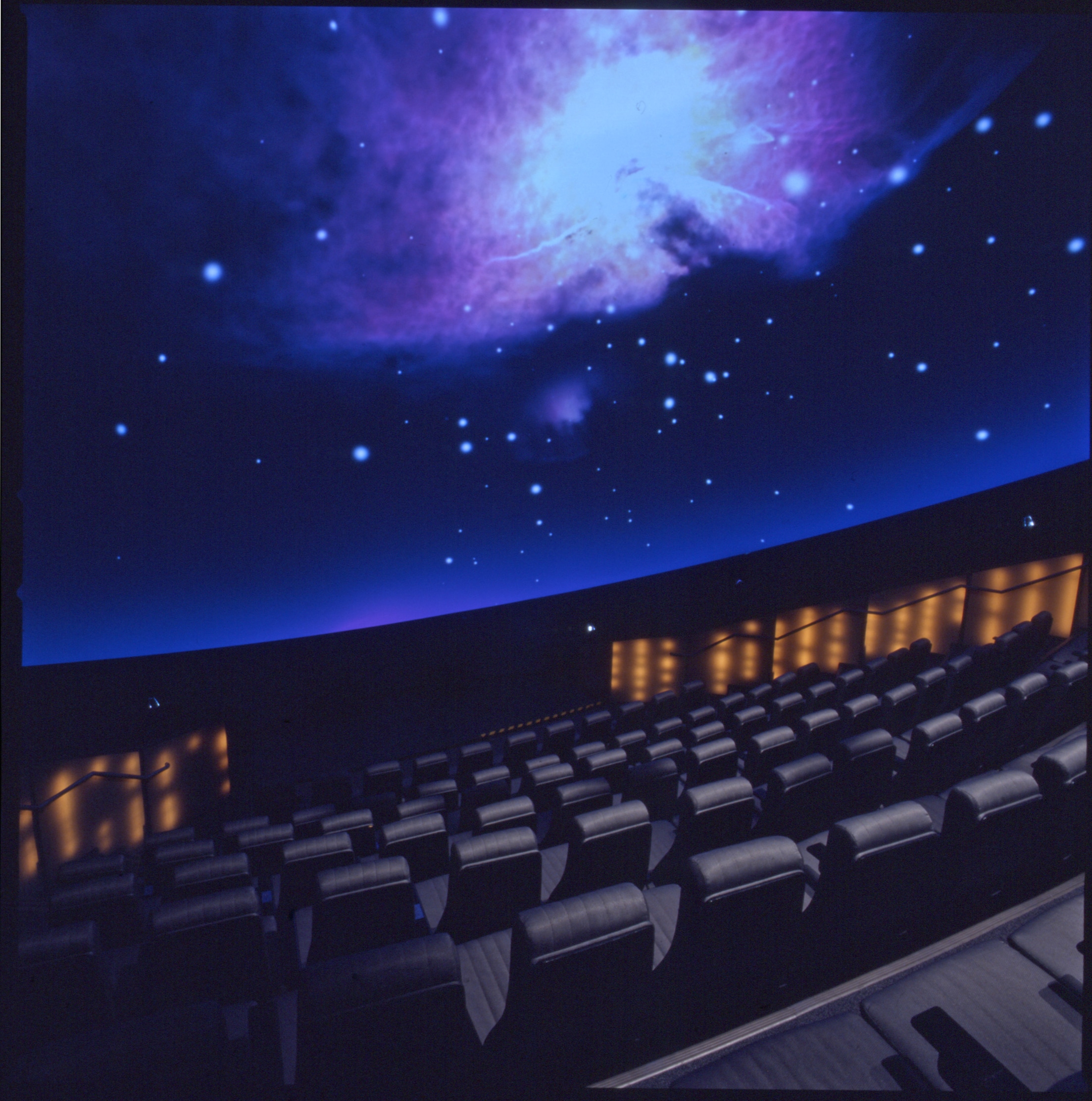
Gates Planetarium. Photo courtesy of Denver Museum of Nature and Science
People toss around the phrase “once in a blue moon.” What is a blue moon and how often is it?
Every full moon has a name. And they don’t mean anything, astronomically speaking. They have cultural reasons. A blue moon is the second full moon in a calendar month, which is rare. But it’s not actually blue.
Recently we had a beaver moon, which is the first full moon in November. It’s called that because in that time of year, beavers are very active. Beavers are nocturnal, so when the full moon is out you can see them more often.
What about a blood moon? Sounds sinister.
If there is a lunar eclipse — which is when the shadow of the Earth falls on the moon — then what happens is that the sun is going through the atmosphere around the Earth and is basically projecting a sunset onto the moon. So the moon will appear red.
Can you confirm whether the moon is made of cheese?
No. It is not made of cheese. But you know what the moon is made out of?
Um . . . rock?
Yes. But specifically, it’s made out of the Earth. We sent astronauts there in 1969, they gathered a bunch of moon dust, and they brought it back. Of course they were like, “These moon rocks are going to be so weird. Can’t wait to see these moon rocks.” But when they tested them…they are identical to Earth rocks.
The most likely thing that happened, our leading theory, is that early Earth, lava planet like that one in Star Wars, something big crashes into it, rips off a bunch of it, and then that chunk that got ripped off forms into the moon.
I read that during Apollo 14, the astronaut Alan Shepard smuggled a couple golf balls and went golfing on the moon. What activity would you do if you went to the moon?
It’d be really fun to see how far you could jump.
It’d be cool to bring a trampoline to the moon.
A soccer ball would be fun.
A frisbee…would not be that fun. I think you could throw it, but it wouldn’t float on the air like it does on the Earth. ’Cause there’s no air.
A slinky would be fun. Probably.
Would a slinky do something crazy?
Just be slower I guess?
 Okay. That’s cool.
A zorb! It’d be a zorb! You know those big inflatable balls you can get inside? That’s what it is.