DCPA NEWS CENTER
Enjoy the best stories and perspectives from the theatre world today.

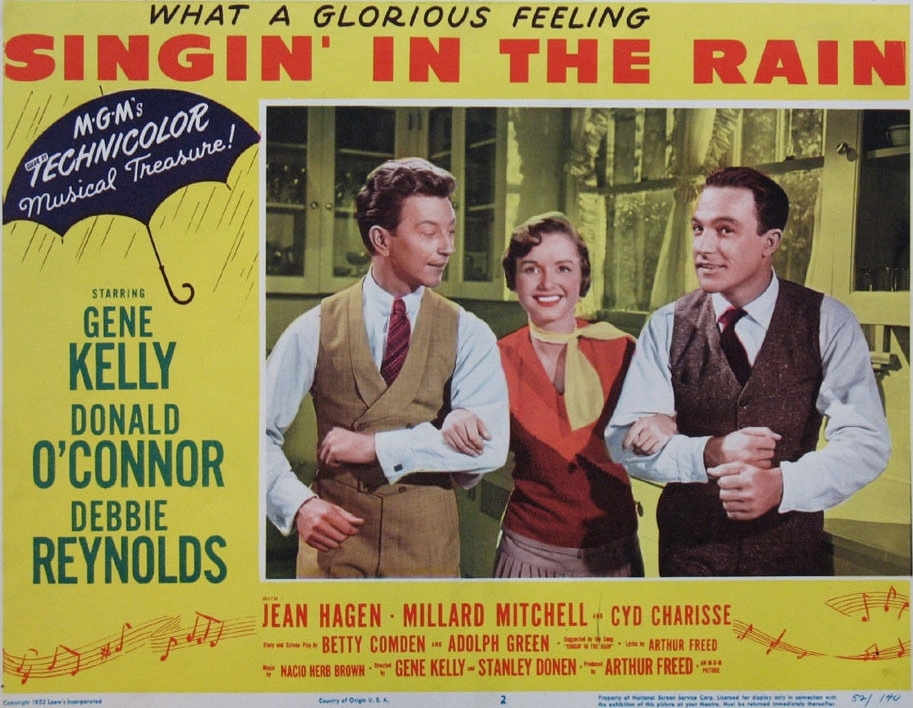
Singin’ In The Rain Lobby Card from WikiCommons. Public Domain
The instant someone mentions Singin’ in the Rain (1952), you picture actor Gene Kelly with a lamppost in one hand and an unused umbrella in the other while he belts out the lyrics:
I’m singin’ in the rain, just singin’ in the rain
What a glorious feelin’, I’m happy again
Considered by many to be the greatest Hollywood movie musical ever made, Singin’ in the Rain was a classic in the making. Excerpts from the movie have inspired scenes in Spamalot, “Paddington Goes to the Movies,” Silver Linings Playbook, Brooklyn, and La La Land among others.
But never before has someone imagined what might have happened behind the scenes during the filming of the iconic movie. Until now.
Playwright Jay Berkow’s What a Glorious Feeling! is a fictional account of what could have happened on set during the making of this legendary movie. But to understand this imagined story, you have to know the players.
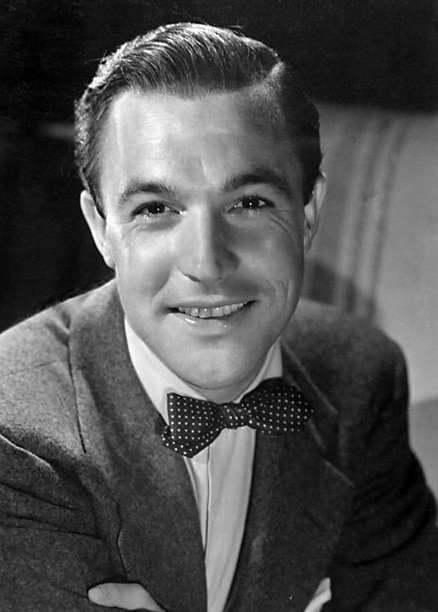
Gene Kelly. Publicity photo distributed by MGM. Public Domain
Few performers left a larger mark on the American movie musical than Gene Kelly (1912-1996), whose athletic dancing style and innovative choreography helped redefine film musicals. Born in Pittsburgh, Kelly trained as a dancer while attending college and first rose to prominence on Broadway, earning acclaim for his starring role in Pal Joey before heading to Hollywood in the early 1940s. Once there, he quickly became one of MGM’s biggest stars, appearing in such classics as For Me and My Gal, Anchors Aweigh, On the Town, and An American in Paris. His combination of classical technique and approachable movement helped transform perceptions of male dancers.
Kelly was more than a performer. He was also an accomplished choreographer and director who championed the idea that dance should deepen character and advance storytelling. His creative partnership with Stanley Donen produced some of the most celebrated musicals of Hollywood’s Golden Age, and their work continues to influence filmmakers and choreographers today.
Among Kelly’s many achievements, Singin’ in the Rain remains his most enduring legacy. The film, which Kelly co-directed and starred in, is widely regarded as one of the greatest movie musicals ever made. More than 70 years after its release, Kelly’s artistry continues to define the genre and inspire new generations of performers.
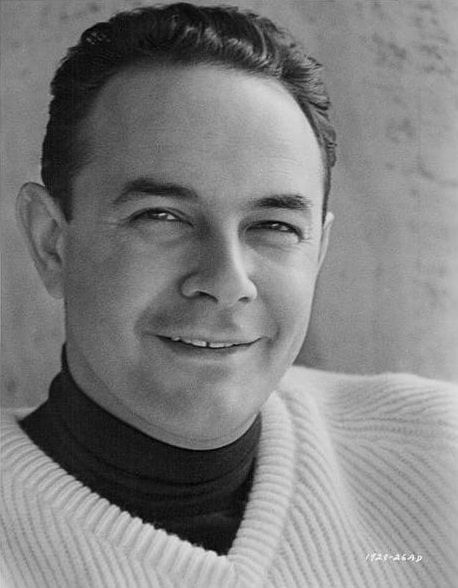
Headshot of film director Stanley Donen, to promote his movie ‘Charade’, 1963. Photo by Pictorial Parade/Moviepix/Getty Images. Public Domain
Stanley Donen (1924-2019) was one of Hollywood’s most influential directors and choreographers, helping to transform the movie musical into a distinctly cinematic art form. Born in South Carolina, Donen developed a passion for dance and filmmaking at an early age, inspired by the musicals of Fred Astaire. At just 16, he moved to New York to pursue a stage career and joined the chorus of the original Broadway production of Pal Joey, where he met Gene Kelly — the beginning of a creative partnership that would shape both of their careers.
Donen’s breakthrough came when he and Kelly co-directed On the Town, a film celebrated for taking musical numbers out of the studio and onto the streets of New York City. Their partnership reached its greatest achievement with Singin’ in the Rain, which they co-directed and choreographed. The film showcased Donen’s ability to blend fantasy, comedy, dance, and storytelling into a seamless cinematic experience.
After establishing himself as a leading force in musicals, Donen enjoyed a successful solo directing career with films such as Seven Brides for Seven Brothers, Funny Face, Charade, and Two for the Road. His versatility extended beyond musicals into sophisticated comedies, romances, and thrillers. Today, Donen is remembered for his lasting influence on how movement, camera work, and narrative can work together on screen.
Unlike Gene Kelly and Stanley Donen, Jeanne Coyne (1923-1973) was not a household name, but she played an important role behind the scenes during Hollywood’s Golden Age. A dancer, choreographer, and dance assistant, Coyne contributed to several landmark MGM productions and worked closely with some of the era’s most influential creative talents.
Coyne was a frequent collaborator of Gene Kelly and Stanley Donen. Alongside fellow dancer Carol Haney, she assisted with choreography and dance direction on major productions while also appearing on screen in several musicals including On the Town , Summer Stock, Kiss Me, Kate, and Singin’ in the Rain on which she also served as assistant dance director. Although many of her screen appearances were uncredited, her behind-the-scenes work helped bring some of Hollywood’s most memorable musical sequences to life
Coyne’s personal life also intertwined with Hollywood history. She was married to Stanley Donen from 1948 to 1951 and later married Gene Kelly in 1960. Together, Kelly and Coyne had two children, and they remained married until her death from leukemia in 1973. While she is often mentioned in connection with the two legendary filmmakers, Coyne’s own accomplishments as a dancer, choreographer, and creative collaborator earned her a place in the story of the American movie musical.
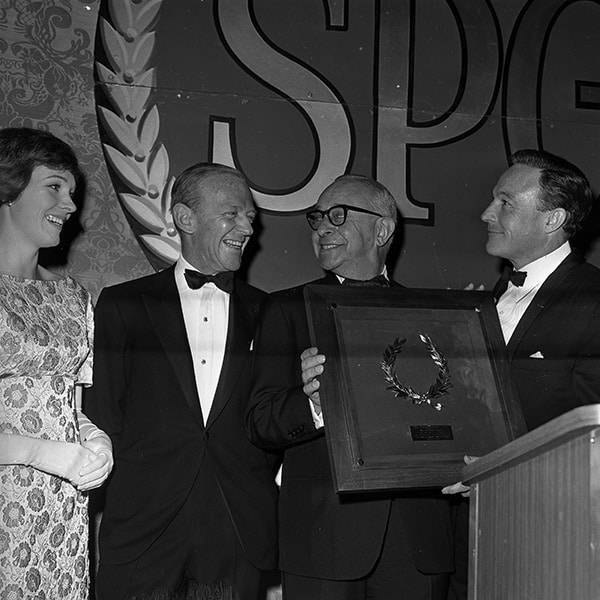
Producer Arthur Freed, center, received the Screen Producers Guild’s Milestone Award. Julie Andrews, Fred Astaire, left, and Gene Kelly were among the guests. Creative Commons Attribution 4.0 International license
While Gene Kelly and Debbie Reynolds became the public faces of Hollywood musicals, producer and lyricist Arthur Freed (1894-1973) was one of the key figures responsible for shaping the genre behind the scenes. Born in Charleston, Freed began his career as a pianist, vaudeville performer, and songwriter before joining MGM as a lyricist in 1928. Working with composer Nacio Herb Brown, he co-wrote a number of popular songs, including “Singin’ in the Rain,” “Broadway Rhythm,” and “You Are My Lucky Star.”
Freed’s greatest impact came as a producer. After serving as an associate producer on The Wizard of Oz, he was given the opportunity to build his own production team at MGM. This group, known as the “Freed Unit,” became synonymous with some of the most acclaimed movie musicals ever made — Meet Me in St. Louis, On the Town, An American in Paris, and The Band Wagon.
Freed’s connection to Singin’ in the Rain ran especially deep. Not only did he produce the film, but the movie was built around songs he had written decades earlier with Brown. In fact, the title song was originally written long before the film existed. The screenplay was later crafted around the Freed-Brown song catalog, making Arthur Freed both the producer and one of the creative inspirations behind the musical.
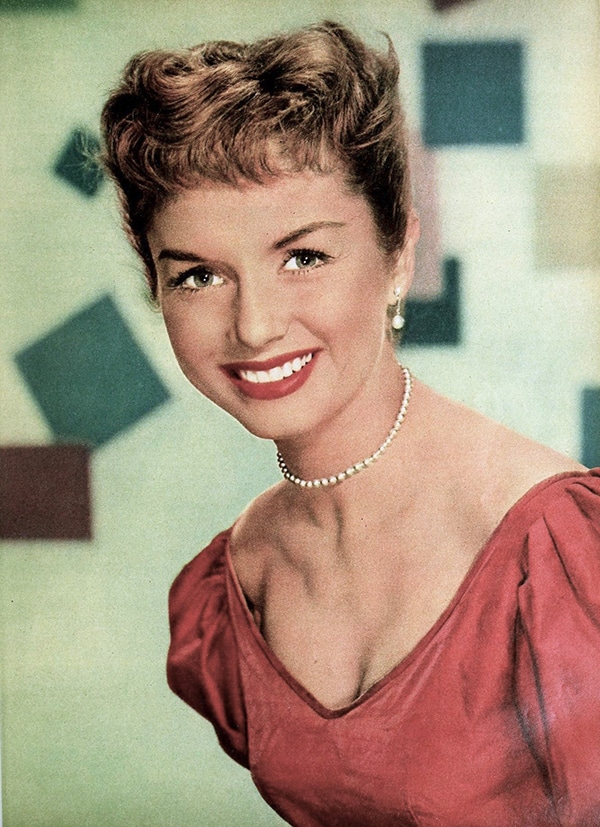
Debbie Reynolds. Photo by Bob Beerman and Bert Parry. Modern Screen, August 1954. Public Domain
Debbie Reynolds (1932-2016) was one of Hollywood’s most beloved performers, known for her warmth, comedic timing, and remarkable versatility as an actress, singer, and dancer. Born Mary Frances Reynolds in El Paso, she moved with her family to California as a child and entered the entertainment industry after being discovered in a beauty contest while a teenager. After making her debut in June Bride, Reynolds appeared in several musical comedies before landing the role that would define her career. She delivered a performance in Singin’ in the Rain that catapulted her into superstardom.
In the movie, Reynolds played aspiring actress Kathy Selden, whose talent and determination help her navigate Hollywood’s transition from silent films to sound. Although she was only 19 years old during production, her charm, humor, and chemistry with Gene Kelly and Donald O’Connor helped make the film a classic.
Reynolds went on to enjoy a long and successful career in film, television, theater, and music. Her popular films included Tammy and the Bachelor, How the West Was Won, and The Unsinkable Molly Brown, for which she earned an Academy Award nomination for Best Actress. Her energetic performances and wholesome screen persona earned her the nickname “America’s Sweetheart.”
The Denver Center for the Performing Arts (DCPA) NewsCenter is the organization’s editorial platform for stories, announcements, interviews, and coverage of theatre and cultural programming in Colorado. We are committed to producing accurate, trustworthy, clearly sourced journalism that reflects our mission and serves our community.
This article relied on online sources: IMDb, Encyclopedia Britannica, and Wikipedia.