DCPA NEWS CENTER
Enjoy the best stories and perspectives from the theatre world today.



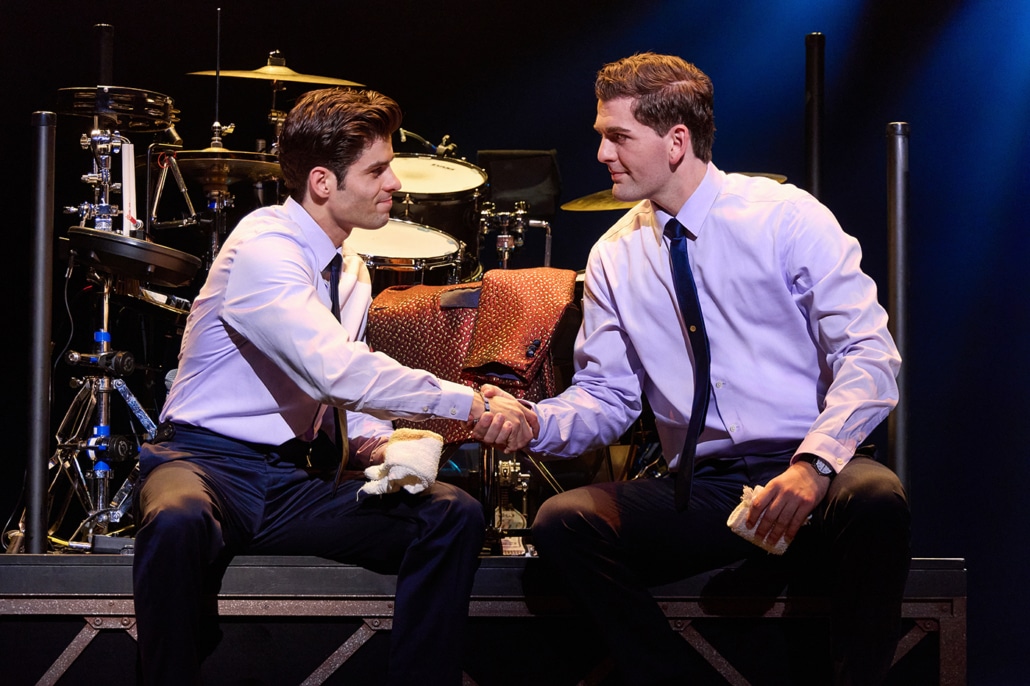
“Dawn” from the 20th anniversary tour of Jersey Boys. Photo by Jeremy Daniel
20 years since Jersey Boys first burst onto the Broadway stage, the much-loved musical about four blue-collar kids who formed an iconic, red-suited group and went on to become one of the most successful boy bands in the history of pop music continues to wow audiences around the globe.
Along the way it has amassed an armful of awards — including four prestigious Tonys, a Grammy for Best Musical Show Album and the coveted Olivier for Best New Musical in 2009 — not to mention the legions of fans who continue to flock to see it.
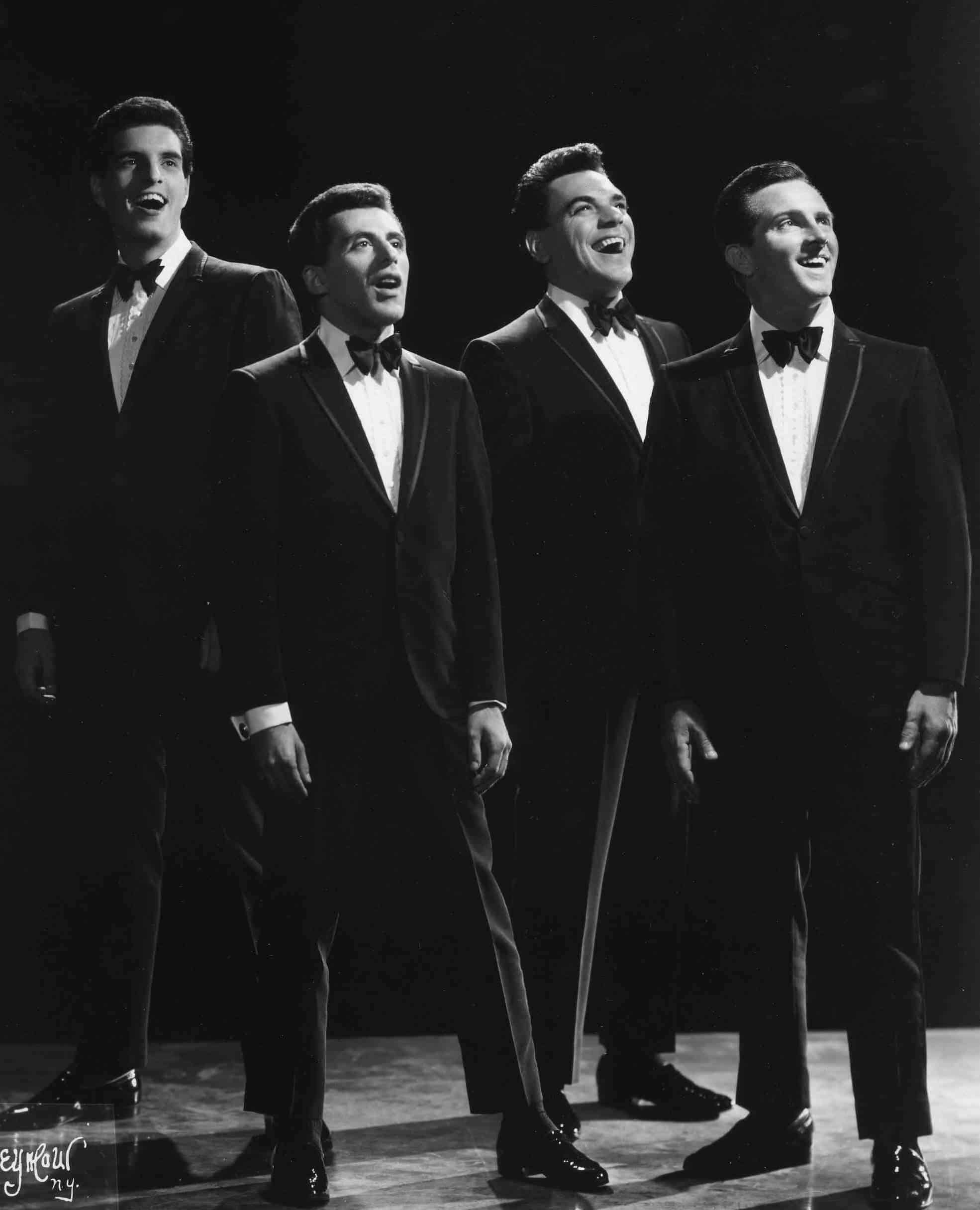
l-r: Bob Gaudio, Frankie Valli, Nick Massi, Tommy DeVito
The musical about four sons of Italian immigrants, who went from singing on the street corners of New Jersey to climbing to the top of the charts with hits such as “Sherry,” “Big Boys Don’t Cry” and “December 1963 (Oh, What a Night)” as The Four Seasons, shows no signs of slowing down.
So, what is it that continues to pull people in, two decades after the show first found its way to the stage, and more than 60 years since the band itself first started to build a loyal following?
For some, it will be the crowd-pleasing, timeless songs — written in the main by the legendary Bob Gaudio and captured through Frankie Valli’s iconic falsetto vocals. For others, it will be the story — that of a group of seemingly ordinary, working-class young men who rose to the top, but whose personal struggles are documented in ways that other musicals might gloss over. There’s personal loss, the highs and lows of being part of a smash-hit group, and a touch of Mafia for good measure. What’s not to like?
For its co-writer, Rick Elice, part of its success certainly lies in the fact the story of The Four Seasons was largely unknown before the show hit the stage. While the lives of other bands may have been well documented — even without the help of a stage musical — The Four Seasons had somehow managed to remain largely unwritten about.
Elice explains how he came across their story, when — having spent two decades working with an advertising agency — a former client approached him with the idea of possibly working The Four Season’s back catalogue of music into a stage show.
Tempted and intrigued, he and his co-writer Marshall Brickman ended up meeting with Valli and fellow band member Gaudio to find out a little bit more.
As they ate in a dark restaurant somewhere in New York, Elice began to realize there was a story to be told. And a good one at that.
“We were waiting for the food to come, and just by way of making conversation, we started to ask them what it was like to be them,” he recalls. “And they started to describe being blue collar, first-generation Italian Americans growing up in New Jersey, which, for people like Marshall and me, was always sort of a joke state.”
He adds: “It smelled bad because there were all these gas refineries there and it was just sort of a drive-thru place you would go on your way someplace else. We didn’t really know anything about it other than the cliches that we had grown up with.”
But as they listened, the more they learned about the group — and it was during this conversation that Elice realized what it was that made their story stand apart from others.
“I knew all about the Beatles, and the Stones — all about those groups. But somehow, while I knew the songs of The Four Seasons, I didn’t know anything about what happened to them until they started telling us in the back of this dark restaurant,” he recalls.
“I kept sort of drilling down into it and asking how I didn’t know about any of this. And they said ‘Well, we weren’t part of the culture elite. We weren’t written about. We didn’t have long hair, and we didn’t come from the other side of the Pond. We didn’t have exotic accents, as the British invasion bands did. We were never written about. Our fans weren’t the girls that The Beatles wrote love songs to. Our fans were the guys that we wrote songs about girls to’.” — Rick Elice, Co-Writer
And there, in that moment, a lightbulb was switched on in Elice’s head.
While Mamma Mia!, which had not long begun performances when this conversation was taking place, catered for a largely female audience, Elice realized that a show about The Four Seasons had the possibility of enticing an entirely different theatre going audience.
“Their fans were the guys, and, of course, in musical theatre… there’s not much of a guy audience for Broadway musicals, except for a gay audience or the men who accompany their wives to see the musical theatre,” Elice explains.
“We had an untapped niche,” he continues. “Guys who bought these songs when they were teenagers in the 60s were now — it being 2003 when we were having this conversation — just at the age of people who mostly buy tickets and go to the theatre. So I thought, ‘Wouldn’t it be amazing if we could sort of tap into that niche and tell this story’.”
Coincidentally, American TV series “The Sopranos” was making a splash on TV screens at that time, and with the Mafia connection to The Four Seasons, Elice and his co-writer knew there was something unique that a Jersey Boys musical could offer that other shows didn’t.
“Frankie and Bob were talking about how their lives were spent navigating between the shark-infested waters of the Jersey Mafia, which I thought was something that only existed on television until I met them,” Elice explains. “What appealed to me instantly about these guys was that the four of them and everything they went through was being handed to us as the basis of not just a true story, but a good story. And not just a good story, but an untold story.”

Rick Elice and Marshall Brickman. Photo by Joan Marcus
So it was that Elice and Brickman opted to tell the story of the members of The Four Seasons themselves — a musical biography, as it were — something that had not really been attempted at that time. Again, it offered a different selling point to the already popular Mamma Mia! that was doing the rounds at the same time.
Having seeded the idea to Gaudio and Valli, the former Four Seasons members suggested Elice and Marshall write them something — a taster scene — to see how it would look.
“So we wrote a scene that is in the show to this day — the sit-down scene where the four guys come to negotiate their survival from a real-life Mafia capo from Jersey, called Angelo DeCarlo, representing the Brooklyn Mafia, to whom Tommy DeVito had gotten deeply in debt,” Elice explains. “It’s not a scene that would be usually seen in a musical because it’s seven pages long. And there’s no songs. It’s just a scene with six guys sitting at a table in a basement in New Jersey.”
Once they had this, the writers also presented the band members with their other trump card: Jersey Boys wouldn’t be one person’s story; it would be told from four perspectives, representing the four different members and their experiences. And the show itself would be divided into ‘four seasons’, matching the name of the band.
“We wouldn’t tell the audience who we believe, because you ask four guys the same question, you’re going to get at least four different answers,” Elice says. “And maybe 17 different answers because they’d been telling these stories for years at that point. They each have their versions of what actually happened.”
With Gaudio and Valli on board, Elice and Brickman began writing the show. And as it happens, director Des McAnuff, who Elice knew from a previous job and who was artistic director of La Jolla Playhouse at that time, was looking for a show to plug a gap in the 2004 schedule after something else fell through.
By now it was late 2003 — and while most musicals can take years to develop and get to the stage, Elice and Brickman found themselves creating Jersey Boys in just months. The show had its official opening night in October of 2004.
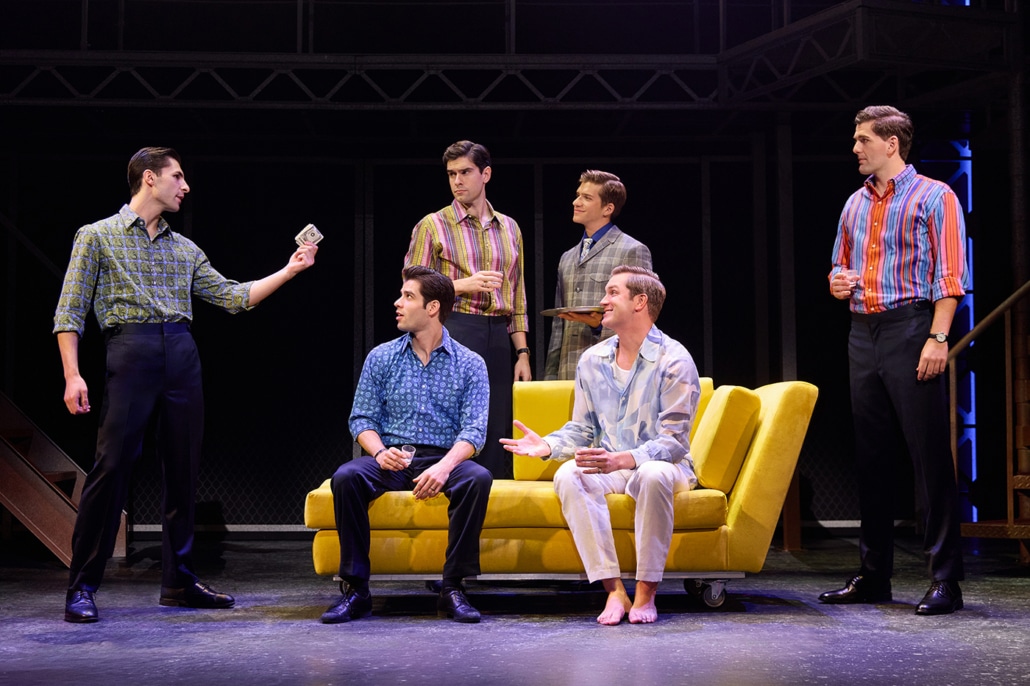
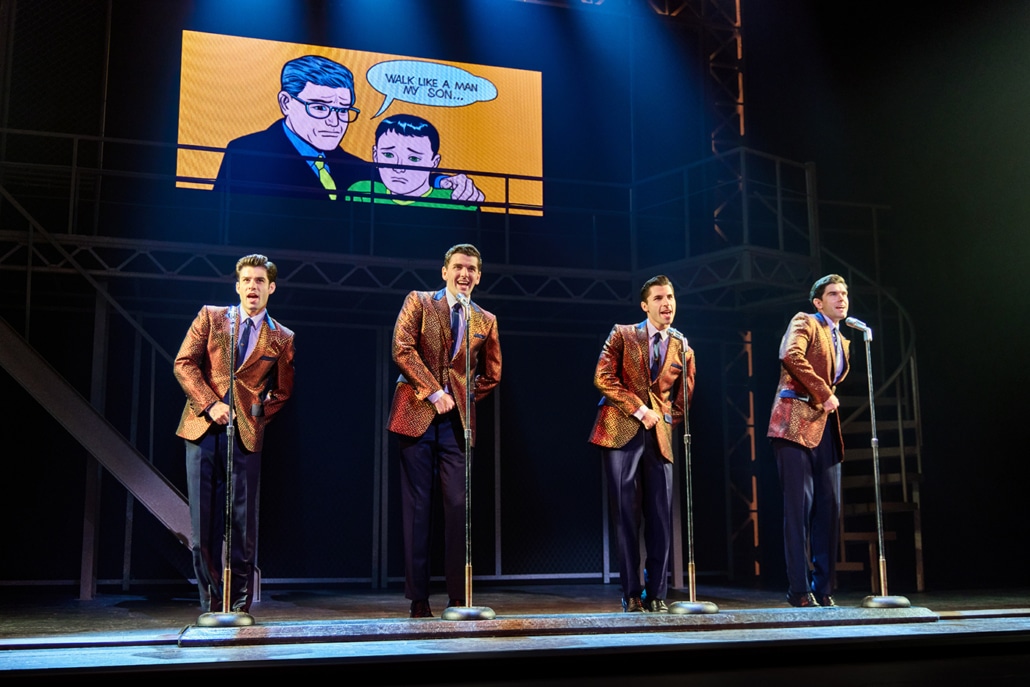
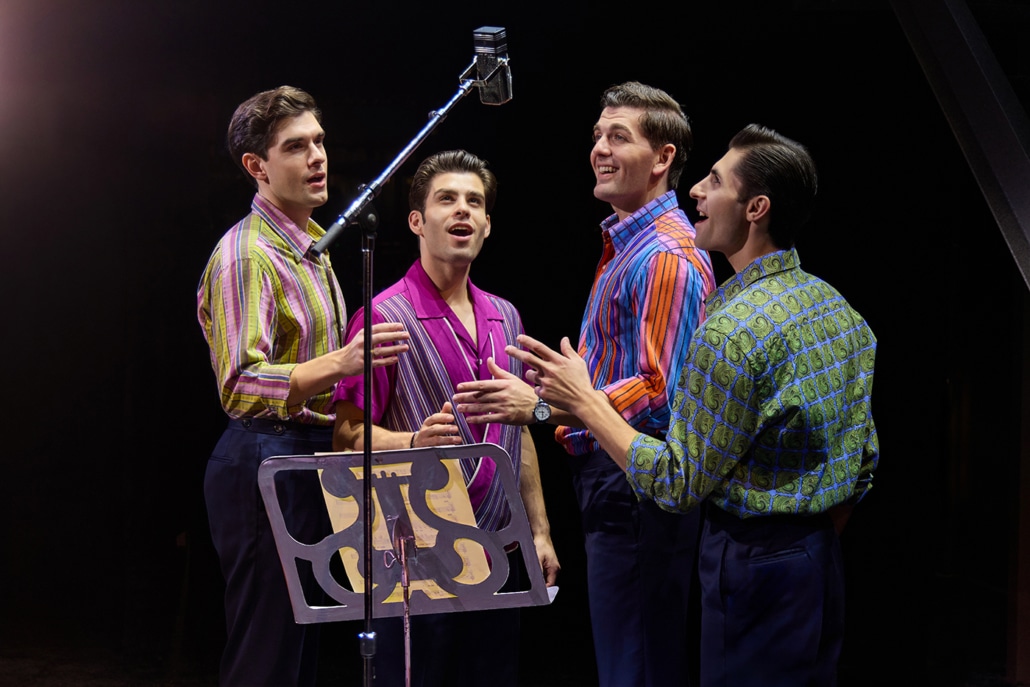
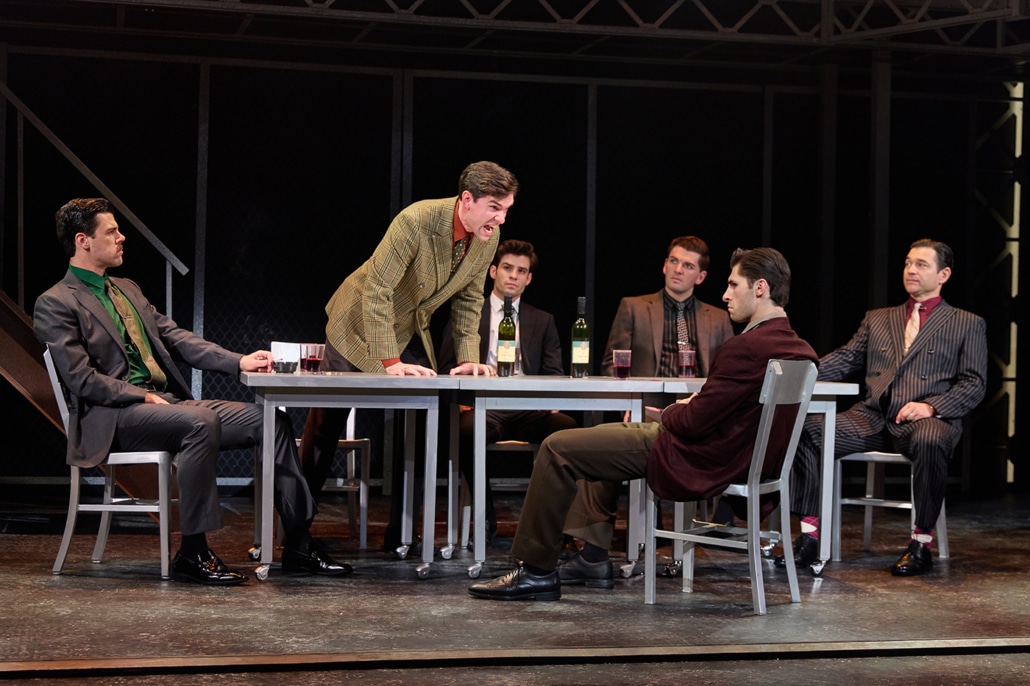
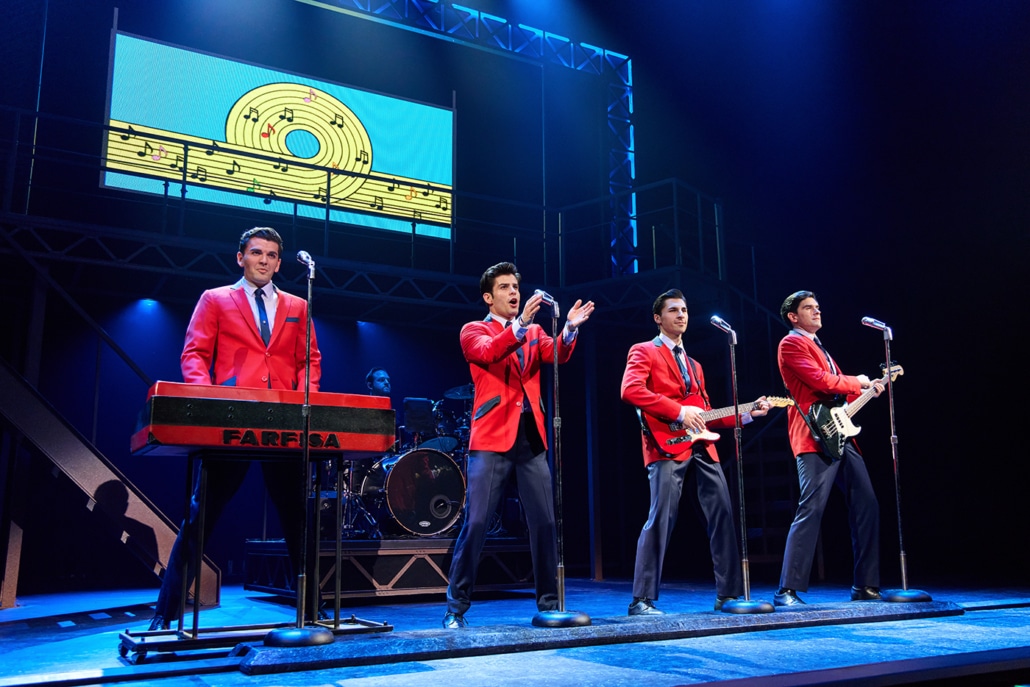
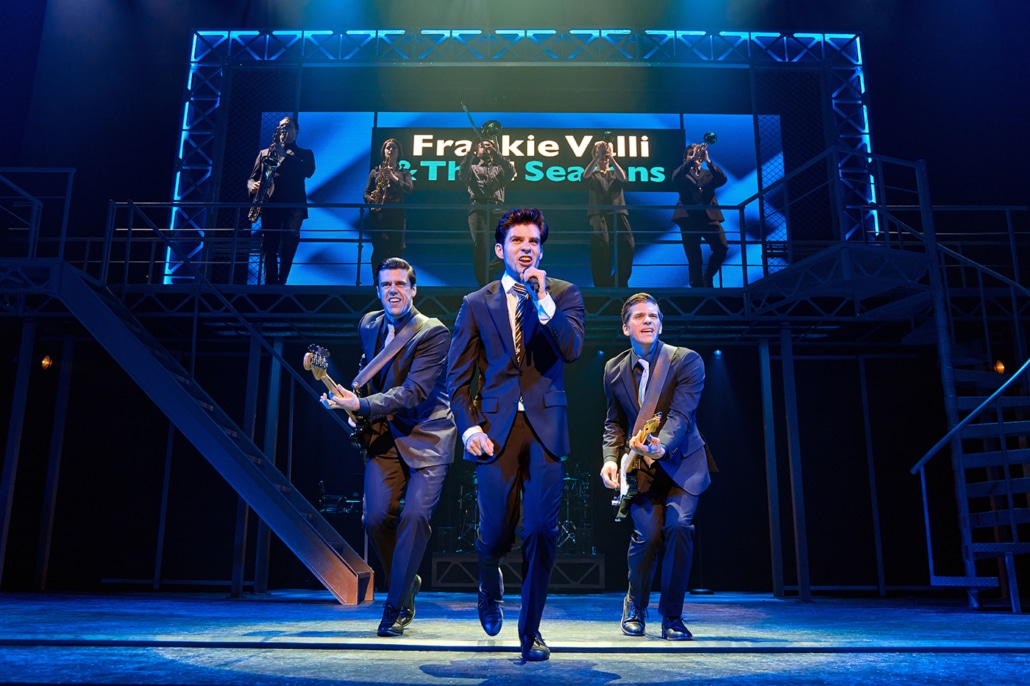
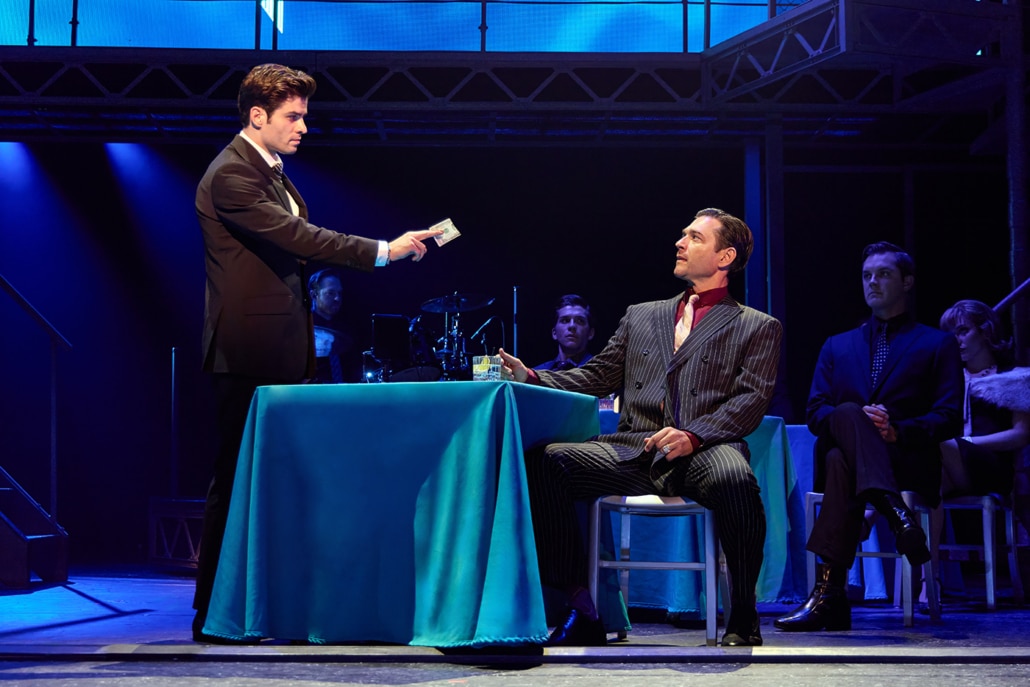
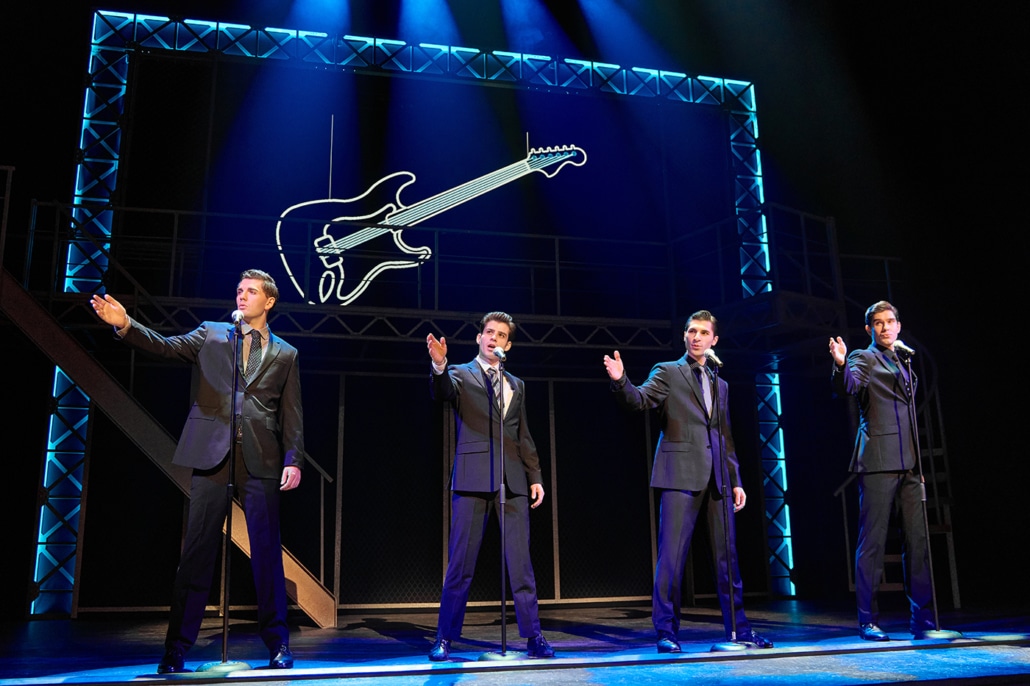
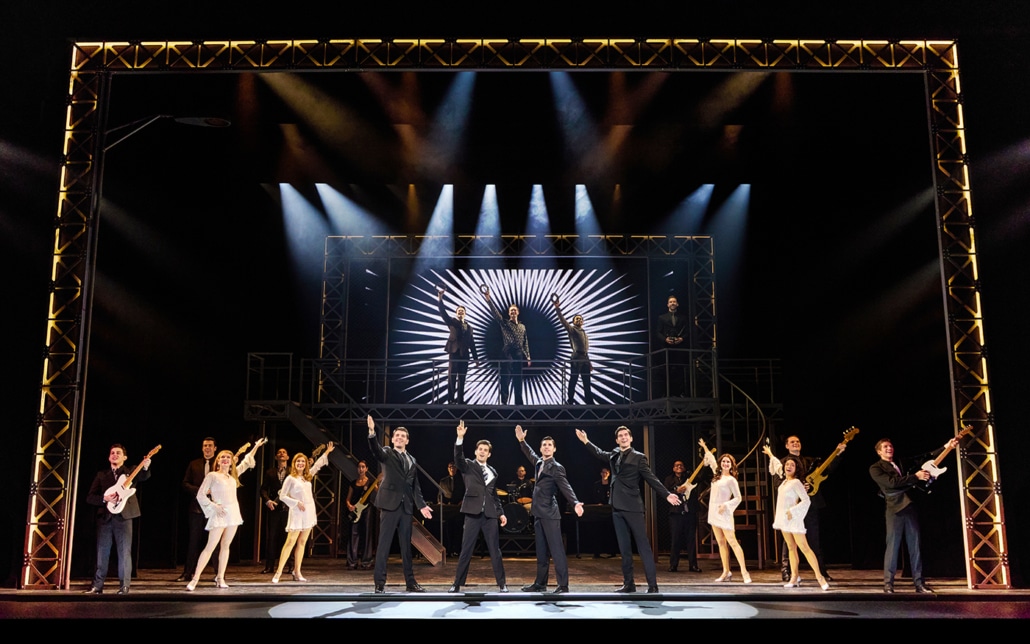
“And of course, never having done a musical, Marshall and I didn’t realize it was supposed to take 10 years to write a musical,” Elice says. “So instead, we just wrote it, quickly, and in April 2004, we auditioned people and met with the designers. The reason the show looks the way it looks is because it all had to be designed and drafted and built very, very quickly, because there was just no time in order to make that opening date. And the first time we ever heard the thing out loud was the first day of rehearsal in La Jolla in August of 2004.”
In fact, the members of The Four Seasons didn’t even see the show up on its feet until the show was in previews.
“They sat in the middle of a sold-out theatre, listening to an audience loving it and cheering, and people running up to them afterwards and making a fuss over them,” Elice says. “And so, they never said, ‘Oh you gotta change it’ after they saw it, because they saw the way the audience loved it.”
He adds: “I think if they had come to a rehearsal, we would have been fighting over the chronology of it and maybe the thing never would have happened. But because they got to see it with an audience the very first time, they felt about it the way the audience did.”
And what is it that audiences have tapped into on this show?
For Elice, it’s the show’s universal themes — something those he worked with in theatre prior to the musical opening always said productions must have.
“When I was at the advertising agency, I started to meet the boldfaced names of my theatrical youth and got to know them and work with them. People like Harold Prince and Stephen Sondheim. And one thing that they used to talk about a lot was finding the ‘universal thing’ — finding something for the audience to really connect to. Michael Bennett said A Chorus Line played for 15 years on Broadway not because the audience was full of people who were Broadway dancers, but it was full of people who, at some point in their lives, have said ‘Look, I really need this job. I’m putting myself on the line in front of you, and I really need this job’.”
He adds: “If I were a douchebag, I would say to you, we sat and we thought about what the universal would be for Jersey Boys. But we didn’t. I don’t think we were that clever, but we were that lucky. Because we hit a universal, and I think that is, at some point in our lives, almost everyone’s been part of a group. It might be a band or a company or a secretarial pool or a bowling league — but these groups tend to become second families, and sometimes very dysfunctional families, and sometimes the bonds are stronger in these second families than they are even in our real families. Sometimes we take them for granted, and sometimes we screw them up.”
He says that, while Jersey Boys tells the story of a particular band, “it’s hard not to be touched by those eternal issues of wanting to belong and wanting to achieve, and wanting to be respected, and wanting to find home.”
“I’m nothing like Frankie or Bob or Tommy or Nick, but I recognize what happens to them and what they go through,” he says. “And I think that’s because I’ve gone through my version of that. And I think a lot of people feel that way.”
The Denver Center for the Performing Arts (DCPA) NewsCenter is the organization’s editorial platform for stories, announcements, interviews, and coverage of theatre and cultural programming in Colorado. We are committed to producing accurate, trustworthy, clearly sourced journalism that reflects our mission and serves our community. Article written by Matt Hemley. Reprinted by permission of Jersey Boys.