DCPA NEWS CENTER
Enjoy the best stories and perspectives from the theatre world today.

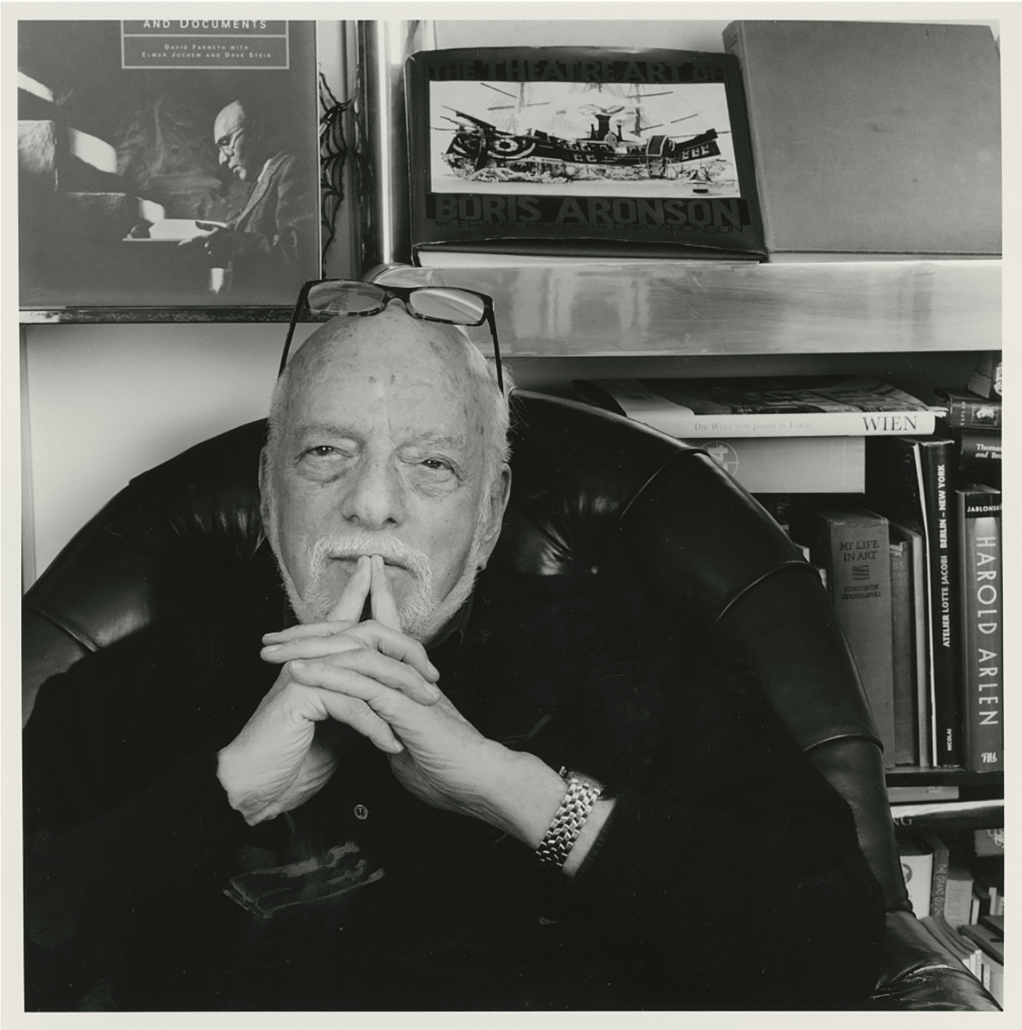
by Hal Prince
The following article by director Harold Prince (1928-2019) was published in Denver Center for the Performing Arts’ Applause magazine in November 1991 for the first Broadway engagement in the newly opened Temple Hoyne Buell Theatre — The Phantom of the Opera. It is republished here to commemorate the 35th anniversary of that opening in tandem with the show’s ninth engagement in Denver.
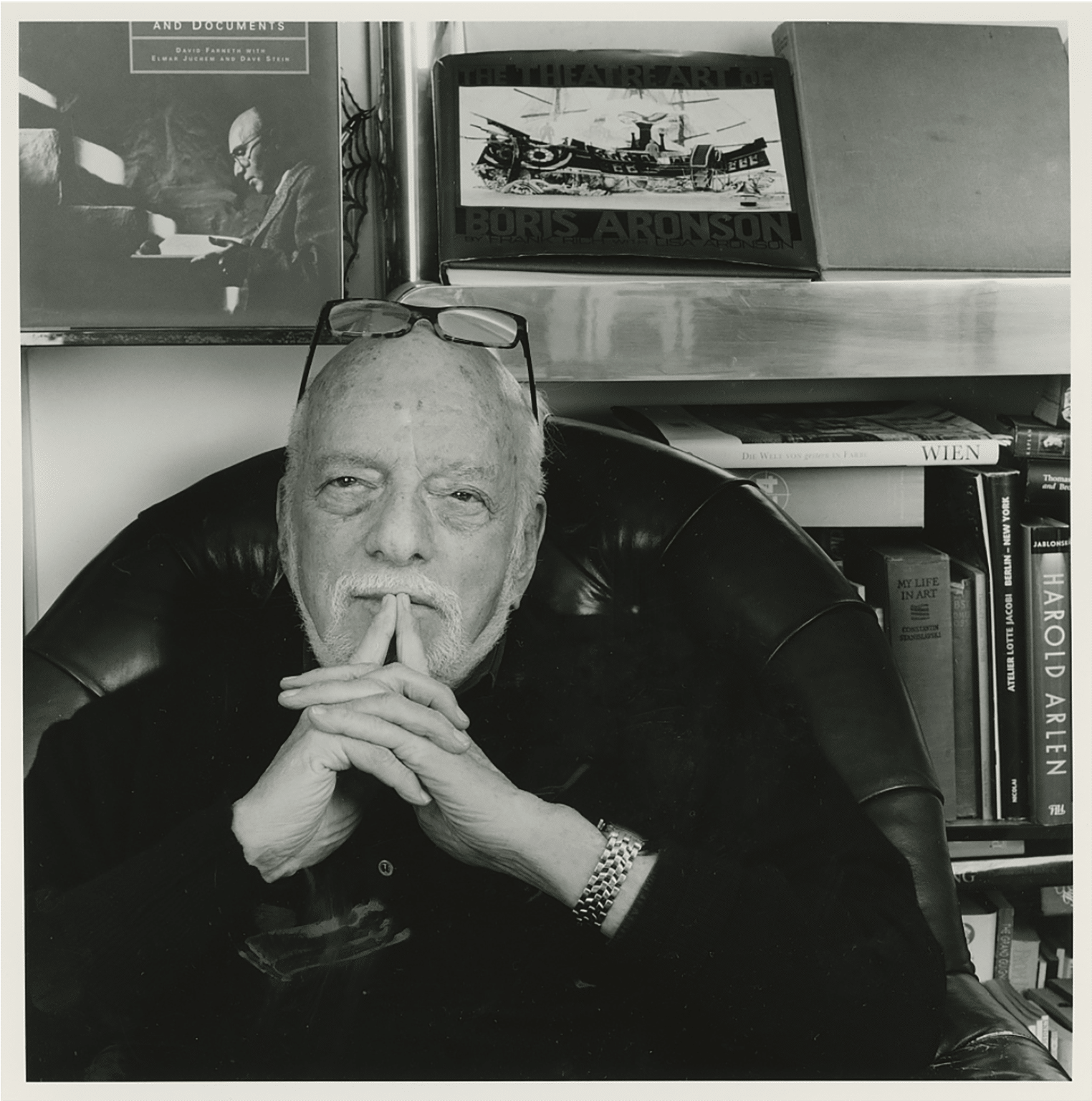
Harold Prince, Director. Photo by Nancy Lee Katz
It is seven years since Andrew Lloyd Webber mentioned his notion of musicalising The Phantom of the Opera. When the idea for a new musical arises, I immediately think of a number of reasons not to do it, why it won’t work. I think of everything as excuses ranging from … it doesn’t sing; through … what can be added to its earlier permutations (four feature films based on an excellent novel by Gaston Leroux) to a simple … why? On this occasion, without hesitation, I said I must be part of it.
The novel confirms there is more to say than has been said in the films, for it is deeply rooted psychologically and far more detailed. Gone is the incident of the acid thrown, which accounts for the Phantom’s grotesque face. Gone is the stick figure and the tin soldier hero, gone the empty-headed ingenue. This Phantom, a sort of Elephant Man born to an aristocratic family, is imprisoned in a mask as a child, by his mother! Subsequently, he tours in sideshows and becomes a court jester to the Sultan of Persia. Through his genius, he ends up designing palaces for the Shah-in-Shahs, after which he moves on to Russia and, eventually to Paris where he is one of the architects of the Opera House.
Would he have constructed the chandelier? My embellishment! Such projects invite that sort of license.
The Phantom’s story is also the story of a woman, a girl really, who is manipulated by three men, all of whom she loves — the Phantom, her father (who is dead), and a well-bred young patrician. The story traces her Rite of Passage.
It seems to me that of the films, Lon Chaney’s came closest to respecting the honesty with which Leroux had charted the emotional course of his characters. Perhaps it follows that only music, operating primally, could add to the power of silence.
For months before opening, the authors worked and reworked the material, while I met here and in London with them and our designer, Maria Björnson. We knew we wanted a simple enamel black box, capable of displaying the Phantom’s bag of tricks—an area in which, selectively, we could recreate the perfumey aroma of our story…a dangerous place.
Aside from examining and exploiting the wonders of Victorian theatrical machinery (we were blessed to open in Her Majesty’s Theatre which contains the oldest still-operating stage in the world), our job was to find a visual metaphor for the psychological underpinnings of the play.
For our solution, we gratefully acknowledge a BBC-TV documentary called The Skin Horse. It is a 45-minute series of interviews with handicapped people, among them a quadriplegic, a victim of multiple sclerosis whose speech is so distorted that her intelligent commentary had to be translated in subtitles across the bottom of the screen, and a beautiful girl deprived of arms by thalidomide. These interviews were interspersed with segments from the 1930s classic film Freaks, and the famous scene from The Elephant Man in which the actress kisses ‘Merrick.’ Some of those interviewed spoke willingly, eagerly of their sexuality; it was an element which had been missing in the design and which, indeed, informed the subsequent rewritten drafts of the libretto.
Finally, there were perks on this journey. The most dramatic was a trip to Paris during which I visited the famous lake in the depths of the Opera House (five floors below the stage) and climbed to the pinnacle on the roof (five floors above), where our final scene in Act I takes place. There is no path up there, there are no handrails to hang onto, you simply scramble behind a nimble-footed Paris Opera engineer. The wind is blowing, you don’t look down, and when you get to the top, one foot perched on either side, you look across to the people on top of the Eiffel Tower.
Hal Prince
Oct. 1991, New York, N.Y.
The Denver Center for the Performing Arts (DCPA) NewsCenter is the organization’s editorial platform for stories, announcements, interviews, and coverage of theatre and cultural programming in Colorado. We are committed to producing accurate, trustworthy, clearly sourced journalism that reflects our mission and serves our community.

 ©Scott Dressel-Martin