DCPA NEWS CENTER
Enjoy the best stories and perspectives from the theatre world today.



Phamaly Theatre Company has been “cripping” the theatrical canon for nearly four decades, reimagining what theatre looks like and who it’s built for.
From its inaugural show, Guys and Dolls in 1990, to last year’s Pippin in partnership with the Denver Center for the Performing Arts (DCPA), Phamaly has placed people with disabilities at the center of stories that were never originally written with them in mind. In doing so, the company has reshaped familiar titles, revealing new dimensions of character, tension, and truth that emerge when difference is embraced.
But those representations have always carried a quiet question: What happens when the story itself begins from within the disability community?
This summer, Phamaly offers an answer.
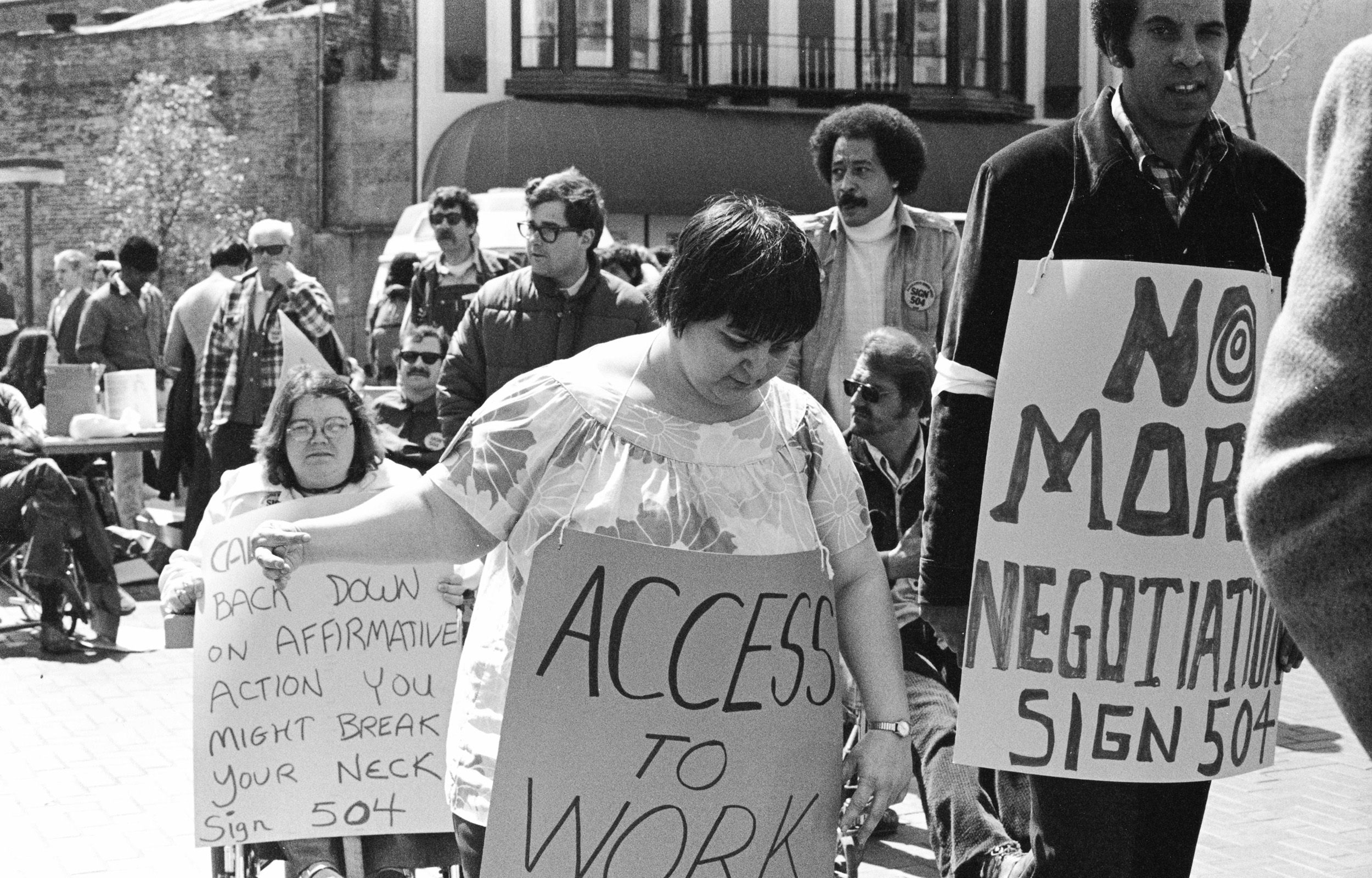
©1977 Anthony Tusler _ AboutDisability
In partnership with the DCPA, the nation’s longest-running disability-affirmative theatre company premieres 504: The Musical, a new work rooted in the 1977 disability rights sit-ins. For 26 days, 150 activists occupied a federal building in San Francisco, demanding the enforcement of, the first major piece of federal legislation prohibiting discrimination against people with disabilities. The protest became a turning point, demonstrating the force of collective action and reshaping what access and equity could mean in the United States.
But 504 is not only a retelling of that history. It is a story about what it takes for a group of people — each carrying different experiences, needs, and identities — to recognize themselves as a collective force.
As Ben Raanan, Phamaly’s Artistic Director, describes it, “The only way for them to win this fight is to think about what makes them the same, rather than what makes them all different.”
That arc is what gives the musical its emotional weight and makes this production feel immediate.

Writers Abbie Goldberg and Mason McDowell at a concert of 504 produced by Epic Players at Joe’s Pub in New York City. Photo by Zui
Because at Phamaly, that shift isn’t reserved for the final moments of a story. It is the foundation the work is built on. Theatre is designed around the artists in the room. Access is expected, not a hurdle to overcome or an afterthought. Processes adapt. The system reshapes itself rather than asking performers to fit into it.
The result is a space where people show up fully as they are.
As Raanan puts it, “Our disabled community isn’t built on hate. It’s built on intense, unimaginable unity.”
For 504 co-writer Abbie Goldberg, that sense of community is both artistic and personal. “When people have their needs met, they’re able to bring more honesty, more risk, more of themselves into the work,” they explain. The result is theatre that feels more grounded, more complex, and more reflective of the world it hopes to represent.
That is what makes 504 extend beyond its historical setting. The story onstage traces a community discovering its own power, transforming from a collection of individuals into a unified force capable of demanding change.
“It’s not just a fight about achieving rights. The legal stuff is still important, but the most powerful shift happens when people see themselves as part of a community. As powerful, beautiful and deserving of the rights they were fighting for.” — Abbie Goldberg, Co-writer
That sit-in may be the catalyst, but the deeper movement happens when people move from isolation to belonging, from being defined by limitation to claiming identity and power.
And it’s what makes Phamaly’s role in this production resonate. Because the company is not only staging a story about disability justice but also modeling what justice can look like in practice.
It’s a subtle but profound shift: from imagining a more just world to inhabiting one.
In 504, a group of activists come together to demand a world built on access and dignity. At Phamaly, that world is already taking shape in rehearsal rooms, onstage, and in the community built along the way.
So, what if the world they were fighting for already existed?
For the length of a performance, at least, it does.
Photo credit: D’Lil, H., photographer. (1977) Judy Heumann of the American Coalition of Citizens with Disabilities and Centers for Independent Living Speaking on the First Day of the Section 504 Demonstrations in San Francisco, California. California San Francisco, 1977. Retrieved from the Library of Congress.
The Denver Center for the Performing Arts (DCPA) NewsCenter is the organization’s editorial platform for stories, announcements, interviews, and coverage of theatre and cultural programming in Colorado. We are committed to producing accurate, trustworthy, clearly sourced journalism that reflects our mission and serves our community.